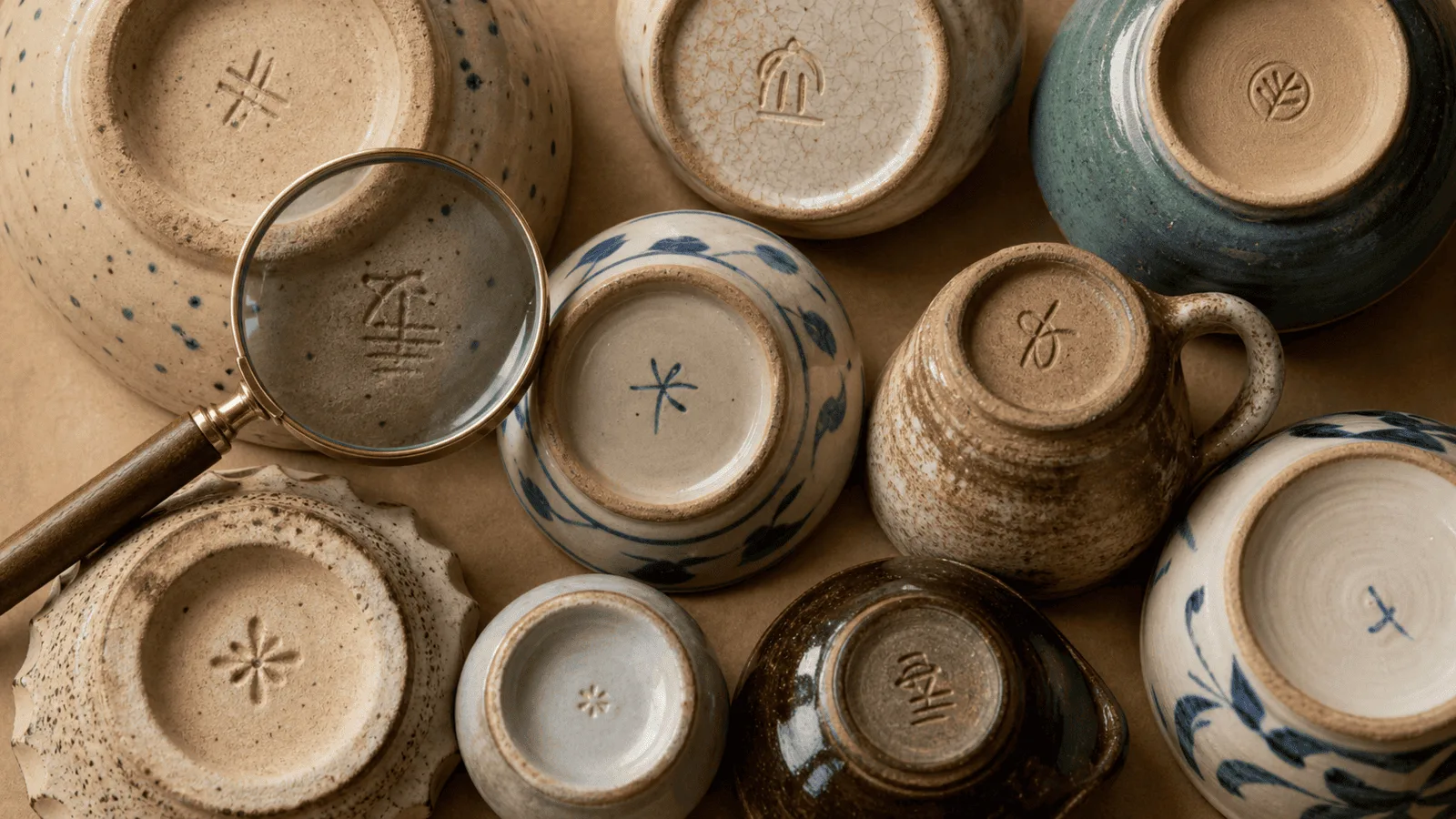
Pottery marks identification is one of the fastest ways to move from “old ceramic thing” to a more useful answer. A mark on the base of a vase, plate, bowl, figurine, or tile can point to a maker, country, date range, factory line, artist, or export period.
The mark is not the whole story. Shape, clay body, glaze, decoration, weight, foot ring, wear, and condition all matter too. But pottery marks identification gives you a starting point, especially when two pieces look similar from the front and very different underneath.
If you are still unsure what the object is, use the broader guide on how to identify antiques first. Then come back to the mark and compare the specific clues.
For a closer look at terminology and mark-checking, see our guide to pottery hallmarks.
Table of Contents
Why Pottery Marks Matter
Pottery marks identification matters because ceramic pieces are often copied, revived, exported, and reissued. A blue-and-white plate can be 19th-century transferware, 20th-century export china, tourist ware, or a recent decorative piece. A vase can be factory-made, studio-made, hand-painted, molded, or assembled from parts.
The mark can narrow the search. It may show a company name, initials, symbol, pattern number, shape number, registration mark, country of origin, artist signature, or retailer stamp. Some marks were used only during certain years, while others changed slowly across decades.
Reference projects such as The Marks Project are helpful for studio ceramics, but you should still compare the whole object. A mark found online is only a match if the style, clay, glaze, and quality fit too.
7 Best Clues in Pottery Marks
1. Printed Backstamp
A printed backstamp is usually applied under or over the glaze. It may include a factory name, logo, place, crown, shield, initials, or words like “Made in.” In pottery marks identification, the exact spelling, typography, and border shape can be as important as the name.
2. Impressed or Incised Mark
Impressed marks are pressed into the clay before firing. Incised marks are scratched or cut into the body. These can be harder to photograph, but they often point to mold numbers, shape numbers, studio signatures, or workshop marks.
3. Country of Origin
Country marks can help with dating. Words such as “England,” “Made in England,” “Germany,” “Japan,” or “Occupied Japan” may suggest broad export periods. Do not date by country mark alone, but use it as one clue in the timeline.
4. Pattern or Shape Number
Numbers on the base are not always dates. They may be pattern numbers, shape numbers, decorator codes, mold numbers, or batch marks. In pottery marks identification, search the number with the maker name if you know it, rather than treating the number by itself as proof of age.
5. Artist Signature
Studio pottery often carries a handwritten signature, monogram, impressed seal, or chop mark. Photograph it from several angles. A signature can be partly hidden by glaze, wear, or firing effects, so side lighting helps.
6. Glaze and Clay Body
The mark should agree with the material. Porcelain, earthenware, stoneware, bone china, majolica, art pottery, and studio ceramics have different clay bodies and surfaces. If a mark suggests one maker but the body and glaze look wrong, be cautious.
7. Wear Around the Foot Ring
Natural wear on the foot ring, underside, and high points can support an age estimate. Fresh dirt, artificial staining, or perfectly sharp edges can be warning signs. Pottery marks identification is stronger when mark, material, style, and wear all tell the same story.
How to Photograph a Mark
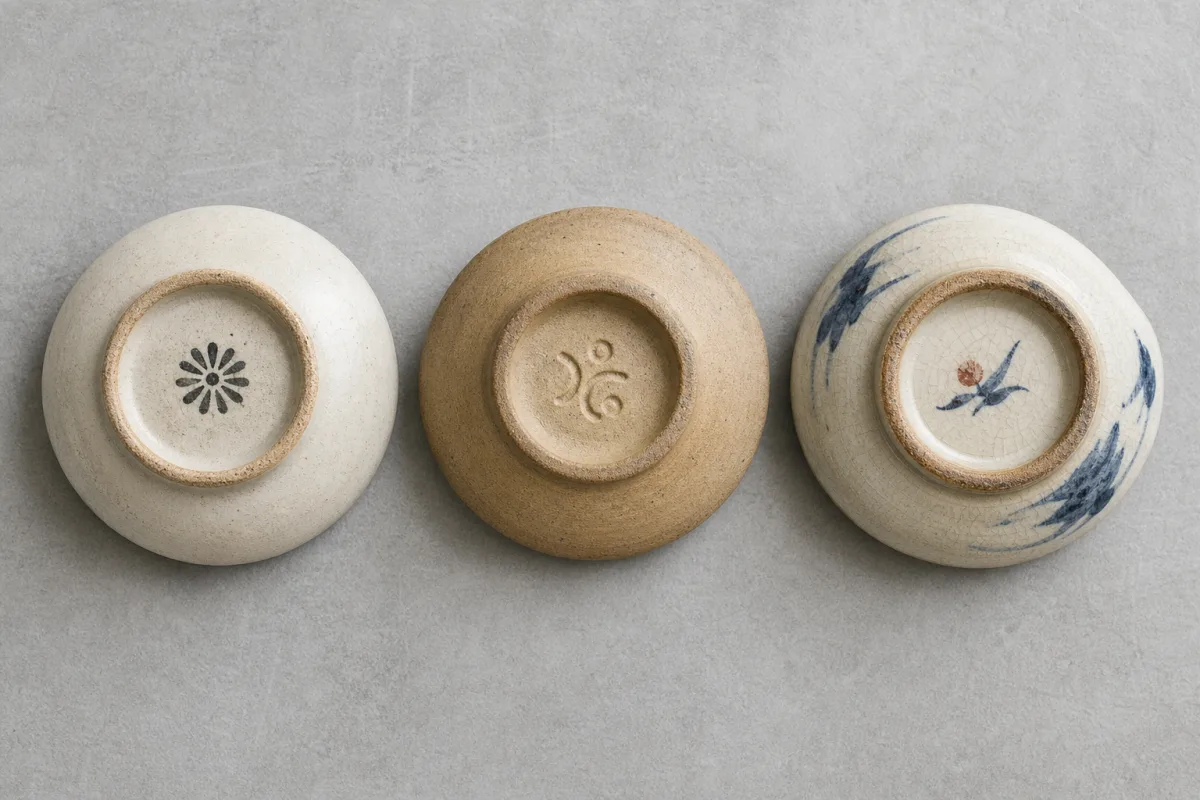
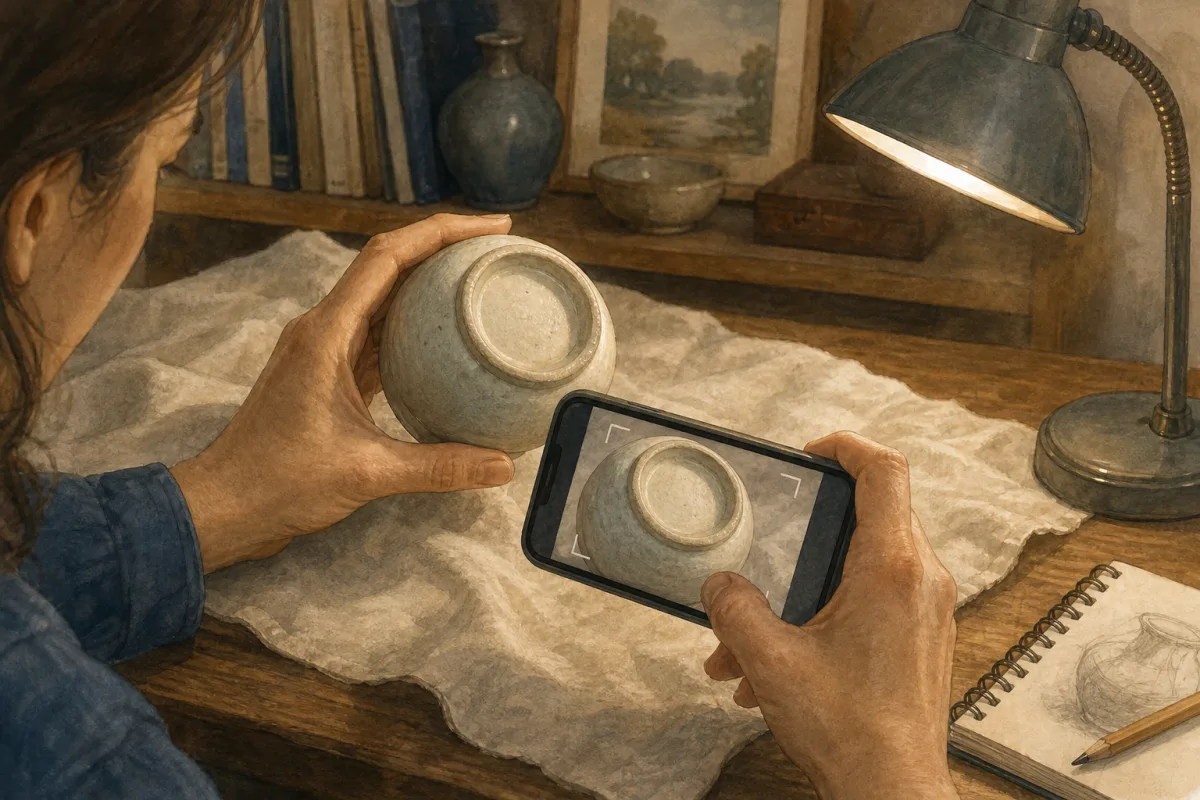
Good photos make a huge difference. Clean loose dust gently, but do not scrub, soak, or use chemicals before research. Place the piece on a stable surface, use soft natural light, and photograph the full object first. Then photograph the base straight on and at a slight angle.
For impressed marks, use side light so shadows reveal the letters. For shiny glaze, move the light rather than using harsh flash. If you use an antique identifier by picture, upload both the full object and the mark close-up. The app needs context.
Common Mistakes
The biggest mistake is matching only the symbol. Many marks look similar, especially crowns, shields, initials, crossed lines, and Asian-inspired characters. Another mistake is assuming every number is a year. A piece marked “1890” may be a pattern number, not a production date.
Also remember that old marks can appear on later reproductions. Some factories reused names, revived patterns, or produced commemorative lines. A correct mark still needs support from quality, decoration, clay, glaze, and condition.
Value and Condition
Once you identify the mark, pricing is the next step. Use an antique price guide online to compare sold examples, but match condition carefully. Chips, cracks, crazing, staining, repairs, missing lids, restored handles, and rubbed gilding can reduce value.
Rare marks can matter, but demand matters too. A known maker in poor condition may sell for less than a more common piece in excellent condition. Pottery marks identification gives you the name; condition and market demand decide the price range.
FAQ
Can pottery marks identification tell the exact year?
Sometimes, but not always. Some marks were used during known date ranges. Other marks continued for decades or were reused. Treat the mark as a dating clue, not the only proof.
What if my pottery has no mark?
Unmarked pottery can still be identifiable by shape, clay, glaze, decoration, construction, and wear. Photograph the whole piece and compare style before deciding it has no value.
Does a famous mark guarantee value?
No. Authenticity, condition, quality, rarity, and buyer demand all matter. A famous mark on a damaged or common piece may not bring a high price.