An antique identifier app can turn a quick photo into a useful first answer: what the item may be, which details matter, how old it might be, and whether it deserves deeper research. That is valuable when you are standing in an estate sale, sorting inherited boxes, checking a thrift store find, or deciding what to photograph for an appraiser.
The important thing is to treat an antique identifier app as a research assistant, not a final legal appraisal. A good app can help you identify category, material, style, marks, condition issues, and a realistic value range. For insurance, tax, donation, estate, or high-value sale decisions, you may still need a qualified appraiser.
This guide explains the best features to look for before you trust a result. If your first question is photo quality, start with the related guide to using an antique identifier by picture.
Table of Contents
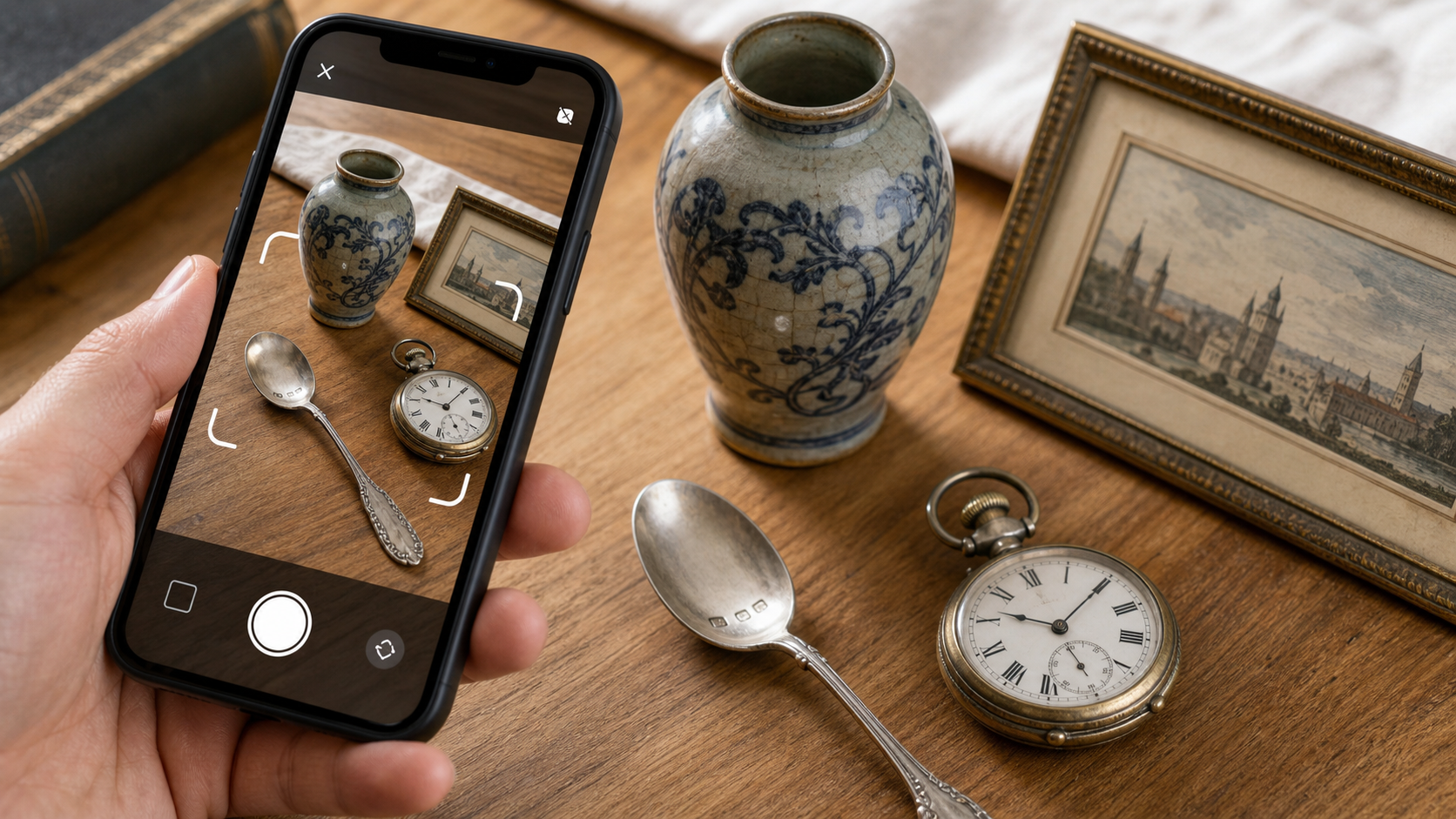
What an Antique Identifier App Does
An antique identifier app reads visual clues from a photo and compares them with known object categories. It may recognize shape, decoration, material, construction, period style, maker marks, labels, signatures, hallmarks, serial numbers, and visible wear. The stronger the photo evidence, the stronger the identification.
For example, a single photo of a chair from across the room may only suggest “wood dining chair.” A better set of photos can show the leg shape, joinery, underside, screws, finish, upholstery, label, and condition. Those details can separate a recent reproduction from a real period piece or a collectible mid-century design.
Idar is designed for this first-pass workflow. You take or upload photos, scan the visible evidence, and get an identification overview with age clues, value context, and next steps. You can then compare the result with museum collections such as the Getty collection or with sold-price research when price matters.
7 Best Features to Look For
The best antique identifier app is not just a camera button. It should guide you toward better evidence and explain why an object may belong to a category, period, or maker. Look for these features before relying on any result.
1. Clear Photo Guidance
A strong antique identifier app should tell you what to photograph: the full object, front, back, bottom, marks, damage, hardware, labels, signatures, and scale. Many mistakes happen because the important clue is hidden on the underside or inside the item.
2. Mark and Label Reading
Marks are often more important than the overall look. Porcelain backstamps, silver hallmarks, furniture labels, patent numbers, watch serial numbers, and artist signatures can all change the identification. The app should encourage close-ups and make it easy to add more images.
3. Age and Style Clues
An antique identifier app should explain the visible clues behind an age estimate. Useful signals include construction methods, wear patterns, materials, decoration style, typography on labels, screw type, glaze, patina, and hardware. A result that simply says “old” is not enough.
4. Value Range with Context
Value is never one number. It depends on condition, rarity, maker, demand, region, size, and proof of authenticity. A helpful app gives a range and explains what might push the object higher or lower. For a deeper pricing workflow, use the antique pricing guide after you identify the object.
5. Condition Checklist
Condition can change value more than age. Chips, repairs, replaced parts, refinishing, missing lids, cracks, stains, corrosion, loose joints, and trimmed signatures all matter. The app should help you inspect the item instead of only naming it.
6. Source-Friendly Next Steps
Good research does not stop at the first answer. The app should make it obvious what to check next: maker databases, sold listings, auction archives, museum records, appraisal options, or specialist categories. If you are not sure what the object is, read how to identify antiques before selling.
7. Appraiser Boundaries
The best antique identifier app should be honest about limits. It can support research, but it cannot physically test metal, verify gemstones, smell old wood, inspect repairs under UV light, or issue a formal insurance document. That honesty makes the result more useful, not less.
How to Scan an Item
Use this simple photo sequence for better results:
- Take one full-object photo in natural light.
- Add close-ups of marks, labels, signatures, or serial numbers.
- Photograph the bottom, back, underside, inside, and hardware.
- Include damage, repairs, missing pieces, and replaced parts.
- Add scale with a ruler, coin, hand, or common object.
- Keep backgrounds plain so the object is not confused with clutter.
An antique identifier app works best when it sees the same clues a human specialist would ask for. If you only upload one dark photo, the result may be broad. If you upload a clean set of evidence photos, the result can become much more specific.
What Results to Trust
Trust a result more when the app explains visible clues: the mark matches the category, the material fits the period, the shape is consistent, and the condition notes match what you can see. Be more cautious when the answer is based only on resemblance, especially for jewelry, silver, Asian ceramics, paintings, rare books, military items, and anything that may be legally sensitive.
Also watch for category confusion. A vintage-style reproduction can look antique in a photo. Silverplate can look like sterling. Transferware can look hand-painted. A printed signature can look like an original signature. This is why an antique identifier app should help you collect evidence, not just deliver a label.
When to Ask an Appraiser
Ask an appraiser when the item may be high value, disputed, inherited as part of an estate, needed for insurance, intended for donation, or connected to legal/tax decisions. You should also seek expert help if the app suggests a rare maker, precious metal, fine art, significant watch, signed jewelry, or historically important object.
For everyday research, an antique identifier app is a fast first filter. It helps you decide what to keep, what to research, what to photograph better, and what deserves professional attention. That is exactly where the tool is strongest.
FAQ
Can an antique identifier app tell me the exact value?
It can give a value range and pricing clues, but exact value depends on condition, demand, provenance, and verified sold prices. Use it as a starting point before checking prices or asking an appraiser.
Is an antique identification app enough for insurance?
No. Insurance usually requires a formal appraisal or documentation from a qualified professional. An app can help prepare photos and notes before that step.
What should I scan first?
Start with the full object, then scan any mark, label, signature, hallmark, serial number, damage, underside, or construction detail. Those clues usually improve the result more than another front photo.