Antique pricing is difficult because antiques do not have one fixed price. The same object can sell for different amounts depending on condition, rarity, demand, location, provenance, and selling venue.
A smart antique pricing process does not chase the highest listing online. It identifies the item, checks real sold prices, adjusts for condition, and chooses the right value type. That gives you a realistic range before you buy, sell, insure, or appraise an item.
This antique pricing guide gives you 7 practical ways to estimate value without confusing asking prices with market value.
Table of Contents
Why Antique Prices Vary So Much
Antique pricing changes because antiques are unique or semi-unique objects. Even when two pieces look similar, their value can differ because one has better condition, a known maker, original finish, stronger provenance, or more current demand.
Selling venue also matters. A local dealer may offer a wholesale price because they need margin. An auction house may attract specialist buyers but charge seller fees. An online marketplace can reach more buyers but may take longer and require careful listing. Insurance replacement value is usually higher than fair market value.
The Four Main Factors in Antique Value
Most antique pricing decisions are shaped by four core factors: rarity, condition, provenance, and demand.
- Rarity: how many similar examples exist and how often they appear for sale.
- Condition: damage, repair, originality, missing parts, and surface quality.
- Provenance: documented history of ownership, collection, maker, or event.
- Demand: how many buyers currently want that category, style, or maker.
Age alone is not enough. A common 120-year-old object may be worth less than a desirable vintage design from the 1960s.
Use Sold Prices, Not Asking Prices
The most common antique pricing mistake is relying on asking prices. A seller can ask any amount. A sold price shows what a buyer actually paid.
When researching online, look for completed sales, auction results, and sold marketplace listings. Compare your item with examples that match as closely as possible in maker, material, size, pattern, age, and condition.
| Price source | How to use it |
|---|---|
| Active listings | Useful for seller expectations, but not proof of value. |
| Sold listings | Useful for current market behavior and realistic price ranges. |
| Auction results | Strong evidence, especially for collectible and specialist categories. |
| Dealer prices | Useful retail context, often higher than quick-sale value. |
| Insurance appraisals | Often replacement value, not what you would receive when selling. |
Adjust for Condition
Condition can change antique pricing dramatically. A cracked ceramic piece, refinished table, missing clock part, replaced handle, or repaired painting may sell for much less than a clean original example.
Document condition honestly before pricing. Take clear photos of damage and repairs. If you compare your damaged item with perfect examples, the estimate will be too high.

Understand Different Value Types
Before asking “what is it worth?”, decide what kind of value you need.
- Fair market value: what a willing buyer and seller might agree on.
- Auction estimate: what an auction specialist expects in a sale.
- Dealer wholesale value: what a dealer may pay before resale.
- Retail replacement value: what it may cost to replace the item, often used for insurance.
These numbers can be very different. An insurance value is not the same as a quick sale price.
Use a Photo-Based Estimate as a Starting Point
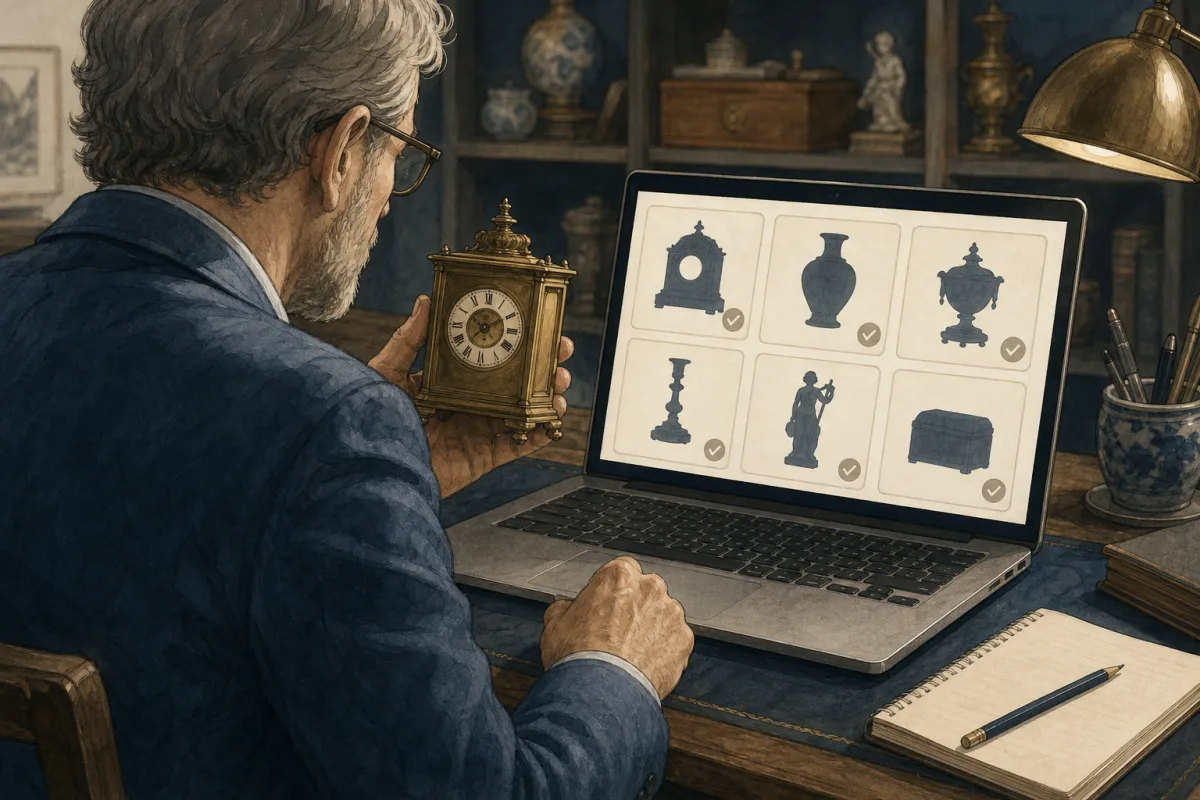
A photo-based tool like Idar’s antique identifier by picture can help you identify the item and understand an initial value range. This is useful before you spend time searching sold listings or money on an appraisal.
Scan the item, note the likely category, materials, maker clues, and age range, then use those details to search for comparable sales. Better identification leads to better antique pricing research.
For broader market context, auction houses such as Sotheby’s publish selling and estimate resources that show how formal valuation differs from casual online pricing.
Simple Antique Pricing Workflow
- Identify the object type and category.
- Photograph marks, labels, underside, and condition.
- Search for comparable sold items.
- Adjust for condition, size, maker, and completeness.
- Decide which value type you need.
- Use a range, not one exact number.
- Get a specialist appraisal if the item may be high value.
Related Antique Value Guides
FAQ
How do I find out what my antique is worth?
Identify the item first, then compare it with similar sold examples. Adjust for condition, maker, rarity, demand, and selling venue.
Are asking prices reliable?
Not by themselves. Asking prices show seller expectations. Sold prices are better evidence of market value.
Why do appraisals and dealer offers differ?
They measure different things. A dealer offer is often wholesale. An appraisal may use fair market value or retail replacement value.
Can an app estimate antique value by photo?
Yes, it can provide a useful first range, especially when photos show marks, materials, and condition. It should not replace a formal appraisal when documentation is required.