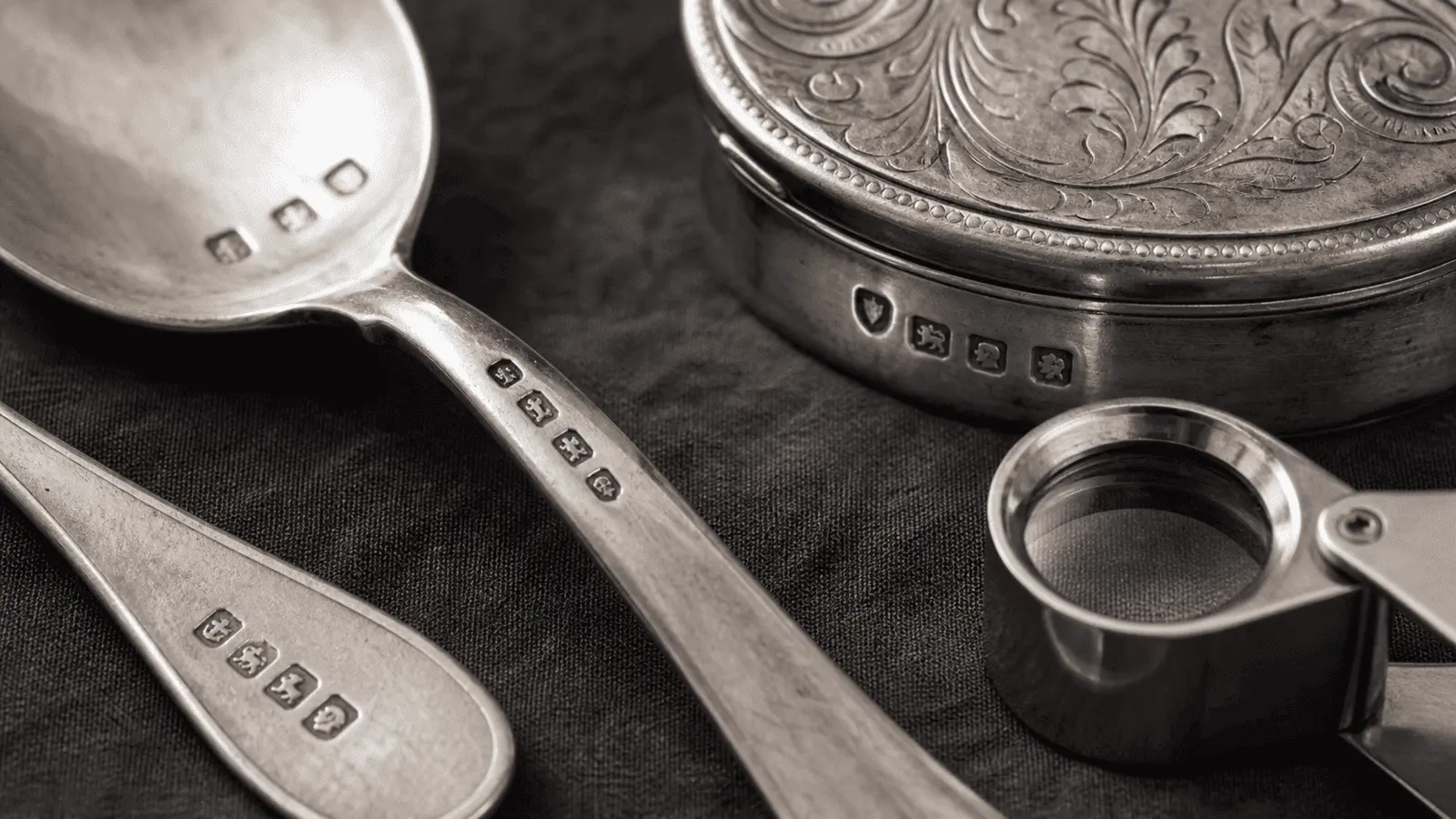
Silver hallmarks identification helps you answer one of the most important questions about an old spoon, tray, tea set, box, watch case, or piece of jewelry: is it sterling silver, silverplate, coin silver, or something else? The answer can change value dramatically.
A mark can point to metal standard, maker, assay office, date letter, country, retailer, pattern, or plating method. But silver hallmarks identification is not just reading letters. You also need to check weight, construction, wear, condition, and whether the marks make sense together.
If you are researching many different item types, start with how to identify antiques. If your item is clearly silver or silver-colored, this guide will help you collect better evidence before pricing or appraisal.
Table of Contents
What Silver Hallmarks Can Tell You
Silver hallmarks can tell you the metal standard, maker, assay location, date range, and sometimes country or retailer. In some systems, hallmarks are highly structured. In others, marks are looser and require more context.
For British silver, official hallmarking is managed through a legal framework, and the British Hallmarking Council is a useful official starting point for understanding the system. Other countries use different standards and symbols, so do not apply one country’s rules to every object.
Silver hallmarks identification is strongest when the mark, object type, wear, metal behavior, and construction agree. A single stamped word is helpful, but the whole item still needs inspection.
7 Best Silver Hallmark Clues
1. Standard Mark
The standard mark may indicate sterling, coin silver, 800 silver, 900 silver, 925, or another metal standard. In some countries, numeric marks are common. In others, symbols are used. Search the exact mark and country together when possible.
2. Maker Mark
The maker mark can be initials, a name, a symbol, or a registered punch. Do not assume initials identify the person without context. Many makers used similar initials, and some marks were used by companies rather than individual craftsmen.
3. Assay or City Mark
Assay marks can point to the office where the silver was tested. This is especially important in British and some European systems. The assay mark helps narrow the date and confirms that the other marks are being read in the right system.
4. Date Letter
Date letters can be useful, but they are easy to misread. The letter style, shield shape, and assay office matter. A plain “A” does not mean the same year in every city or every cycle. Silver hallmarks identification requires matching the whole mark group.
5. Plate Marks
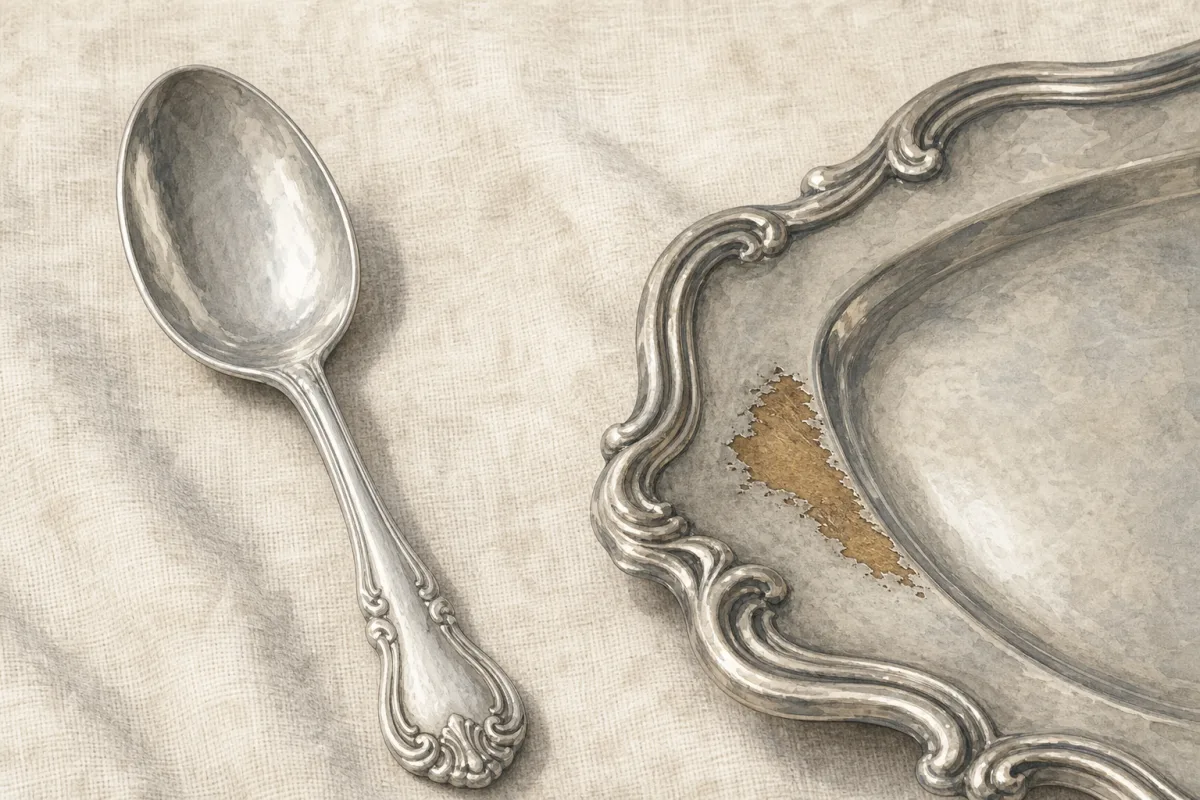
Marks such as EPNS, EPBM, A1, Quadruple Plate, Silver Soldered, or company names may point to silverplate rather than solid silver. Silverplate can be collectible, but its value is usually different from sterling. Heavy wear showing base metal is a key condition issue.
6. Pseudo Marks
Some manufacturers used decorative pseudo hallmarks to make silverplate or export goods look more traditional. These marks may resemble official symbols without following a legal hallmarking system. Compare carefully before assuming age or silver content.
7. Weight and Construction
Solid silver usually feels different from thin plated wares, but weight alone is not proof. Weighted candlesticks, filled handles, knife handles, and cement-filled bases can confuse value estimates. Note whether the item is hollow, weighted, repaired, or assembled from mixed parts.
Sterling vs Silverplate
Sterling silver is a silver alloy, commonly associated with 925 parts silver per 1000. Silverplate is a thin layer of silver over a base metal. Both can be antique, but they are not priced the same way. Sterling has metal value plus object value. Silverplate usually depends more on design, maker, rarity, and condition.
In silver hallmarks identification, look for words and symbols that clearly identify metal content. If a piece says “sterling” or “925,” that is a strong clue, but still check for repairs, mixed parts, and whether every component is marked. A tea set can include pieces from different makers or dates.
How to Photograph Hallmarks
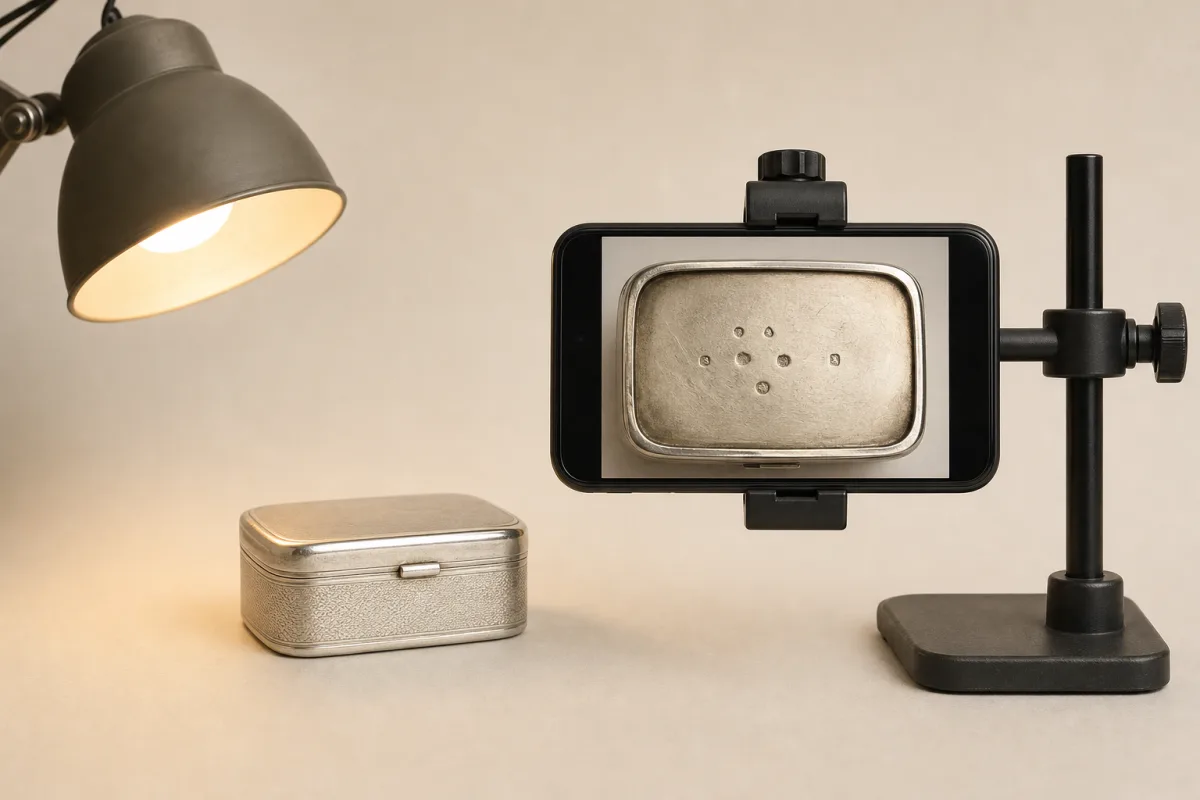
Use soft light and avoid harsh reflections. Place the item on a plain surface. Photograph the full object first, then the mark group. Take one close-up straight on and one from a slight angle. If the mark is worn, side lighting can reveal stamped edges.
Upload the full item and the mark close-up if you use an antique identifier by picture. The full item helps with form and period, while the hallmark close-up helps with metal and maker clues.
Pricing Silver Items
After silver hallmarks identification, use an antique price guide online to compare similar sold examples. Match metal standard, maker, weight, form, pattern, condition, and completeness. A single spoon, a matched service, a hollowware piece, and a damaged tray all have different markets.
For valuable or uncertain silver, consider a professional appraisal or a trusted precious-metal test. Do not polish aggressively before silver hallmarks identification or evaluation. Over-polishing can soften detail, remove patina, and reduce collector appeal.
FAQ
Can silver hallmarks identification prove something is sterling?
It can provide strong evidence, especially when the mark is complete and matches a known system. For high-value decisions, physical testing or expert review may still be needed.
Is silverplate worthless?
No. Some silverplate has decorative, historical, or collector value. It usually does not carry the same melt-value component as sterling, but rare designs or makers can still sell.
Should I clean silver before identifying it?
Light dusting is fine, but avoid aggressive polishing, chemicals, or abrasives before research. Cleaning can hide evidence or reduce value if done badly.