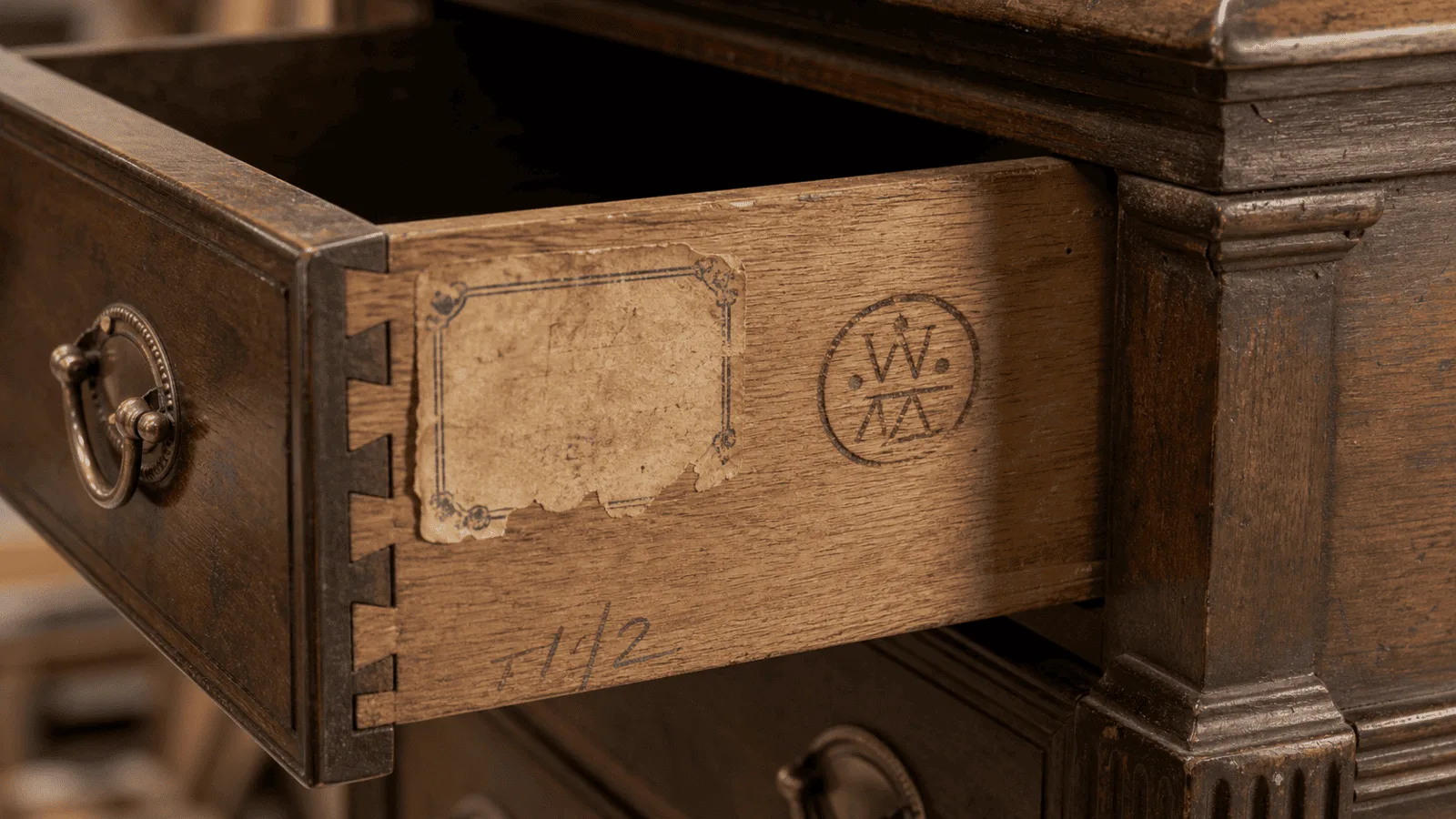
Furniture maker marks can turn a mystery chair, table, cabinet, dresser, desk, or chest into a researchable object. A paper label, burned stamp, metal tag, branded mark, pencil number, or retailer plaque may point to the maker, factory, retailer, pattern, date range, or country of origin.
Not every old piece has a mark, and not every mark proves high value. Still, furniture maker marks are worth checking before you sell, refinish, donate, or discard a piece. They can separate ordinary used furniture from a collectible design, regional workshop piece, or valuable antique.
If you are starting with an unknown object, read how to identify antiques first. Then inspect the furniture slowly, because the best marks are often hidden underneath, behind drawers, or inside the case.
Table of Contents
Where to Find Furniture Maker Marks
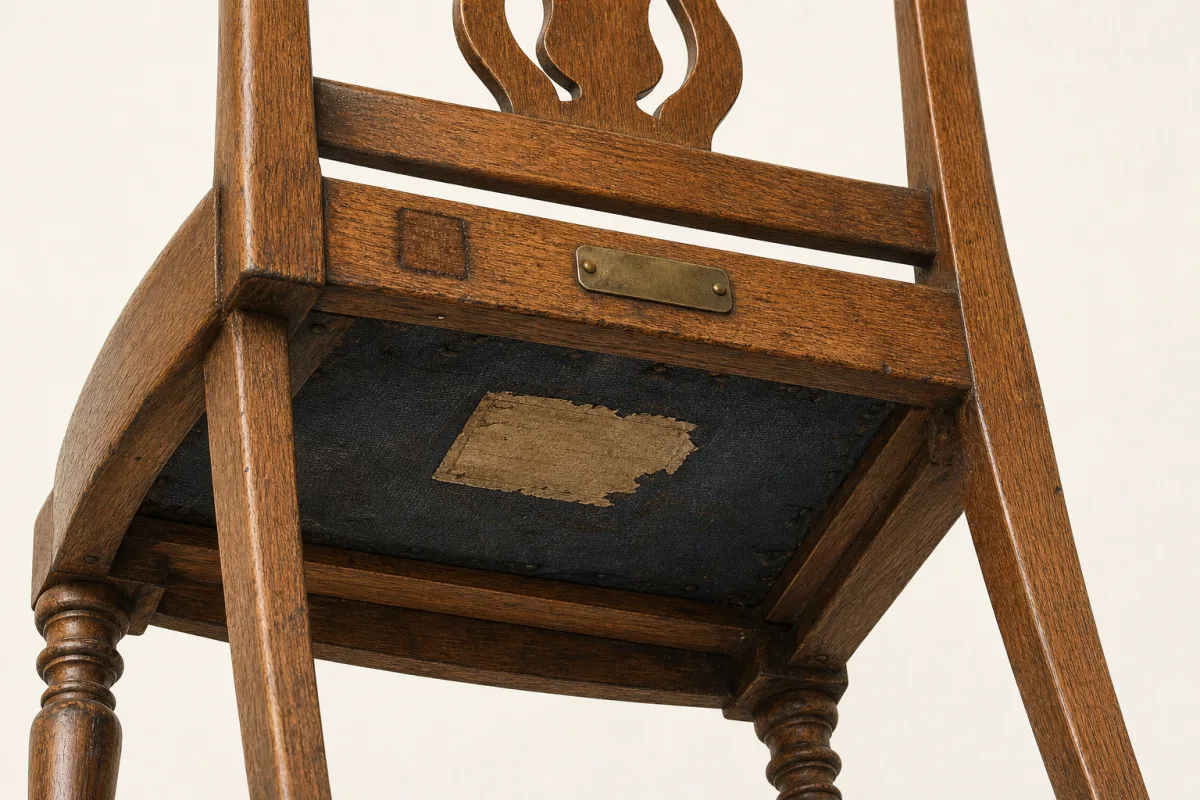
Furniture maker marks are often hidden because makers placed them where buyers would not see them every day. Check the underside of tables and chairs, backs of cabinets, inside drawers, drawer sides, underside of drawer bottoms, back rails, inside case corners, mirror backs, hardware plates, and paper labels on unfinished wood.
Look for stamped names, burned brands, printed labels, metal tags, paper decals, pencil inscriptions, chalk numbers, assembly marks, patent numbers, retailer plaques, and shipping labels. For design context, public collections such as the V&A collections can help you compare period forms and decorative styles.
Take your time. A label can be dusty, torn, darkened, or partly hidden behind a drawer runner. Photograph before cleaning so you do not accidentally damage fragile paper or chalk marks.
7 Best Antique Furniture Clues
1. Paper Label
Paper labels can include maker name, retailer name, address, model, patent information, or care instructions. Typography, address wording, and paper aging can help with dating. Do not peel a label off. Photograph it in place.
2. Stamped or Branded Mark
Stamped or burned furniture maker marks may appear under seats, inside drawers, on backboards, or beneath tables. A clear stamp can be very useful, but a partial stamp should be read cautiously. Similar surnames and company initials can create false matches.
3. Metal Tag or Plaque
Metal tags are common on some 20th-century furniture, office furniture, and manufacturer lines. They may show a serial number, model number, or company name. Photograph the tag and the whole object together so the mark has context.
4. Drawer Joinery
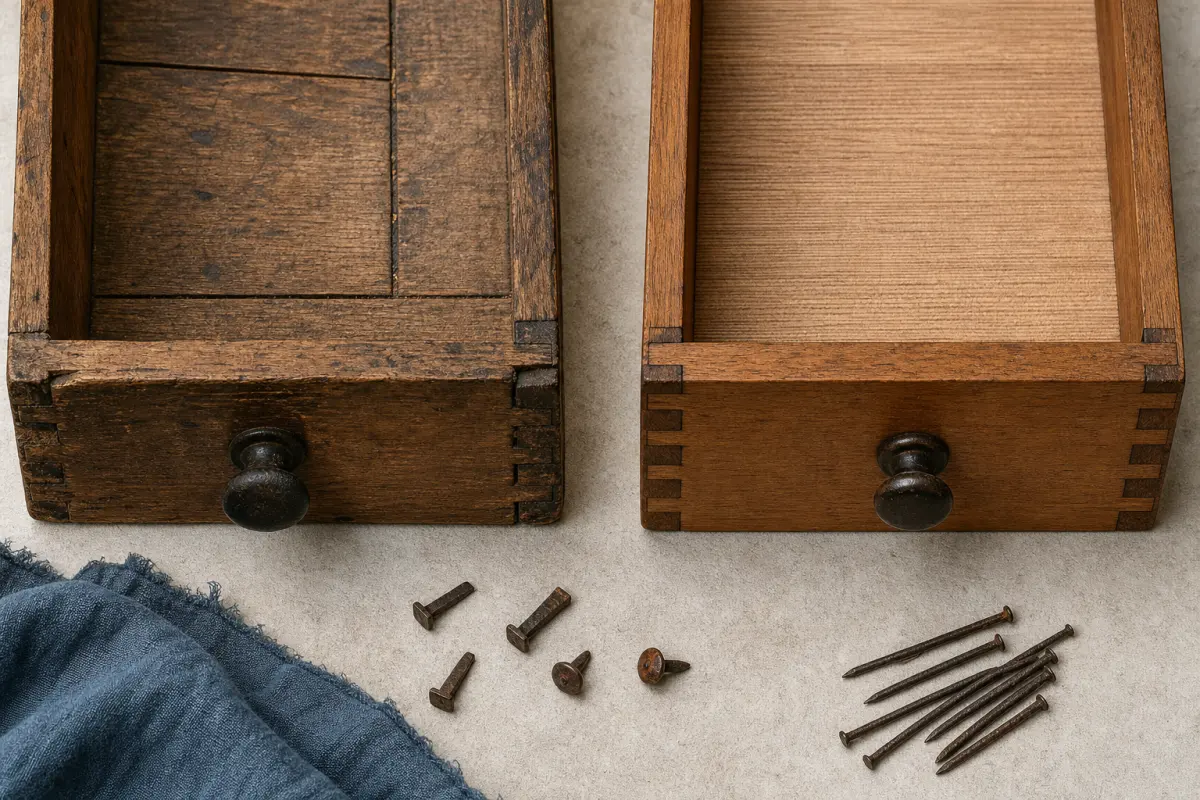
Joinery can help confirm whether the mark fits the construction. Hand-cut dovetails, machine-cut dovetails, nailed drawer bottoms, plywood, staples, screws, and modern glues all suggest different periods. Construction does not identify a maker alone, but it can support or challenge the mark.
5. Hardware and Screws
Original hardware can support age and quality. Replaced pulls, modern screws, missing escutcheons, and new hinges can affect value. If furniture maker marks suggest an older period but the hardware is modern, inspect for repairs or later alterations.
6. Style and Proportion
Furniture style matters: Victorian, Arts and Crafts, Art Deco, Danish modern, colonial revival, mid-century modern, and many other styles have recognizable proportions. A maker mark should fit the style and period of the piece.
7. Model, Pattern, or Serial Number
Numbers may identify a model, factory batch, pattern, finish, or order. They are not always dates. Search the number with the maker name and furniture type. For example, a drawer stamp may only be an assembly mark that helped workers fit parts together.
Marks vs Style
Furniture maker marks are strongest when they agree with style, materials, construction, and condition. A famous name on a piece that looks wrong should be investigated carefully. Labels can be moved, furniture can be rebuilt, and later reproductions can copy older forms.
Style alone can also mislead. A colonial revival piece may look much older than it is. A mid-century style chair may be a recent reproduction. A Victorian-looking cabinet may have been heavily restored. Use the mark as one clue in a larger identification process.
Photographing Furniture for Identification
Photograph the whole object from the front, side, back, and underside. Then photograph drawers removed, joinery, hardware, labels, stamps, damage, repairs, and any unusual construction details. Include scale and avoid dark cluttered backgrounds.
If the item is too large to move, take close-ups in place. Use a flashlight at an angle for stamped marks. If you use an antique identifier by picture, upload both the full furniture piece and the hidden mark. The full form helps identify style; the mark helps identify maker.
Value and Appraisal
After identification, compare sold examples with an antique price guide online. Match maker, style, period, wood, size, condition, originality, and local demand. Large furniture can be valuable but harder to sell because transport and space affect buyers.
Do not refinish before researching. Original finish can matter. A piece with a tired but original surface may interest collectors more than a shiny stripped piece. If furniture maker marks suggest a known designer, important workshop, or rare form, ask an appraiser before making changes.
FAQ
Where are furniture maker marks usually located?
Check drawer interiors, drawer backs, undersides, backboards, chair rails, table aprons, paper labels, metal tags, and unfinished wood surfaces.
Does a maker mark guarantee antique value?
No. Value depends on maker, authenticity, age, condition, originality, style, demand, and sale venue. A mark is a clue, not a final price.
What if my furniture has no mark?
Unmarked furniture can still be identified by style, construction, wood, hardware, wear, and proportions. Many older or regional pieces were never labeled.