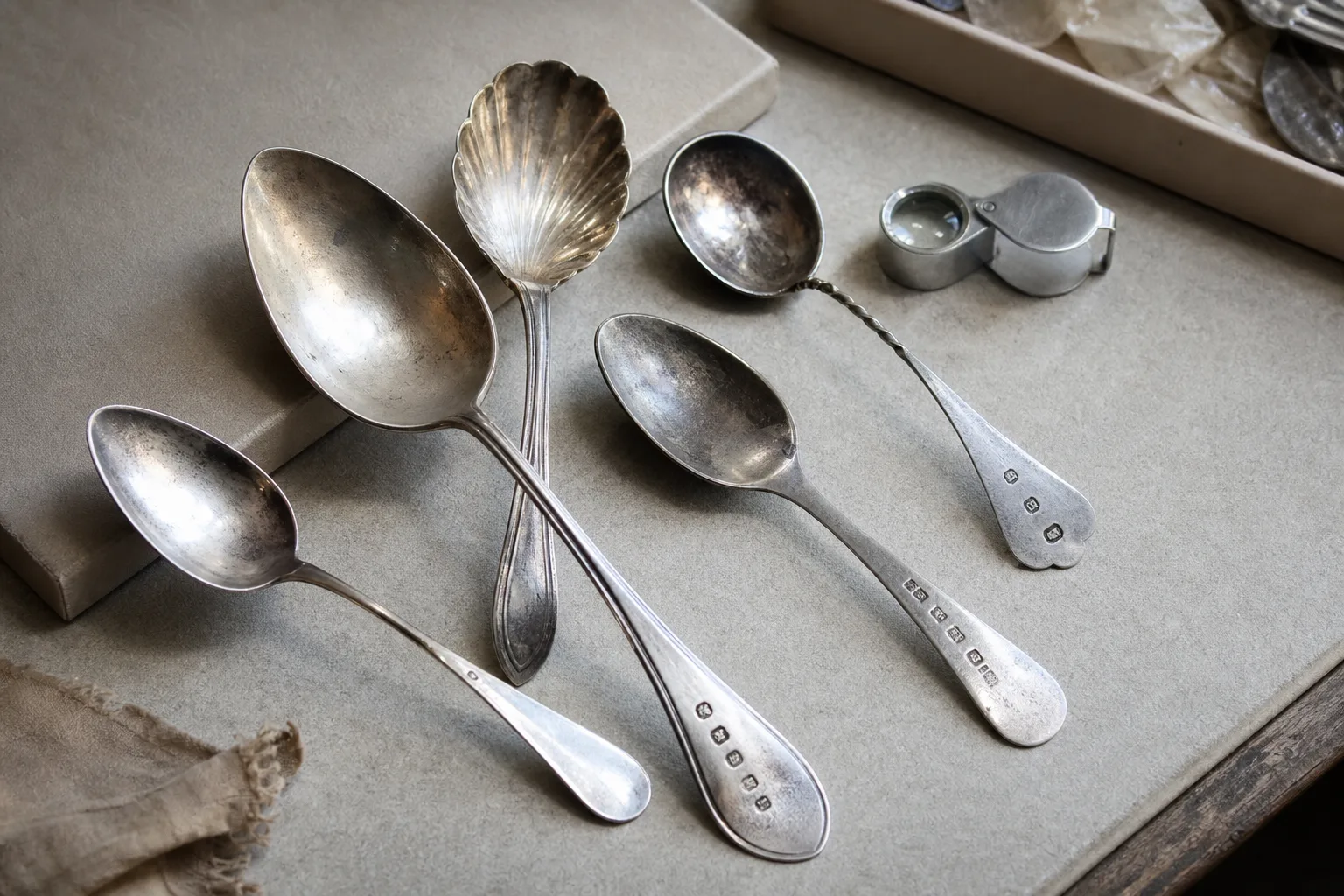
Start by recording every mark, then identify the material, shape, and use before looking for a value. An old spoon is not automatically antique, sterling, rare, or valuable: a maker’s mark, a decorative pattern, and a dark surface can each be useful clues, but none proves all of those things alone.
Use this sequence for an antique old spoons identifier: photograph the spoon, transcribe marks exactly, decide whether it is solid silver, plated metal, base metal, or another material, compare its form with known spoon types, and only then research comparable documented examples. For a broader approach to reading marks on objects, see Pottery Hallmarks: Identify Marks with Care.
Inspect the spoon before you search
-
Photograph both sides in diffuse daylight. Include the full spoon, the front and back of the handle, the bowl, every stamp, any monogram, and close views of worn or repaired areas. Place a plain ruler beside it for scale.
-
Write down what you see rather than what you think it says. Note letters, symbols, shields, initials, place names, numbers, and punctuation. A partial or misread mark can send research in the wrong direction.
-
Measure the overall length and describe the bowl: round, oval, pointed, shell-shaped, deep, shallow, pierced, or unusually small. Describe the handle separately, including its outline, decoration, terminal, and any engraving.
-
Look for construction evidence. Check whether the bowl and handle meet smoothly, whether edges are crisp or heavily polished, and whether there are seams, patches, cracks, solder, bent areas, or later engraving.
-
Keep each spoon from a set together. A mixed group may contain replacements, later additions, or spoons with different materials and makers.
Visible irregularity, tool marks, wear, repairs, weight, and finish can help build an age assessment, but they need corroboration from marks, construction, or documented comparisons. The identification guidance in the search results likewise treats maker, pattern, monogram, bowl wear, handle form, repairs, and weight as clues to assess together rather than a single dating test. Source (accessed 2026-09-29)
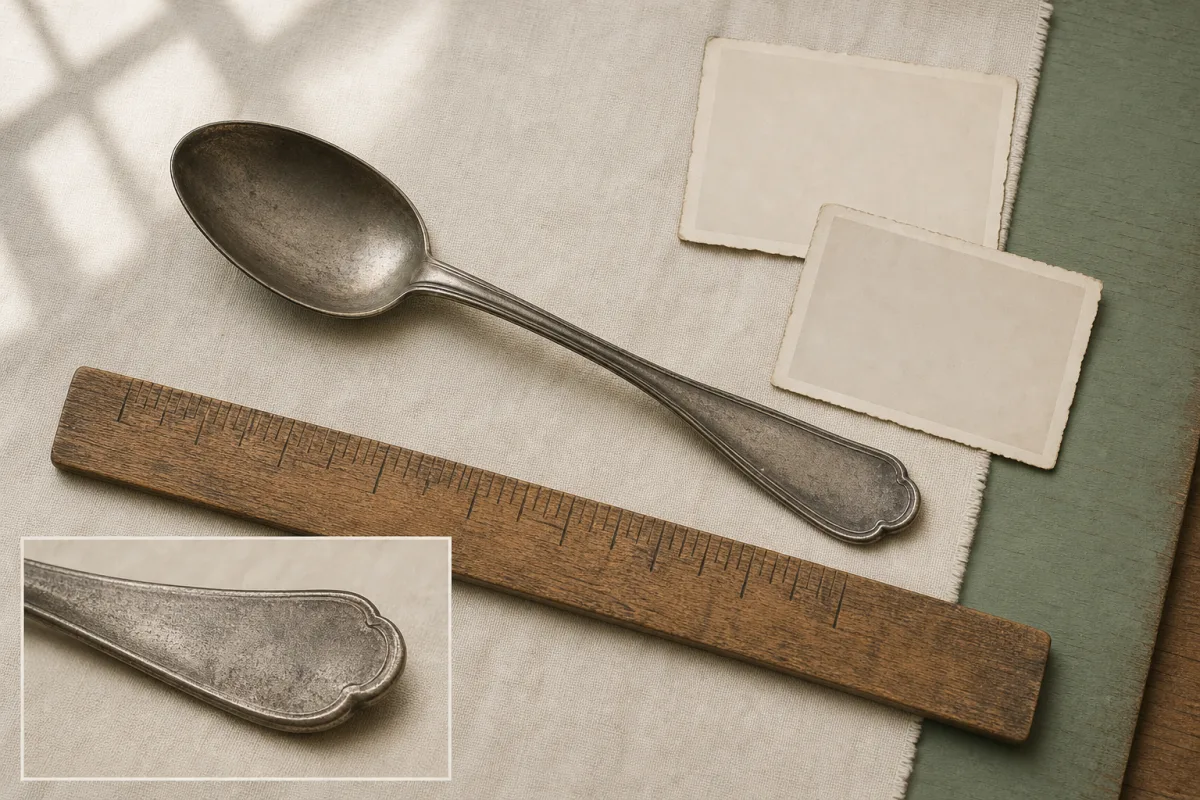
Identify the material without guessing from color
Start with the stamp, not the shine. Tarnish can make different metals look similar, and bright polishing can conceal useful surface evidence. A spoon can be silver-colored without being solid silver.
| What you find | What it may indicate | Best next step |
|---|---|---|
| A group of small punched symbols | A hallmarking system may identify metal standard, maker, assay location, or date. | Photograph each punch straight on and compare the whole sequence, not one symbol in isolation. |
| A word mark or initials only | It may be a maker, retailer, manufacturer, or plate mark rather than a complete hallmark. | Search the lettering exactly, including spaces and punctuation, with the spoon’s country or style clues. |
| Worn pale metal showing a different-colored metal beneath | It may be plated, though damage alone does not identify the original finish. | Document the location of the wear and avoid abrasive polishing. |
| Wood, horn, mother-of-pearl, or another non-metal handle | The handle material is an identification clue, but the bowl, ferrule, and fittings may have different materials. | Photograph joints and fittings separately. |
In traditional British silver hallmarking, the standard or purity mark, assay-office symbol, date letter, and maker’s mark are described as the standard marks; a duty mark was also used in some periods. This is a framework for interpreting a relevant British hallmark, not a rule that every old spoon will carry every element. Source (accessed 2026-09-29)
Do not scrape a mark, file an edge, or use aggressive chemical tests on a spoon you may want to preserve. If the material itself affects a sale, insurance, or estate decision, ask a qualified silver specialist to examine it.
Read marks as a sequence
Turn the spoon until the marks are upright and copy them left to right. A row of punches can contain different kinds of information. A maker’s mark may point to who submitted or made an item; a purity mark concerns metal standard; an assay symbol can point to a hallmarking office; and a date letter, where applicable, needs the correct office and date-letter table. An inscription is different again: it may record an owner, presentation, place, event, or retailer.
For a likely British silver spoon, compare the entire group of marks with a specialist hallmark reference rather than treating an isolated letter as a date. Hallmark references distinguish the standard or purity mark, assay-office symbol, date letter, and maker’s mark, which is why a partial photograph often cannot support a firm attribution. Source (accessed 2026-09-29)
A monogram should be treated as a lead, not proof of ownership or age. Look for evidence that the engraving is consistent with the rest of the spoon’s wear and finish, but leave final conclusions to documented provenance or an in-person specialist examination.
Use form and decoration to narrow the type
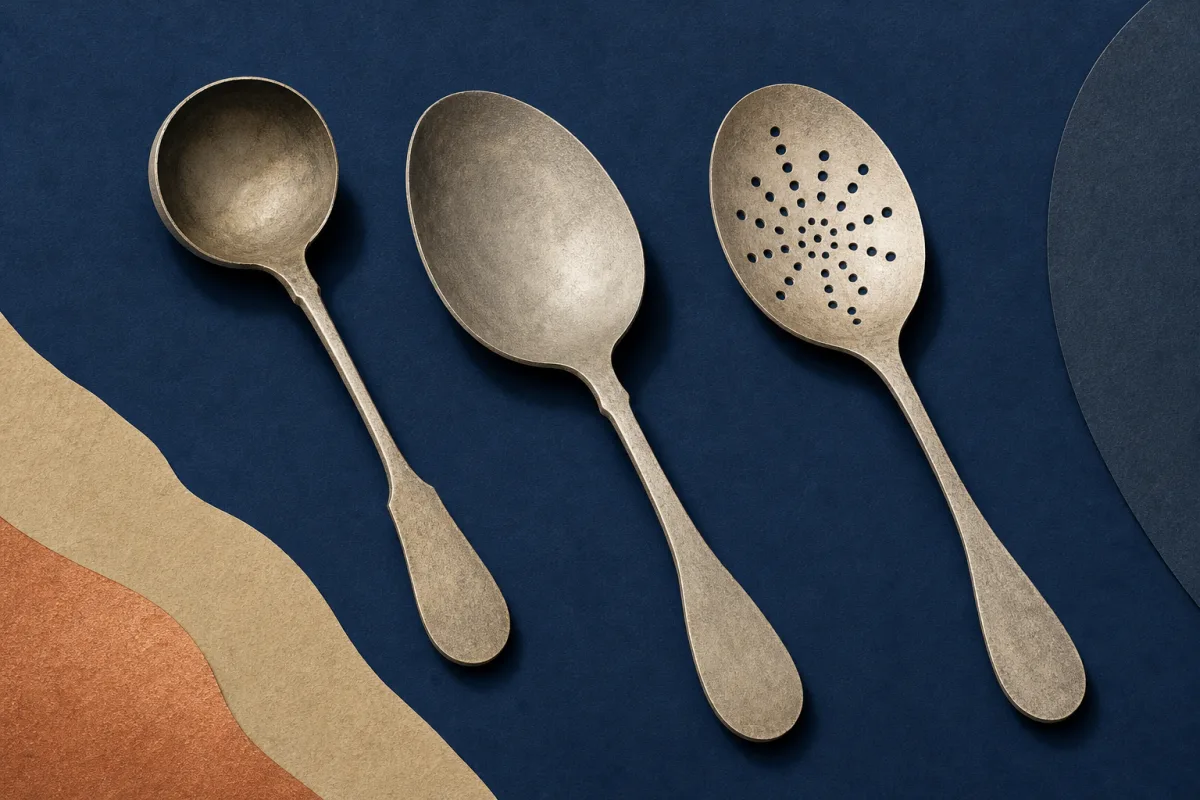
The bowl often tells you more about original use than the handle does. A small, deep bowl may suggest a salt spoon; a broad bowl may indicate a serving role; a pierced bowl may have been made for draining; and a themed handle may suggest a souvenir piece. These are starting categories, not final identifications.
Common collecting categories include table spoons, dessert or tea spoons, serving spoons, ladles, salt spoons, souvenir spoons, and specialty forms made for a particular food or task. Salt spoons were produced in distinctive ladle and shovel forms, with ladles distinguished from shovels by their bowl form. Source (accessed 2026-09-29)
For pattern research, describe details precisely: shell, fiddle, bead, floral scroll, geometric border, bright-cut engraving, twisted stem, figural terminal, or a view or place name in the bowl. Then combine those terms with the exact maker or retailer mark. Similar-looking handle designs were used by more than one maker, so visual resemblance is not enough by itself.
Research value after identification
Value is a separate question from age. A spoon’s likely material, maker, pattern, type, condition, completeness within a set, provenance, and current buyer demand can each affect the result. Precious-metal content may matter, but it does not make every marked spoon collectible; similarly, an unusual form can matter more than material in some collector markets.
Research completed, well-described sales through reputable auction archives or specialist dealers after you have a defensible identification. Compare like with like: the same maker or pattern where possible, the same material, a similar spoon type, comparable condition, and whether a matching set was included. Asking prices are not evidence of a completed market value.
Souvenir spoons deserve the same caution. A named town, building, event, or scenic bowl can help identify the subject and likely market, but it does not by itself establish rarity or worth. Check the mark, whether the decoration is intact, and whether the spoon is part of a documented series.
For the factors commonly considered in a silver-focused assessment, see Antique Silver Appraisal: Clues That Reveal Value. For a wider overview of real-world valuation evidence, see Antiques and Collectibles Value Guide for Real-World Appraisals.
What to send for a preliminary identification
-
Clear full-length front and back photographs.
-
Close, sharply focused images of every mark and inscription.
-
Length, approximate weight if available, and the number of matching pieces.
-
A note of where it came from, while distinguishing family story from documented provenance.
-
Photos of damage, plating wear, dents, repairs, splits, and altered engraving.
-
Your goal: identification, sale research, insurance, estate work, or material verification.
When a specialist appraisal is appropriate
Seek a specialist when the marks suggest solid silver, the spoon may be an early or unusual form, the object is part of an important set, the material needs verification, or the conclusion will be used for insurance, probate, donation, or sale. Online identification can help organize evidence, but photographs may not reveal weight, repairs, construction, or the details needed to authenticate a mark.
If you are comparing online options, consult Best Online Antique Appraisal Sites Compared. Keep your original photographs and notes with the spoon: a careful record makes a later specialist opinion more useful.
Quick distinction: identification versus appraisal
Identification asks what the spoon is: its probable material, maker, type, pattern, and period. Appraisal asks what a defined market may pay for that particular example, in its current condition and with its available provenance. A hallmark can be strong identification evidence, but it is not a value certificate.