Antique Value Guide
Antique Basket Identification Guide for Clearer Reads
antique basket identification: Learn how to identify antique baskets by material, weave, shape, wear, and maker clues with a practical checklist and value cues.
Antique basket identification starts with the basket’s material, weave, shape, and wear. Those four clues usually tell you whether you are looking at a handwoven utilitarian basket, a regional Native basket, or a later decorative piece. The clearest identification comes from comparing construction details with the basket’s age, use, and any labels or repairs.
If you want a faster first pass, inspect the base, rim, handle joins, and fiber type before you focus on style. Those areas usually hold the best evidence.
Start with the basket itself
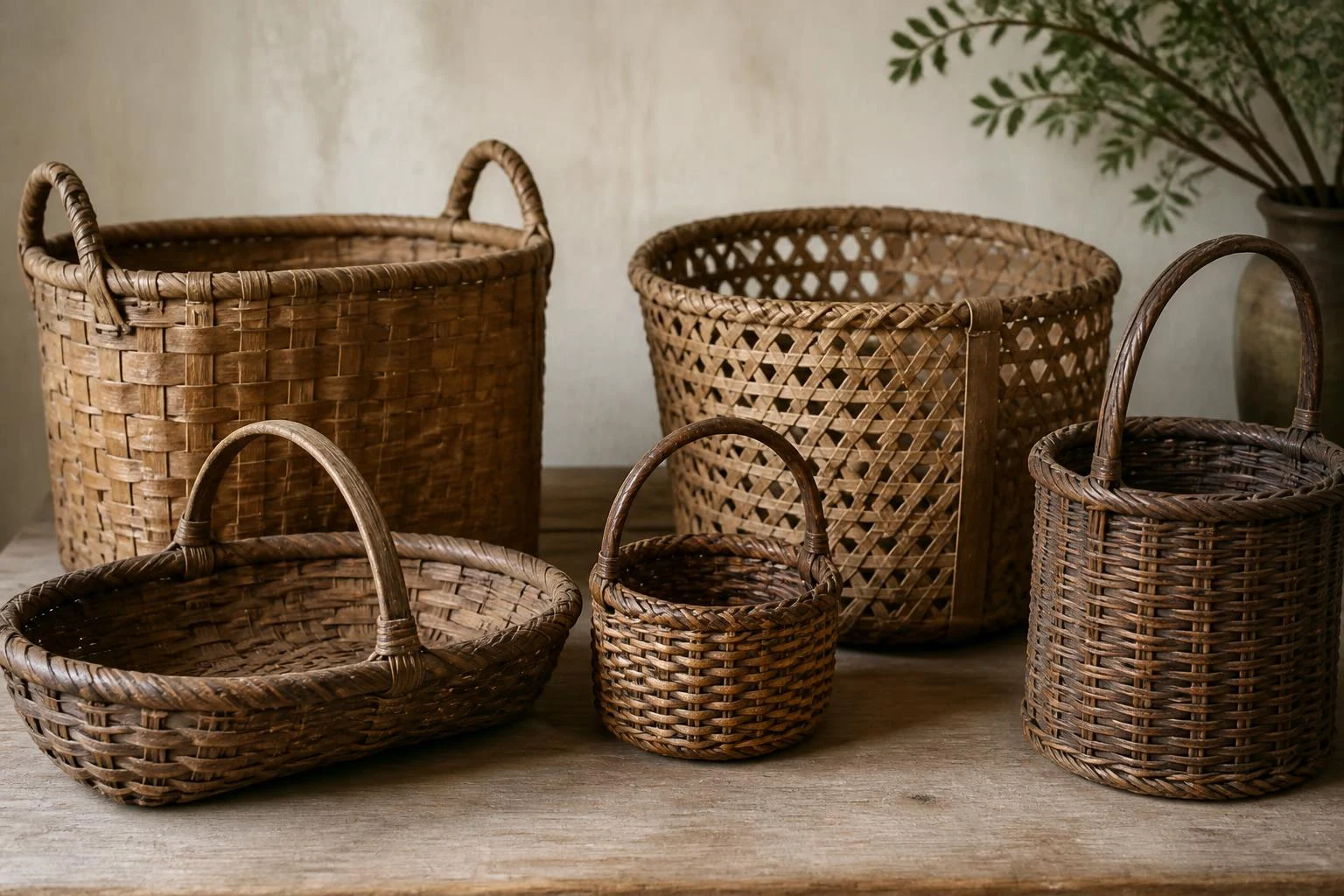
First, decide whether the basket was made for carrying, storing, harvesting, serving, or display. That fact matters because original use affects shape and wear. A market basket often has a reinforced handle and a sturdier base. A storage basket may be wider and more open. A ceremonial or regional basket may have tighter weaving, more symmetry, or a design language tied to a specific tradition.
Second, look at the material. Reed, willow, cane, splint, sweetgrass, pine needle, yucca, and spruce root are all common basket materials. The reading is simple: plant fibers generally point to handwoven traditional work, while plastic-coated reed or very uniform synthetic strands usually indicate a later basket.
7 clues that help identify an antique basket
1. Check the weave structure
The weave is the strongest starting point. Plain weave, twill, coiling, plaiting, and twining are the main construction methods you will see. A plain description is not enough by itself. A tight, even coil can suggest a skilled maker and a region where coil work is traditional. A looser, irregular weave can suggest utilitarian use, a home-made piece, or later repairs.
Look for whether the weave changes at corners, at the rim, or around the handle. Those transitions often reveal how the basket was built.
2. Read the rim, edge, and handle
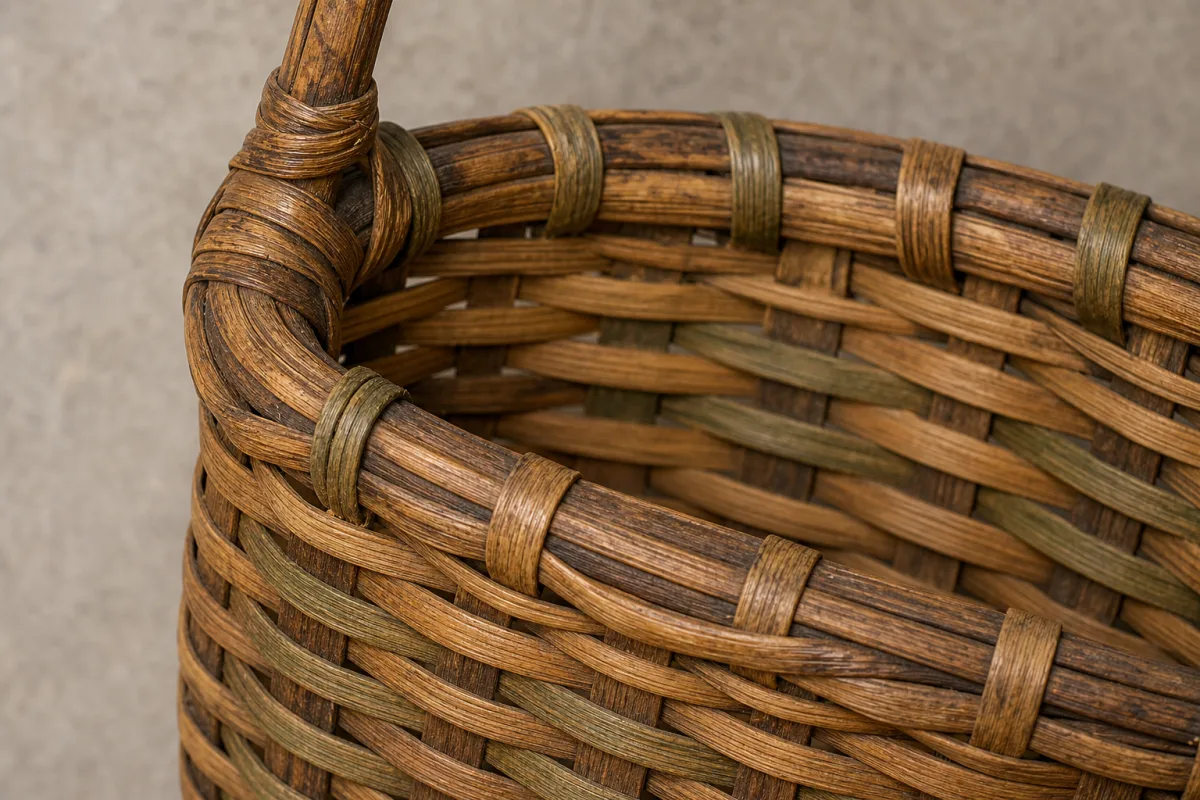
The rim is the upper edge. The handle is the carrying arch, if there is one. A wrapped or bound rim can be a sign of reinforcement. A raw, unfinished edge may mean the basket was used lightly or never intended for heavy carrying. A handle that is integrated into the weave usually points to thoughtful original construction. A handle that was added later can indicate repair or repurposing.
Watch for break lines, new binding, fresh stitches, or glue. Those are restoration clues, not proof of age.
3. Inspect the base for wear and form
The base tells you how the basket was used. A flat, worn bottom suggests sitting on floors, shelves, or counters. A rounded base often belongs to a basket that was carried or hung. A reinforced base can signal heavy use, especially in gathering or storage baskets.
Wear on the base should look consistent with the rest of the basket. Heavy bottom wear with a nearly untouched rim may mean the basket is older and was handled carefully, or it may mean the bottom was replaced. Treat that as a clue, not a conclusion.
4. Identify the fiber and color story
Material changes over time. Natural fibers darken, dry, and become brittle with age. Dyes can fade unevenly. Smoke staining, sun exposure, and repeated handling can create surface color shifts. The reading is that honest age usually produces uneven but coherent wear. Artificially even color can signal a newer decorative piece or a restored surface.
If the basket is made with sweetgrass, pine needles, or other aromatic plant material, smell can help confirm the material. Do not rely on smell alone, because storage conditions change scent over time.
5. Look for maker marks, tags, and labels
Some baskets carry paper labels, ink stamps, stitched tags, or exhibition labels. That is hard evidence when the label is original and still attached in a believable way. A loose tag glued to a worn basket is weaker evidence because it may have been added later.
Do not assume every handwritten mark is a maker’s mark. Some are shop inventory notes, later collector numbers, or restoration marks. If a mark is unfamiliar, photograph it and compare it with documented examples from museum collections, auction catalogs, or a qualified appraiser.
6. Compare the form to a known regional tradition
Certain basket traditions are often discussed by collectors because their construction patterns are recognizable. Navajo antique baskets are frequently coiled and may show symmetry, strong geometry, and carefully finished rims. Hopi antique baskets can also show coiled work and designs tied to local use and presentation. Apache baskets, often associated with Indé traditions, may show distinctive coiling, utility shapes, and decorated surfaces depending on origin and period.
The reading here should stay cautious. A regional style can suggest origin, but one feature is never enough. Similar techniques appear across communities, and later tourist pieces can copy older forms.
7. Separate age from condition
Age and condition are not the same. An older basket can be fragile, darkened, and repaired. A newer basket can look clean and glossy. When you identify an antique basket, ask two separate questions: how old does it appear, and how complete is it today?
This distinction matters because a well-preserved basket can be more desirable than a damaged one, but only if the preservation is original and not heavy restoration.
What collectors usually notice first
Collectors often begin with shape, then move to origin, then condition. That order works because the shape is visible at a glance, the origin comes from construction and motif clues, and condition affects both authenticity and value.
- Shape: round, oval, square, tray, cradle, gathering basket, or lidded basket.
- Use: carrying, storage, serving, harvesting, gifting, or display.
- Construction: coil, twine, plait, wrapped rim, stitched joins, or split-reed work.
- Surface: natural tone, dyed design, smoke color, faded pigment, or repair patches.
- Provenance: family history, region, old labels, or documentation.
If you have family information, write it down before cleaning or handling the basket further. Provenance can matter as much as the object itself.
Value clues you can check before asking for an appraisal
Value in antique baskets usually depends on age, condition, origin, rarity, and demand. That is the practical reading. A basket with documented origin and intact original surface will generally be easier to place than an unmarked basket with heavy repairs.
| Check | What to look for | What it may mean |
|---|---|---|
| Original surface | Even patina, old dirt in creases, faded natural color | Possible age and honest wear |
| Repairs | New stitching, glued edges, replaced handles | Condition issue; may reduce value |
| Regional traits | Recognizable form or design language | Possible origin clue, not proof |
| Rarity | Unusual size, special use, uncommon material | Can increase interest if authentic |
| Documentation | Old labels, purchase notes, family records | Stronger basis for identification |
If you want a broader framework for appraisals, the page on Antiques and Collectibles Value Guide for Real-World Appraisals explains how appraisers compare condition, category, and market demand.
Common mistakes that lead to the wrong ID
- Cleaning the basket too aggressively before photographing it.
- Assuming all handwoven baskets are antique.
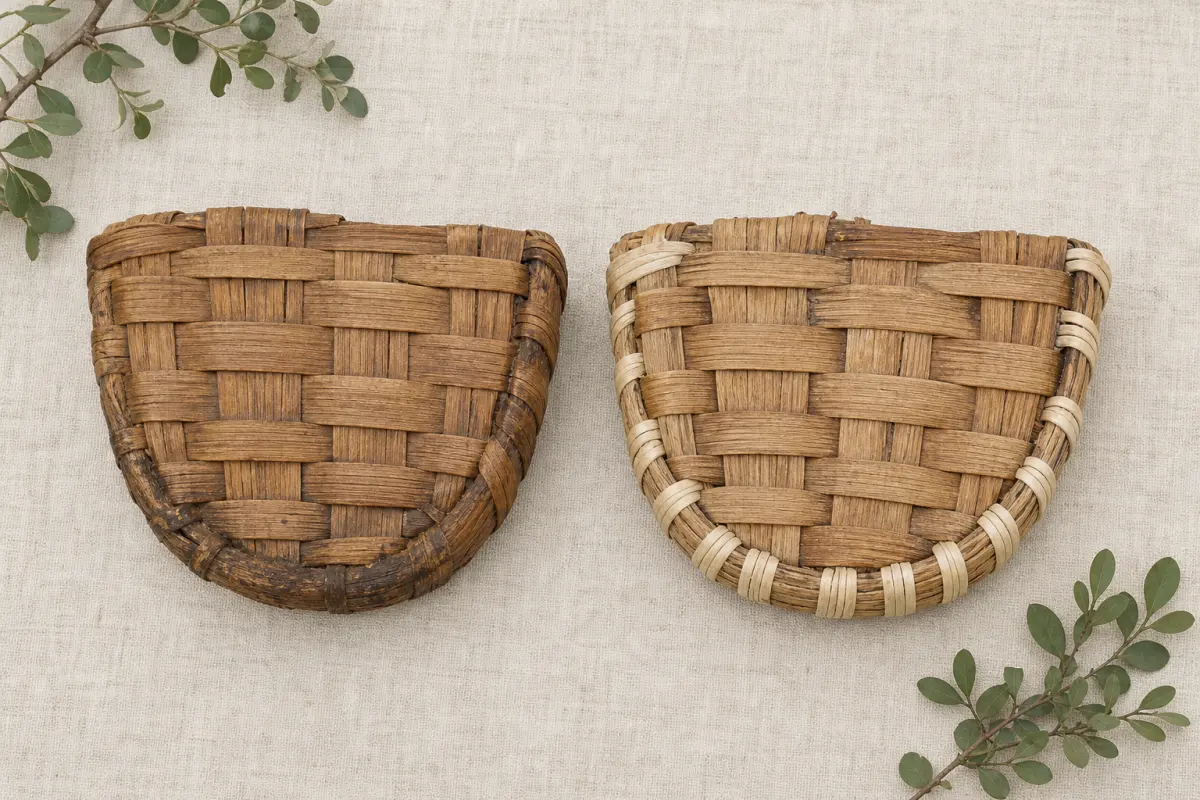
- Confusing decorative replicas with older utility baskets.
- Treating one regional feature as a full identification.
- Ignoring repairs that change the original form.
A simple rule helps: preserve first, identify second, and only then decide whether the basket needs professional help.
Quick identification checklist
- Photograph the basket from the top, bottom, sides, and close-ups of the rim and base.
- Note the material and whether it feels natural or synthetic.
- Describe the weave method in plain language.
- Check for labels, marks, or old ownership notes.
- Compare the shape with known regional or functional basket types.
- Record repairs, missing strands, or replaced parts.
- Keep any provenance documents with the basket.
When to get a professional opinion
Seek a qualified appraiser or specialist if the basket may be tied to a named maker, a documented regional tradition, or a higher-value market. That is especially important for baskets that may be Native-made, museum-worthy, or heavily altered. A professional can separate original construction from later repair more reliably than a quick online guess.
If you prefer a faster first step, you can use the Antique Value Identifier by IDAR on the App Store to organize photos and compare visible clues before you request a formal opinion. Use it as a starting point, not as the final word.
If you are comparing appraisal options, this guide to 7 Best Online Antique Appraisal Sites Compared may help you decide what kind of help fits your basket.
Practical takeaway
Clear antique basket identification comes from layering evidence. Start with material and weave, then check rim, base, wear, and labels, and only after that consider regional style or value. If the basket has a family history or a distinctive tradition, keep that record with it. The more specific the evidence, the more reliable your identification will be.
If you want help organizing what you see, upload clear photos and notes into a basket ID workflow, then compare the results with a specialist before making a selling or insurance decision.
FAQ
How can I tell if a basket is actually antique?
Look for age-consistent wear, natural material changes, old repairs, and construction methods that fit an older handwoven piece. A basket can be old without being rare, and it can be well made without being antique.
Are all old woven baskets valuable?
No. Value depends on age, condition, origin, rarity, and demand. A common storage basket with heavy damage may have little market value even if it is genuinely old.
Can I identify a Native basket from photos alone?
Sometimes you can form a careful preliminary opinion from photos, but a confident identification usually needs close views of the weave, base, rim, and any documentation. If the basket may be culturally significant, a specialist familiar with the relevant tradition should review it.
Should I clean an antique basket before showing it to an appraiser?
Not usually. Light dust removal with a soft brush may be reasonable, but washing, soaking, or polishing can damage fibers and remove useful evidence. Save cleaning decisions for after identification.
Soft next step
If you are trying to identify a basket from a family attic, a shop find, or an inheritance piece, start with photos and notes, then compare the evidence piece by piece. A careful first read often prevents a costly mistake later.
Try the Idar app
Use the app when you want a faster, more organized starting point before comparing details manually.