Antique Value Guide
German Porcelain Doll Marks: A Clear Identification Guide
german porcelain doll marks identification: Learn how to read German porcelain doll marks, spot common body clues, and judge whether an old doll may have value.
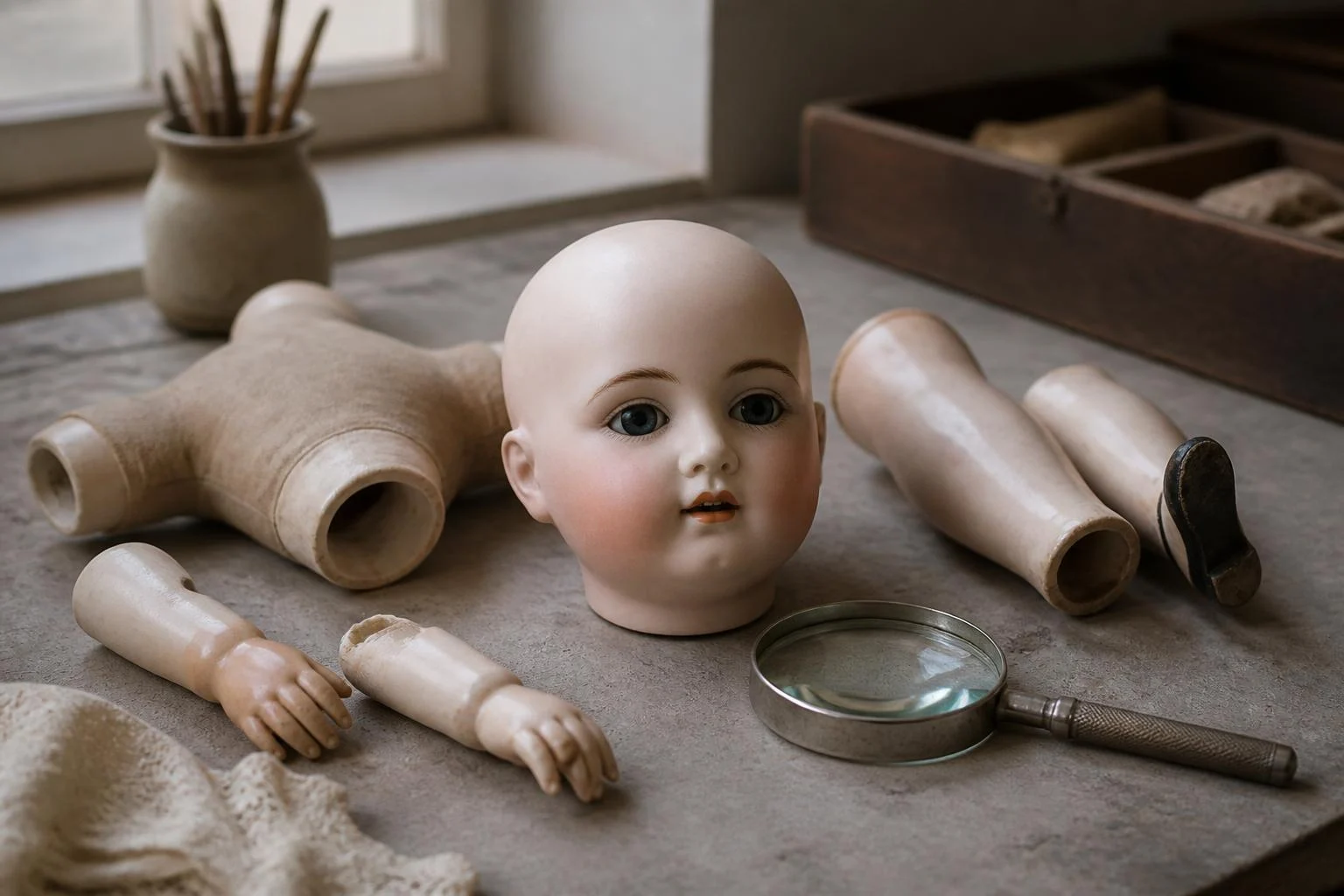
German porcelain doll marks identification starts with reading the mark exactly as it appears, then checking the doll’s head, body, and materials together. A mark alone does not prove age or value. It is a clue, and the full doll tells the rest of the story.
If you can photograph the mark clearly and compare it with the doll’s construction, you can usually narrow the maker, era, and whether the piece is likely a collectible or a later reproduction. That is the fastest way to avoid mistaking a common doll for a rare one.
What German porcelain doll marks can tell you
A doll mark is any stamp, incised number, impressed symbol, paper label, or painted detail used by the maker or seller. On German dolls, the most useful marks are often found on the back of the bisque head, the shoulder plate, the torso, or a cloth body tag.
The reading is simple: a clear mark can help identify the manufacturer, and the construction around it can help separate an early doll from a later replacement or reproduction. When a mark is vague, partial, or copied, the body details matter even more.
- Maker name or initials: often the easiest starting point.
- Model number: can point to a mold or head style.
- Size number: may help match the doll to catalog references.
- Country wording: can suggest export-era production.
- Paint or pencil marks: sometimes appear under glaze or near the shoulder plate.
How to identify your doll markings
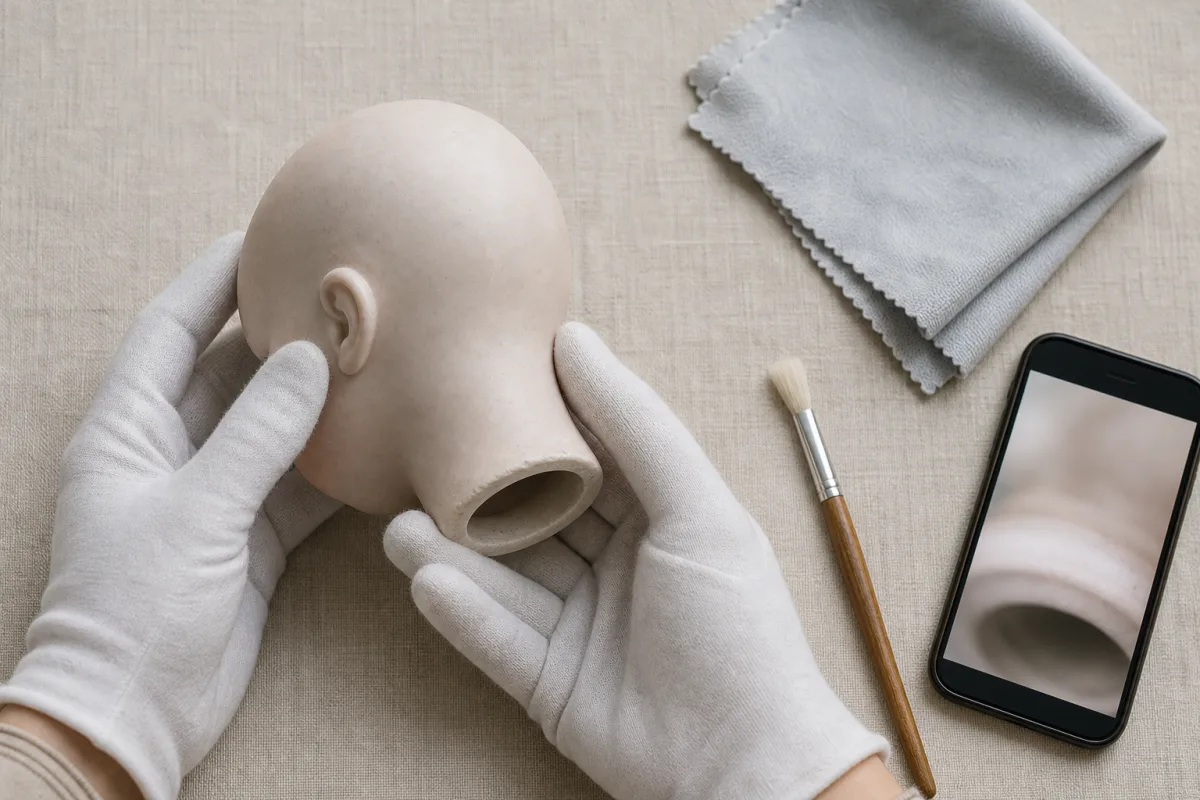
1. Clean the surface gently and photograph the mark
Use a soft dry brush or a microfiber cloth. Do not scrub glazed bisque or paint. The fact is that dirt, age grime, and old glue can hide the mark. The reading is that a better photo often reveals whether you are looking at a factory mark, a repair note, or a later owner’s writing.
Take one photo in daylight and one with side lighting. Side lighting often makes impressed letters and numbers easier to read.
2. Note exactly where the mark sits
Location matters. A mark on the back of a bisque head may be original factory identification. A mark on the torso cloth or shoe may be a retailer label or repair mark. The fact is that different doll parts were marked differently. The reading is that location can tell you whether the mark belongs to the original doll or to a later addition.
3. Separate the mark into letters, numbers, and symbols
Write down every character you can see without guessing. If one character is unclear, note the uncertainty instead of filling it in. The fact is that a single wrong letter can send identification in the wrong direction. The reading is that careful transcription is more reliable than trying to force a match too early.
4. Compare the mark with the doll’s material
German porcelain and bisque dolls are often made with a hard, unglazed bisque head and a composite, papier-mâché, wood, cloth, or kid body. The fact is that many older dolls are not all porcelain. The reading is that a doll with a bisque head and cloth body can still be an authentic German doll even if the whole figure is not porcelain.
5. Check whether the face matches the mark era
Facial painting, glass eyes, hairstyle, and shoulder plate shape should make sense together. The fact is that some marks were used across more than one decade. The reading is that a mark by itself cannot prove the date if the styling looks later or heavily restored.
Common clues that help with German doll identification
When you are working on german porcelain doll marks identification, the strongest result comes from combining the mark with visual clues. Use this checklist before deciding what you have.
| Clue | What to look for | What it may suggest |
|---|---|---|
| Head material | Unglazed bisque, glossy porcelain, or painted composition | Bisque heads are common on German dolls |
| Mark style | Impressed letters, painted numbers, faint stamp | Factory mark, mold number, or later label |
| Eyes | Sleep eyes, stationary glass eyes, painted eyes | Helps narrow era and doll type |
| Body construction | Cloth, composition, wood, kid, or jointed body | Supports or weakens the age estimate |
| Finish condition | Hairline cracks, repainting, chips, repairs | Condition affects collectibility and value |
Are old German dolls worth anything?
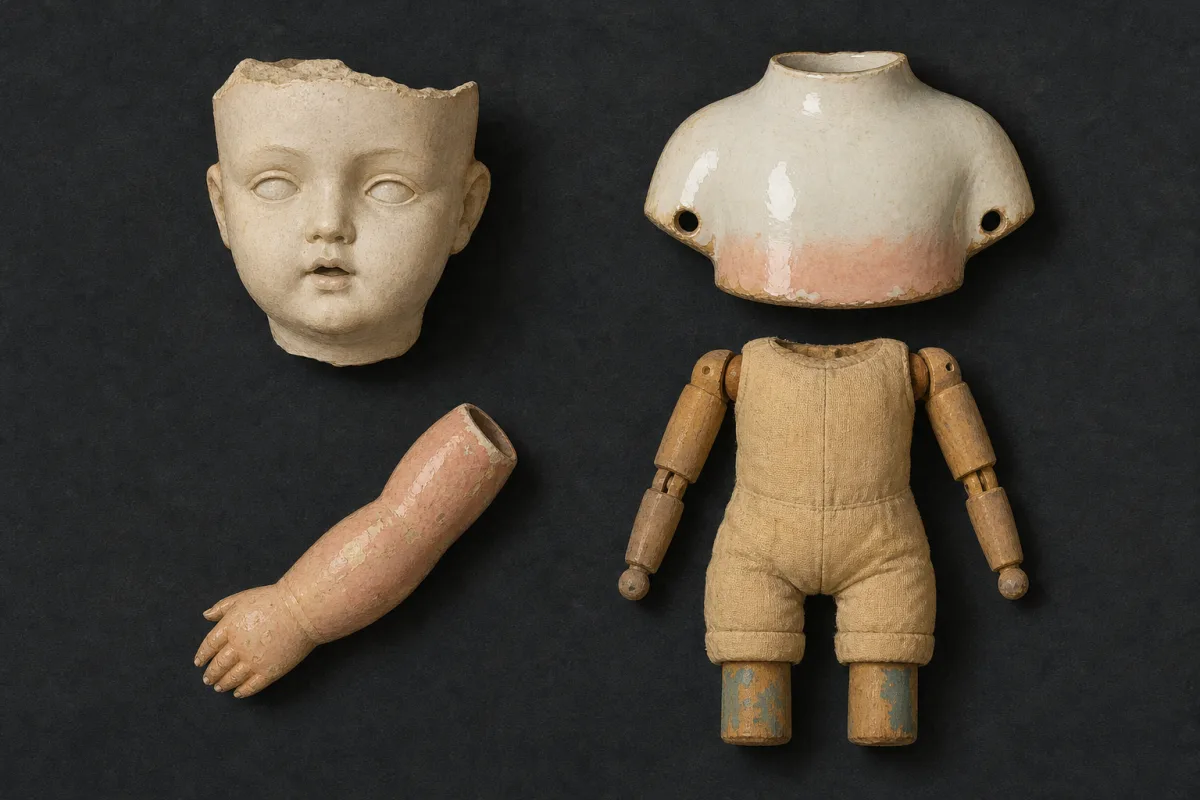
Some old German dolls are worth money, and some are not. The fact is that value depends on maker, condition, originality, size, face type, and whether the doll is complete. The reading is that a marked German doll in strong original condition can be collectible, while a damaged or heavily restored doll may have modest value only.
For a practical appraisal path, compare the doll against broader value factors used for antiques and collectibles. If you want a wider framework for appraising household antiques, the Antiques and Collectibles Value Guide for Real-World Appraisals is a useful next step.
Keep these value factors in mind:
- Original paint: repainting usually reduces value.
- Undamaged bisque: cracks, chips, and hairlines matter.
- Proper body and limbs: replacements can change desirability.
- Marked head and matching construction: stronger than a loose mark alone.
- Desirable face type: certain expressions and forms draw more collector interest.
How to tell if your porcelain doll is valuable
Start with the mark, then move to condition, then to completeness. The fact is that a beautiful mark is not enough if the doll has major damage. The reading is that a less famous maker in excellent condition can sometimes be more appealing than a better-known name with heavy repairs.
Use this simple decision path:
- Read the mark exactly as shown.
- Confirm whether the head is bisque or glazed porcelain.
- Check the body for originality and repairs.
- Compare hair, eyes, and clothing for age consistency.
- Look for matching parts rather than mixed replacements.
- Get a second opinion if the doll appears early or unusual.
What are German porcelain dolls called?
German porcelain dolls are often described by their construction and face style rather than one single name. Common terms include bisque doll, porcelain head doll, character doll, baby doll, and fashion doll. The fact is that German makers produced many styles. The reading is that the right name depends on the doll’s face, body, and intended type, not just the country of origin.
If your doll has basket pieces or a display accessory and you are unsure whether those parts belong together, a separate comparison can help. For that kind of object-by-object reading, see the Antique Basket Identification Guide for Clearer Reads.
Warning signs that a mark may not be original
Some marks are misleading. The fact is that marks can be added later, copied, or moved from one part to another during repair. The reading is that a suspicious mark should never be treated as proof until the rest of the doll agrees with it.
- Paint looks newer than the rest of the doll.
- The mark sits awkwardly over wear, dust, or old damage.
- The doll’s style conflicts with the supposed maker period.
- The mark is too crisp while the rest of the doll is heavily worn.
- The head, body, and limbs do not look like a matched set.
Value checklist before you list, sell, or insure the doll
Use this checklist to document the doll in a way that helps a buyer, appraiser, or insurer understand it.
- Full front, back, and side photos.
- Close-up of the mark with good light.
- Photo of the head interior if safely accessible.
- Body, joints, and limb close-ups.
- Any clothing labels, repair notes, or accessory marks.
- Notes on chips, cracks, repainting, or replacements.
If you want a faster first pass, a photo-based tool can help you organize what you see and compare clues side by side. The Antique Value Identifier iDar can support that kind of initial review before you seek a formal appraisal.
When to seek a professional opinion
Get a qualified antique appraiser or doll specialist involved if the doll appears early, rare, or unusually well preserved. The fact is that some dolls need hands-on inspection to confirm repairs, re-painting, and originality. The reading is that a professional opinion is most useful when the mark and the construction seem to point in different directions.
If you are comparing options for outside help, this overview of 7 Best Online Antique Appraisal Sites Compared can help you decide what kind of service fits your item and budget.
FAQ
How do I identify my doll markings?
Start by photographing the mark in daylight and side light. Then write down every visible letter, number, and symbol exactly as shown. After that, compare the mark with the doll’s head material, body type, eyes, and clothing so you can tell whether the mark and the construction belong to the same period.
Can a German doll be valuable without a clear mark?
Yes. The fact is that some dolls are valuable because of face type, age, condition, and originality. The reading is that a missing mark makes identification harder, but it does not automatically make the doll unimportant.
What if the mark is faint or partly worn away?
Document what you can see and avoid guessing. Look at the doll’s construction, mold seams, eye type, and body joints for supporting clues. A faint mark often needs comparison with several similar dolls before you can reach a solid conclusion.
Are all porcelain dolls made in Germany?
No. The fact is that porcelain dolls were made in multiple countries. The reading is that German dolls are a major category, but origin should be confirmed by the mark and the construction, not assumed from appearance alone.
Final take
German porcelain doll marks identification works best when you treat the mark as one piece of evidence, not the whole answer. Read the mark carefully, check the doll’s materials and construction, and compare the condition with what you expect from the style. That approach gives you a clearer identification and a better sense of possible value.
If you want help organizing your photos and notes before you decide what to do next, try Antique Value Identifier iDar as a soft first step.
Try the Idar app
Use the app when you want a faster, more organized starting point before comparing details manually.