Antique Value Guide
Old Tool Values: A Free Online Checking Guide
Free online antique tool price guide with verified auction examples, maker and condition checks, and a method for comparing sold prices.
Updated September 7, 2026: sources and examples checked.
If you want a free online antique tool price guide, start by identifying the tool, checking its condition, and comparing it with sold examples that match the same type, maker, size, and use. That is the fastest way to get a useful value range without guessing. A tool with an early maker mark, original parts, and solid working condition usually reads differently from a later replacement piece, even when they look similar at first glance.
The key is to separate what you can see from what you infer. First note the facts: material, size, markings, wear, repairs, and completeness. Then read those facts against the market: a rare form, a desirable maker, or a tool tied to a specific trade can push value up, while heavy rust, missing parts, and aggressive restoration can reduce it.
Verified auction examples: what the whole lot sold for
These two completed sales are useful reference records, not a price list for individual planes. Both were sold by Jeffrey S. Evans & Associates on March 7, 2025. Each reported total includes the buyer’s premium; it is not a delivered cost or the seller’s net proceeds.
| Identified lot | Condition and contents | Reported result (USD) |
|---|---|---|
| Lot 2435: six planes, including a Stanley No. 45 | The No. 45 combination plow/bead plane had its dovetailed crate, paper label and assorted blades. The lot included other planes. Described as good overall, with moderate surface and use wear. | $97.60 for the entire lot, including buyer’s premium. Source |
| Lot 2375: mixed hand tools, including a Stanley 71½ router plane | An uncounted group with other planes, gimlets, clamps and compasses. Described as good overall, with use wear and minor surface rust. | $109.80 for the entire lot, including buyer’s premium. Source |
Do not price a loose No. 45 at $97.60 from this record. That number bought six planes together. Dividing by six would be equally misleading: the pieces were not identical. For a single tool, find single-tool sales with the same model, parts and condition. If you cannot find those matches, record the price as unresolved instead of inventing a range.
Build your own comparable-sales note
- Copy the model or maker exactly as marked, including a size or type number.
- List included cutters, fences, handles and boxes, and record faults separately.
- Keep the sale date, currency, lot size, sold price and source link together.
- Label the price basis: hammer only, buyer’s premium included, or an asking price that has not sold.
- Compare several close matches before drawing a range. Keep unusual lots and exceptional condition outside the ordinary comparison.
Source records checked September 7, 2026. The examples remain historical transactions, not September 2026 appraisals.
What old tools are worth money?
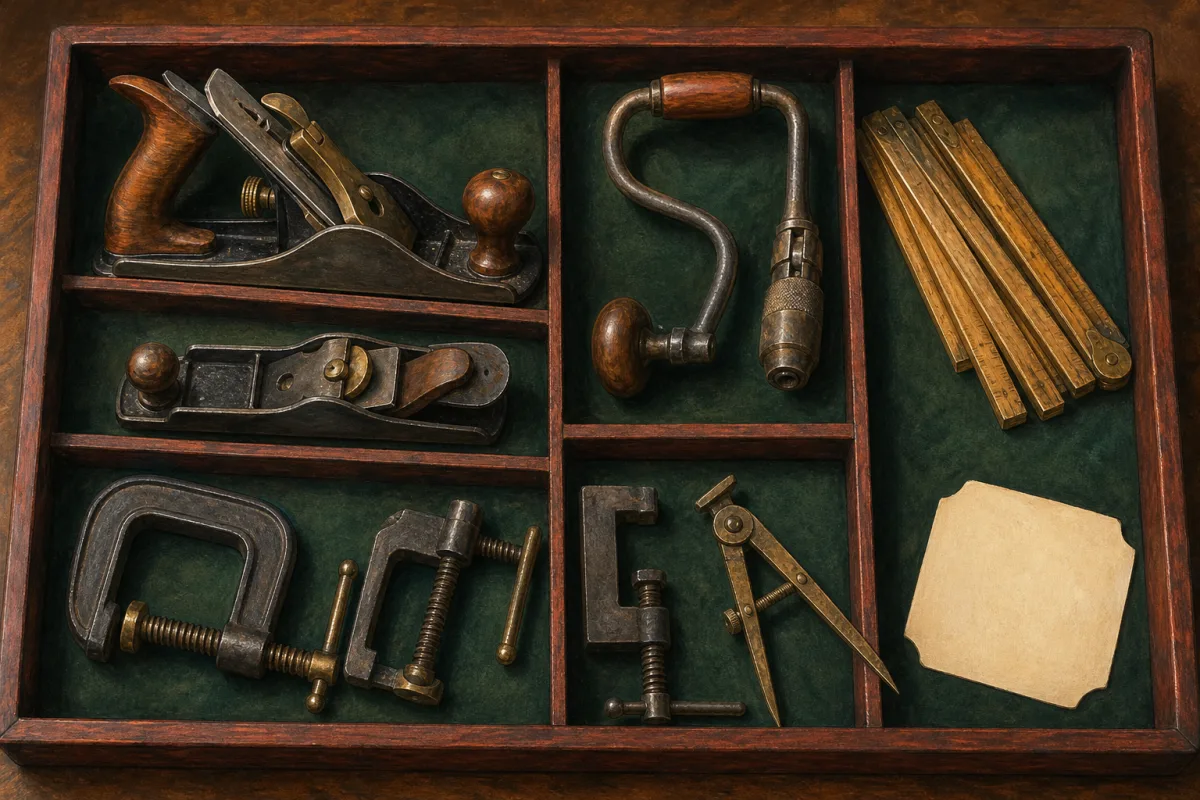
Not every old hand tool has value beyond utility. The tools that usually attract buyers are the ones with age, scarcity, original features, or a clear place in woodworking, farming, machinist, blacksmith, or printing history. A plain later-generation wrench may be usable, but it may not be collectible. A marked pre-war plane, a boxed set of measuring tools, or an early special-purpose tool can be more interesting because the design, maker, and condition are easier to document.
In practical terms, the best candidates for a price check are tools that have one or more of these traits:
- Visible maker’s marks, patent dates, or shop labels
- Unusual shapes or specialty functions
- Original wooden handles, grips, boxes, or cases
- Early hand-forged or cast construction
- Complete sets rather than loose pieces
- Strong condition with readable surfaces and less replacement work
If you are unsure whether your item is a tool or a decorative object, compare the wear pattern to the intended use. A real working tool usually shows even, functional wear on the working edge, grip, or contact points. Decorative wear can look random or artificial. That reading is not proof by itself, but it helps you decide whether to keep researching.
7 clues that help you estimate value
1) Identify the exact type of tool
The fact is the tool category. A block plane, brace, bit, saw, auger, level, caliper, plumb bob, or spokeshave all follow different collector markets. The reading is that a precise type name narrows your price check to sold examples that truly match. A general search for “old tool” is too broad to be useful.
2) Read the maker’s mark carefully
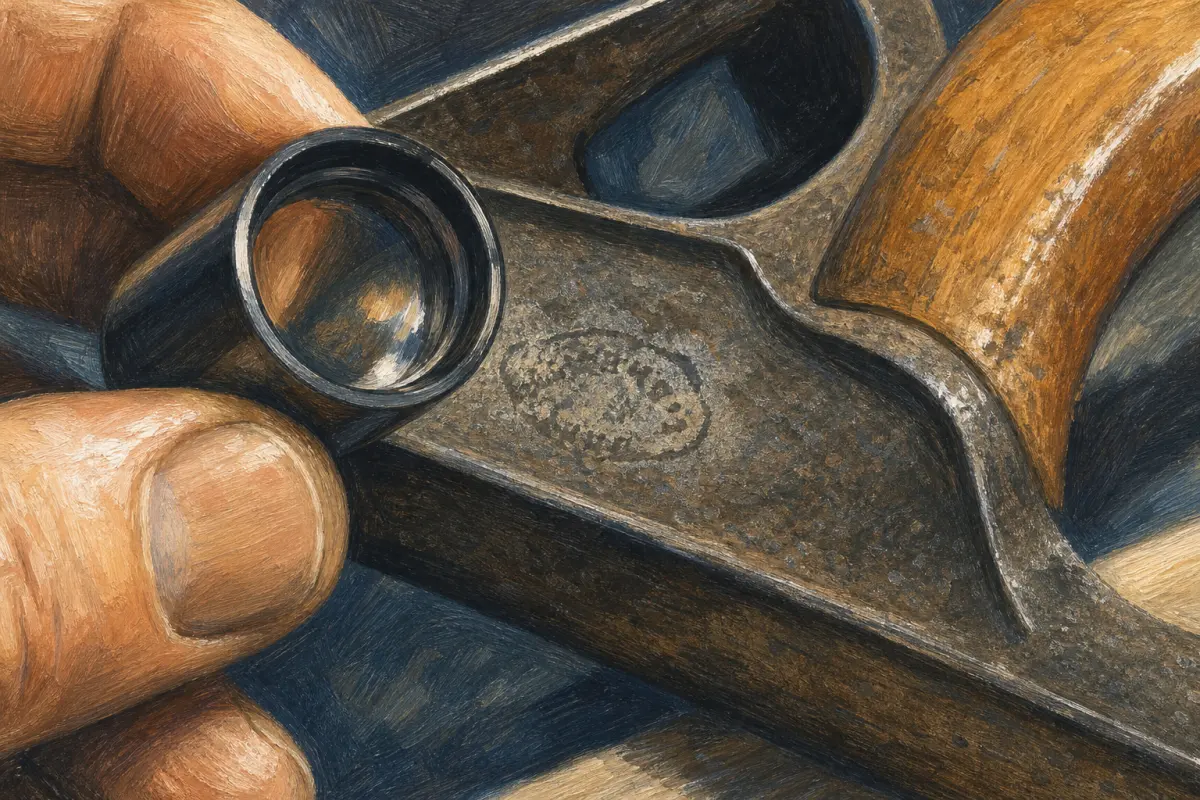
The fact is the stamp, engraving, label, or cast lettering on the tool. The reading is that a readable maker mark can help you date the piece and compare it with similar items. Do not assume every faint mark means a famous brand. Photograph the mark in direct light and compare the letters one by one before you decide what it says.
3) Check completeness
The fact is whether the tool still has its original parts. The reading is that completeness often matters more than age alone. A hand plane with its iron and tote intact may be more useful to a buyer than a rarer body missing key pieces. The same logic applies to boxed sets, which often lose value when pieces are missing.
4) Look at condition honestly
The fact is the state of the metal, wood, joints, and finish. The reading is that clean original surfaces usually appeal more than stripped or heavily polished ones. Surface rust is not always fatal. Deep pitting, cracked handles, warped bodies, broken edges, and repaired joints are the issues that usually change the value picture.
5) Separate original surface from restoration
The fact is whether the finish, paint, plating, or patina looks original. The reading is that careful cleaning can help a tool present better, but aggressive refinishing can erase collecting value. A buyer who wants a display piece may prefer honest age. A user who wants function may care more about usability. Those are different markets, so they price the same tool differently.
6) Compare special-purpose tools with common shop tools
The fact is whether the tool serves a common or niche task. The reading is that niche tools often bring more interest when they are hard to find in complete condition. Common hammers, screwdrivers, and wrenches are often easier to replace than specialty gauges, shipwright tools, cooper’s tools, or trade-specific kits.
7) Match the tool to sold examples, not asking prices
The fact is that asking prices show what sellers hope to get. The reading is that sold examples show what buyers actually paid. For a free online antique tool price guide, sold examples are the stronger comparison point. Use listings that match the same tool type, maker, condition, and completeness as closely as possible.
Quick value checklist before you search online
Use this checklist to organize what you know before you compare prices:
- Type: What kind of tool is it exactly?
- Maker: Can you read a name, stamp, patent date, or label?
- Material: Is it iron, steel, brass, wood, leather, or a mix?
- Size: Measure the full length, width, and any key openings or blade sizes.
- Condition: Note rust, cracks, chips, bends, and repairs.
- Completeness: Are all original parts present?
- Provenance: Do you know where it came from or how it was used?
- Photos: Take front, back, side, mark, and close-up detail shots.
If you want a broader pricing context after you identify the tool, this guide pairs well with Antiques and Collectibles Value Guide for Real-World Appraisals. If your item turns out to be more specialized, you may also want to compare it with trade-specific articles such as Antique Appraisal Services: 7 Clues to Figure Out What Your Item Is Worth.
How to use a free online price check without overthinking it
Start with the fastest match, then refine. Enter the tool type first, then the maker if you can confirm it, then the size and any distinctive feature. The fact is that each added detail reduces false matches. The reading is that a smaller, tighter set of comparables usually gives a better value estimate.
If the first result looks wrong, do not force the match. Many old tools share similar silhouettes. A saw with a replaced handle, a plane with a swapped blade, or a caliper with a missing arm can look close to the right category while belonging to a different market.
A practical way to compare online is to sort the results into three groups:
- Clear matches: same type, same maker, similar size, similar condition.
- Partial matches: same type but different maker, period, or completeness.
- Poor matches: decorative pieces, reproductions, or heavily altered tools.
The first group helps most. The second group can suggest a rough range. The third group should be ignored for pricing purposes.
Common mistakes that distort tool value
- Confusing a later reproduction with an original working tool
- Using decorative listings as if they were comparable sales
- Ignoring missing parts or replacement handles
- Cleaning away original surface before documenting the item
- Reading a faint mark as a famous maker without confirmation
- Assuming age alone creates value
One useful habit is to photograph the item before any cleaning. That gives you a record of the original condition and makes later comparison easier. If the piece is fragile, rusty, or mechanically stuck, stop before forcing movement. A damaged pivot, cracked handle, or snapped edge can lower value more than surface grime ever would.
When a tool may need a closer appraisal
Some items deserve more than a quick online check. If the tool has a rare maker, unusual trade history, a complete boxed set, or signs of early manufacture, a more careful comparison is worth the time. If you are trying to decide between selling, keeping, or insuring the item, a documented appraisal path is more useful than a single rough number.
For that next step, you can compare methods in 7 Best Online Antique Appraisal Sites Compared. If your item is a fitted furniture piece rather than a hand tool, a related example is Antique Chifferobe with Mirror: Value by Style and Condition, which shows how style and condition affect pricing in another category.
Simple table: what usually helps or hurts value
| What you see | What it means | Likely effect on value |
|---|---|---|
| Readable maker mark | The tool can be matched to a specific maker or period | Usually helps |
| Complete original parts | Fewer missing pieces and less replacement work | Usually helps |
| Heavy rust or pitting | Surface damage is visible and may affect function | Usually hurts |
| Replaced handle or blade | The tool is no longer fully original | Usually hurts |
| Rare specialty form | The tool may serve a niche trade or task | Often helps |
| Common mass-made form | The market may be broad and competitive | Often limits value |
FAQ
How do I use a free online antique tool price guide?
Start by identifying the exact tool type, then add the maker, size, and condition. Compare those details with sold examples that match closely. The best reading comes from a narrow match, not from a broad search.
What kind of old tools are worth money?
Tools that are complete, marked, uncommon, or tied to a specific trade usually have the best chance of value. Early hand planes, specialty measuring tools, boxed sets, and tools from recognizable makers are common examples. Condition and originality still matter.
Is rust always a dealbreaker?
No. Light surface rust can be part of age and use. Deep pitting, structural damage, and broken working parts are more serious. The value reading changes most when rust has affected function or removed original material.
Should I clean an old tool before checking its price?
Only lightly, if at all. Dust removal and careful dry brushing are usually safer than polishing or stripping. The fact is that original surface can matter. The reading is that aggressive cleaning can reduce collector interest.
What if I cannot read the maker’s mark?
Take close photos in strong indirect light, then compare letter shapes, layout, and placement. If the mark is still unclear, use the tool type, size, and construction details to narrow the search. A blurry mark is not enough to name the maker with confidence.
Try a fast photo-based check
If you want a quicker first pass, use the Antique Value Identifier app to organize your photos and compare visible details before you search deeper. It is a simple way to move from “What is this?” to “What should I compare next?”
When you are ready, keep the process simple: identify the type, confirm the mark, judge condition, and compare sold examples. That sequence gives you a practical answer without pretending the first result is the final one.
Try the Idar app
Use the app when you want a faster, more organized starting point before comparing details manually.