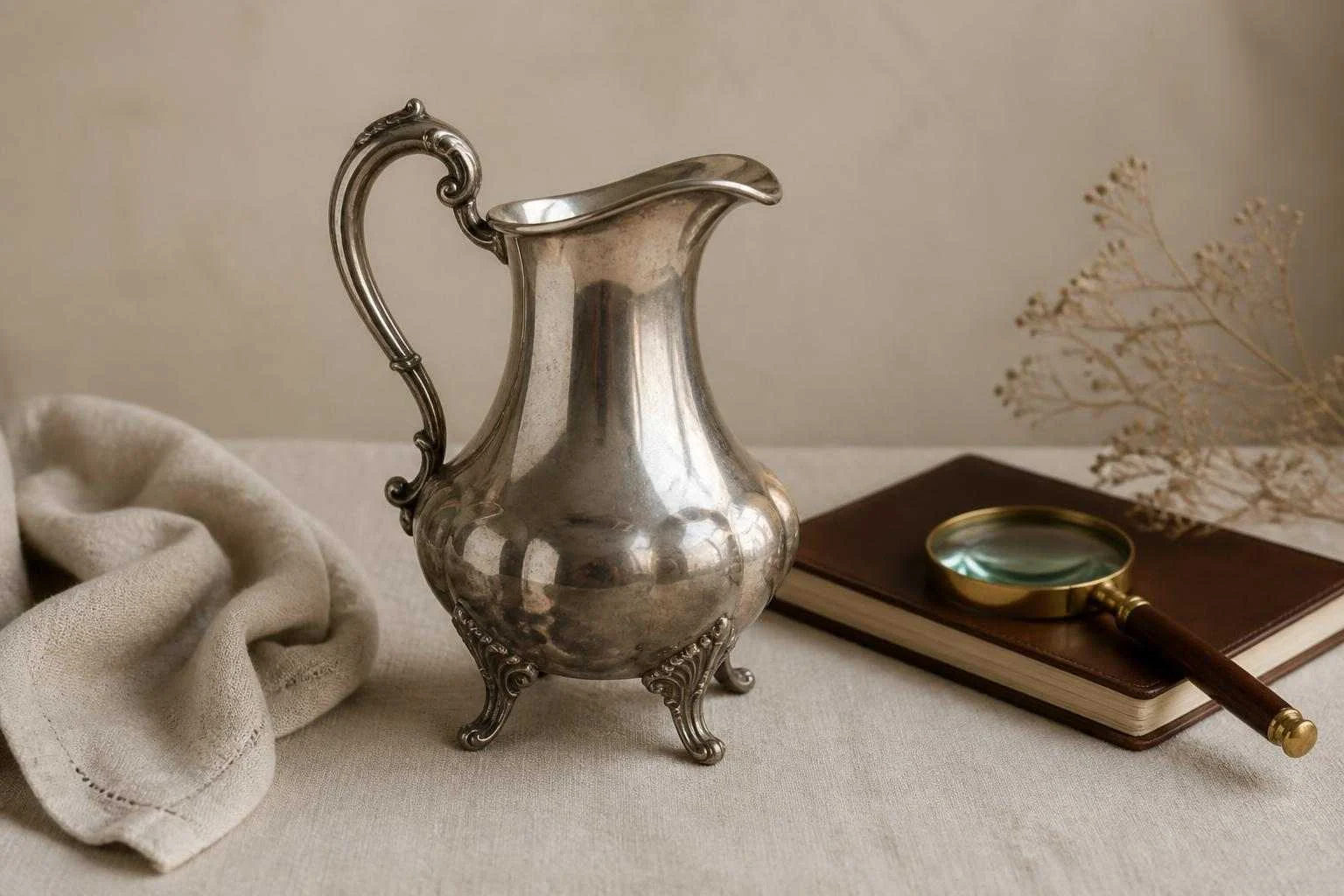
Antique Value Guide
Silver Pitcher Value: Marks, Weight, and Maker Premiums
Learn how to check silver pitcher value by examining hallmarks, condition, age, weight, and style. Includes a practical value checklist and FAQ.
If you are trying to determine silver pitcher value, the fastest path is to look at what the pitcher is made of, who made it, how old it appears, and whether it has any damage or restoration. The same basic method works for an antique silver pitcher value estimate and for a sterling silver water pitcher value check, but the details matter. A real sterling piece can be worth much more than silver-plated tableware, and condition can make a big difference either way.
Below is a practical guide to help you narrow down what you have before you compare it with recent sales or ask for a professional opinion.
1. First confirm whether it is sterling, silver plate, or something else
The most important factor in silver pitcher value is the metal. Many pitchers look silver but are actually silver plate, which usually has a much lower market value than sterling silver.
- Sterling silver is typically marked with numbers such as 925, 900, or “sterling.”
- Silver plate may be marked EPNS, EP, A1, S.P., or similar plating terms.
- Coin silver is older and may be marked 800, 900, or with less standardized stamps.
- Unmarked pieces need closer inspection, because some older items are worn, while others are plated and simply missing marks.
If you want a deeper look at the marks themselves, see Silver Hallmarks Identification: 7 Best Clues.
2. Read the marks before you guess the value
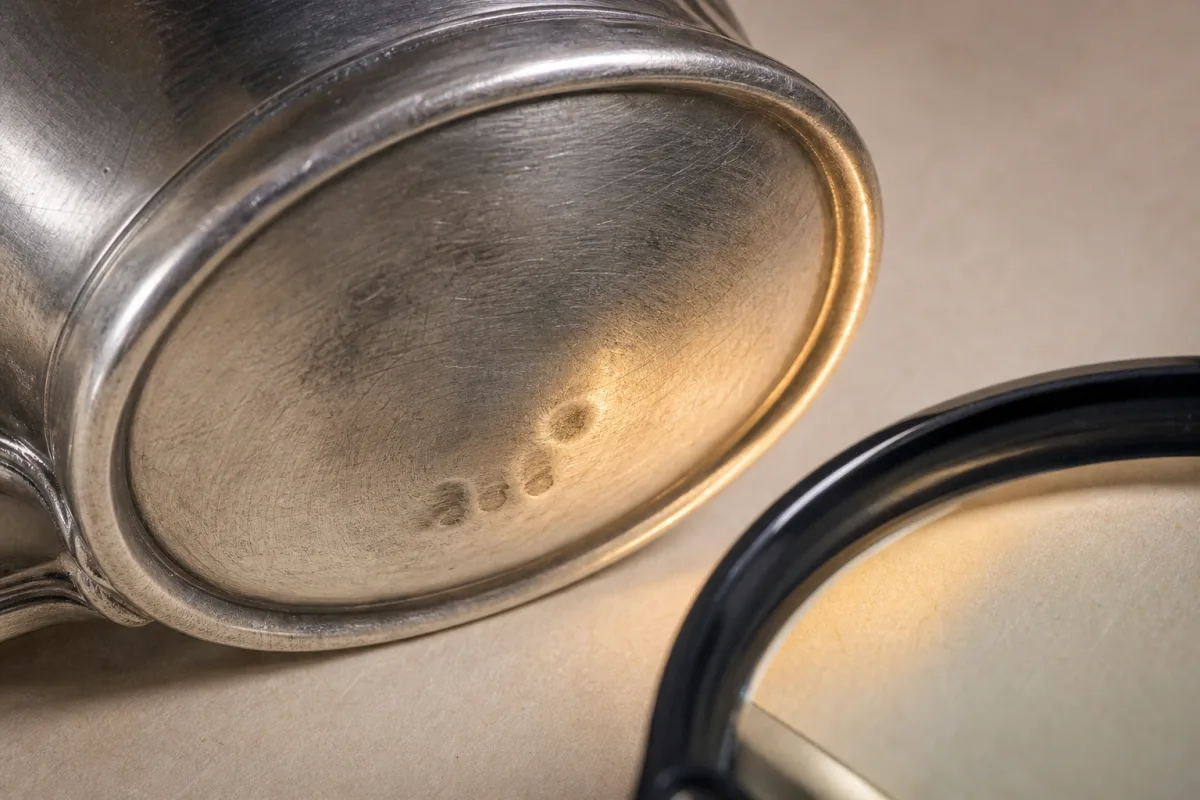
Hallmarks, maker’s marks, and pattern marks can turn a vague estimate into a much better one. An antique silver pitcher value can rise if the maker is known, the mark is clear, and the piece can be tied to a specific period or workshop.
Common marks to look for include:
- purity marks such as 925, 800, or 900
- maker’s initials or a full company name
- country of origin marks
- date letters or symbols on some European pieces
- retailer names on custom or presentation pitchers
Use a magnifying glass and good light. On pitchers, marks are often found on the base, near the handle, or inside the foot rim. If the stamp is weak or partially worn, do not fill in the blanks by guessing. Compare what you can see with verified references or a trusted appraisal source.
3. Check whether the pitcher is weighted or hollow
Some silver pitchers, especially larger table pieces, have weighted bases or reinforced feet. This matters because the weight you feel in your hand may not be pure silver weight. For sterling silver water pitcher value, buyers often care about both the craftsmanship and the actual silver content, but they also look at form and collectability.
In general:
- Heavier sterling pitchers may have higher intrinsic metal value, but design still matters.
- Weighted bases can make a pitcher feel more substantial without adding much silver content.
- Silver plate is not valued for melt content in the same way sterling is.
Do not assume that a heavy pitcher automatically means high value. Construction method, maker, and condition still carry a lot of weight.
4. Look at condition with a collector’s eye
Condition can move value up or down quickly. Even a rare piece loses appeal if it has dents, repairs, or heavy wear. A clean, original pitcher in good condition will usually bring stronger interest than one that has been polished aggressively or damaged.
Check for these issues:
- dents in the body or base
- cracks near the handle or spout
- repairs, solder marks, or replaced parts
- thin wear on high points
- deep scratches or monogram removal
- heavy tarnish, if it hides detail or surface texture
Light tarnish is normal and does not automatically reduce value. In fact, an overly polished pitcher can sometimes lose crisp detail, which may lower collector interest. When in doubt, clean gently rather than aggressively.
5. Estimate age from style, form, and craftsmanship
Age is another major part of silver pitcher value. Older pitchers are not always worth more, but age can support rarity, craftsmanship, and historical appeal. Look at the shape of the handle, the profile of the spout, and the overall decoration.
Useful clues include:
- Victorian examples often have ornate decoration, engraved bands, or elaborate handles.
- Art Nouveau or Arts and Crafts pieces may show flowing or hand-hammered design.
- Early 20th-century pitchers often have cleaner lines and more restrained ornament.
- Mid-century pieces may emphasize simplicity and practical form.
Style alone does not prove age, but it helps you narrow the period before you compare it with catalog images, auction results, or expert references. If you are still learning the broader process, How to Identify Antiques: 7 Best Expert Tips is a useful place to start.
6. Compare maker, pattern, and market demand
Two pitchers with the same silver content can have very different values. A well-known maker, desirable pattern, or unusual form can lift the price significantly. On the other hand, a common unmarked pitcher may be valued mostly for its material and condition.
Market demand often depends on:
- recognizable maker or silversmith
- quality of design and workmanship
- whether the pitcher matches a popular table service pattern
- size and usability
- current buyer interest for similar pieces
If you are comparing multiple antiques at once, it can help to use a broader pricing method. See Antique Pricing: 7 Best Ways to Value Items for a wider framework.
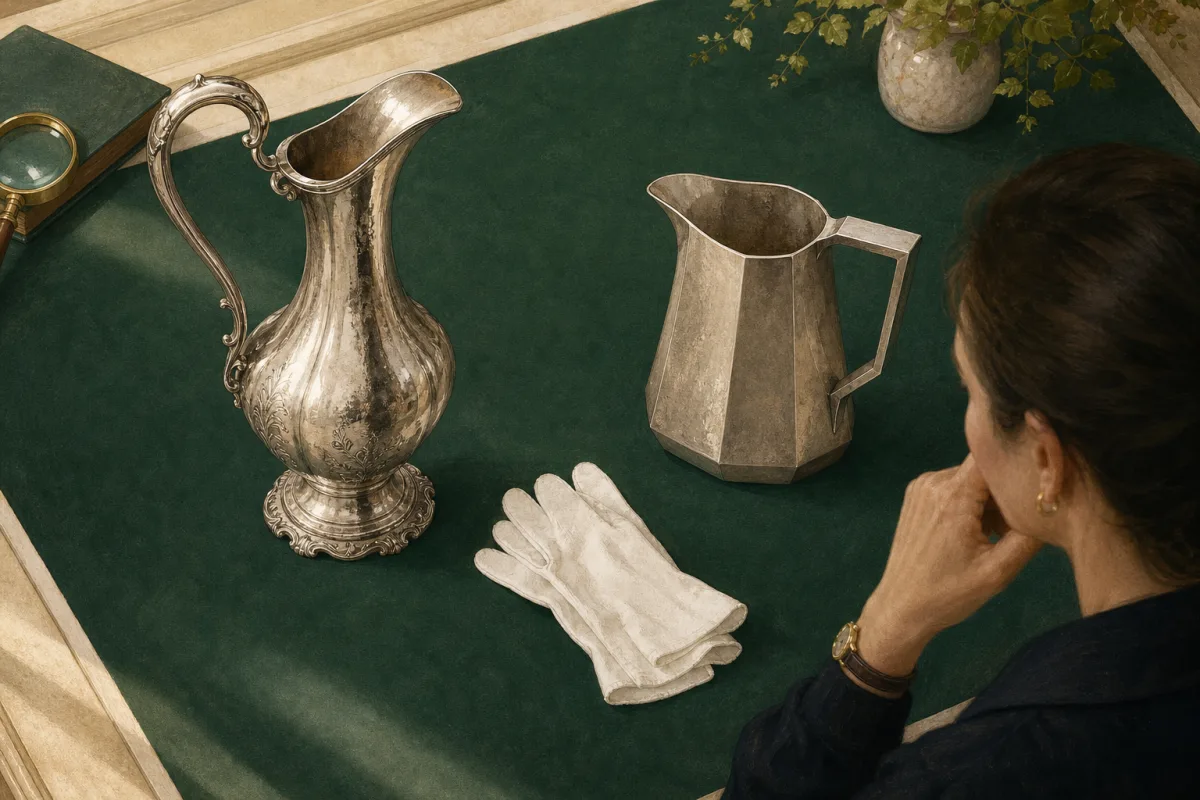
Silver pitcher value checklist
Use this quick checklist before you decide whether your pitcher is a low, moderate, or potentially strong-value piece.
| Check | What to look for | Why it matters |
|---|---|---|
| Metal type | Sterling, coin silver, or silver plate | Determines whether value is based on silver content or mostly on decorative appeal |
| Hallmarks | Purity marks, maker’s marks, country marks | Helps confirm authenticity and origin |
| Condition | Dents, repairs, wear, scratches | Affects collector interest and resale value |
| Age/style | Victorian, Art Nouveau, Arts and Crafts, early modern | Can point to rarity and design appeal |
| Maker | Known workshop or silversmith | Some names bring stronger demand |
| Size and weight | Capacity, heft, construction | Useful for comparing similar pieces, especially sterling |
| Market comps | Recent auction or resale results | Shows what buyers are currently paying |
7. Compare your pitcher with real-world sales, not just asking prices
A common mistake is to compare your pitcher with active listings only. Asking prices can be optimistic. For a more realistic silver pitcher value estimate, look for sold results from auctions, estate sales, or reputable resale platforms when possible.
When comparing examples, try to match:
- same metal type
- similar maker
- similar size and weight
- similar condition
- same approximate era
If the pitcher is part of a broader antiques collection, or if you are unsure how to separate decorative value from true age and authenticity, you may also find Vintage Value: How to Check What It Is Worth helpful.
When a professional appraisal makes sense
Some pitchers are easy to sort into basic value ranges, but a few deserve a closer look. Consider an appraiser or specialist if your pitcher has any of the following:
- clear sterling hallmarks and a known maker
- unusual engraving or presentation inscription
- early date or rare form
- possible museum-quality craftsmanship
- uncertain marks that need verification
If you want to compare options for in-person valuation, this guide may help: Antique Valuations Near Me: 7 Best Options.
FAQ
Is a sterling silver pitcher always valuable?
Not always. Sterling has intrinsic silver value, but actual market value depends on weight, condition, maker, age, and demand. A plain damaged pitcher may sell for much less than a rare, well-preserved one.
How can I tell if my pitcher is silver plate?
Look for plating marks such as EPNS, EP, A1, or S.P. Silver plate usually lacks sterling purity marks like 925 or sterling. If the plating is worn, the base metal may show through.
Does tarnish lower silver pitcher value?
Light tarnish usually does not. Heavy tarnish that hides detail is not ideal, but aggressive cleaning can be worse if it removes surface character or softens crisp edges.
What affects antique silver pitcher value the most?
The biggest factors are metal type, maker, hallmarks, condition, age, and how desirable the style is to buyers.
Can an app help me identify the marks?
Yes, a reference tool can help you compare marks and narrow down possibilities before you seek a formal appraisal. If you want a quick starting point, you can try the Antique Value Identifier app on the App Store: https://apps.apple.com/us/app/antique-value-identifier-idar/id6757795979.
Silver pitchers can range from modest household pieces to highly collectible antiques. The best way to judge silver pitcher value is to start with the marks, confirm the metal, review condition, and compare against real sales of similar pieces. If you need a fast first pass, a simple identifier tool can help organize what you see before you decide whether to sell, insure, or appraise the item.
Try the Antiquevalue app
Use the app when you want a faster photo-based check before comparing details manually.