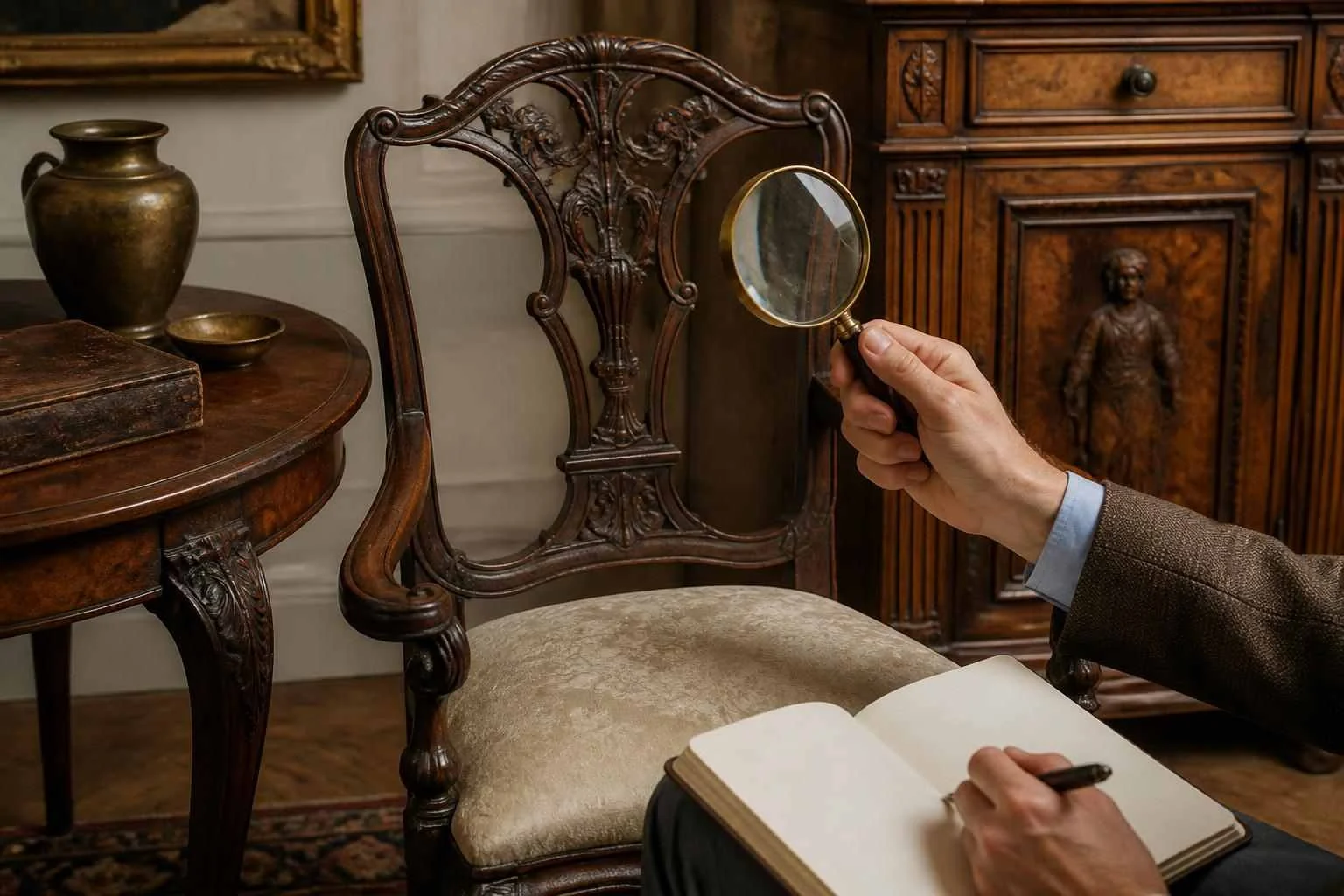
Antique Value Guide
Antique Furniture Appraisal: What Experts Look For
Learn how to do an antique furniture appraisal with practical checks for style, maker marks, condition, and value. A clear guide to identify antique furniture and estimate what it is worth.
If you are trying to figure out what old furniture is worth, the first step is a careful antique furniture appraisal. You do not need to be an expert to make a solid first estimate. With the right checks, you can learn whether a piece is truly antique, simply vintage furniture, or just furniture old enough to look the part.
This guide walks through the most useful clues: style, construction, condition, maker marks, and recent market demand. It is written for practical use, so you can compare antique and furniture details without getting lost in collector jargon.
1. Start with the basics: what kind of piece is it?
Before you think about value, identify the object itself. Is it a chair, desk, dresser, cabinet, sideboard, table, or bed frame? The type matters because some categories sell better than others, and certain forms are easier to date than others.
Look at the overall shape, the wood, the hardware, and how the piece was built. A quick initial review helps separate true antique furniture from later reproductions or mass-produced vintage furniture.
- Check whether the piece looks hand-finished or machine-made.
- Look for wear where hands and feet would naturally touch the furniture.
- Notice if the wood, screws, and joinery seem consistent with one period.
- Compare the design to known furniture and antiques from the same era.
2. Identify antique furniture styles
One of the fastest ways to narrow down an appraisal is to identify antique furniture styles. Style can point you to an era, country of origin, and likely market interest. For example, a heavy oak case piece with carved details may suggest a different period than a slim mahogany side table with elegant legs.
When you look at style, focus on the most visible design traits:
- Leg shape: straight, cabriole, turned, tapered, or bracket feet.
- Ornament: carved flowers, fluting, inlay, veneer, or plain surfaces.
- Silhouette: formal, rustic, streamlined, or decorative.
- Hardware: hand-forged pulls, brass handles, or later replacements.
If you are unsure, compare your piece with reference photos from trusted antique furniture appraisal resources and style guides. A close match in shape and decoration often tells you more than a guess based on age alone.
3. Check construction and materials
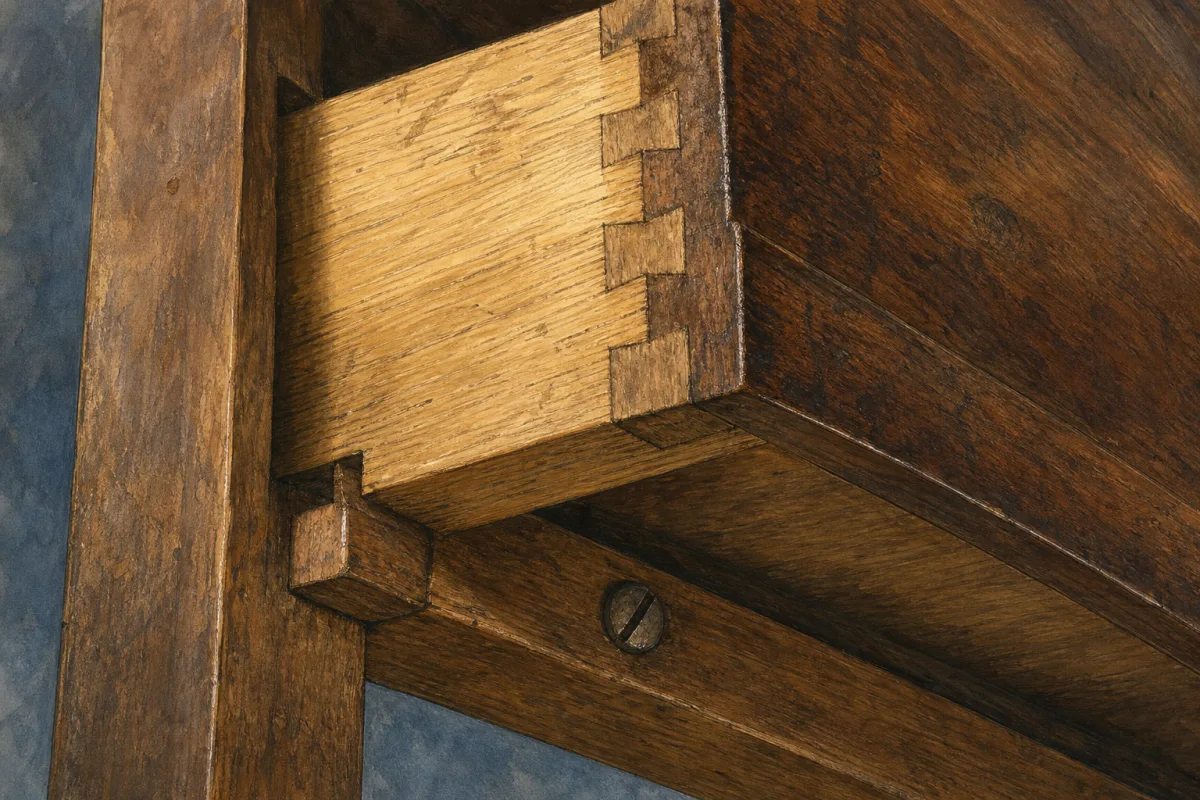
Construction details are some of the strongest clues in an antique furniture appraisal. Old furniture often shows hand tools, older joinery methods, and natural aging patterns that are hard to fake convincingly.
Useful things to inspect include:
- Joinery: Dovetails, mortise-and-tenon joints, pegged joints, and hand-cut marks can indicate older work.
- Screws and nails: Uneven slots, cut nails, and handmade fasteners may suggest age.
- Wood species: Oak, walnut, mahogany, pine, cherry, and maple all appear in different periods and regions.
- Back boards and bottoms: These areas often reveal whether the piece was later altered or repaired.
- Finish: A worn original finish is different from a heavy modern refinish.
Do not assume that every old-looking feature means an item is antique. Some newer pieces are distressed on purpose. A real appraisal depends on the whole object, not just one detail.
4. Look for maker marks, labels, and signatures
Marks can help, but they are not always present. In many cases, furniture maker marks were hidden on the back, underside, inside drawer sides, or on a paper label that has faded over time.
Search carefully for:
- Brand stamps or burned-in marks
- Paper labels or tags
- Metal plaques
- Chalk numbers or inventory marks
- Carved initials or signatures
If you find a mark, photograph it clearly and compare it with verified references. If you need more help, this guide on Furniture Maker Marks: 7 Best Antique Clues can help you understand what to look for without mistaking a random stamp for a real manufacturer mark.
Be cautious with undocumented marks. Fake or misleading labels do exist, so the mark should support the appraisal, not define it by itself.
5. Evaluate condition honestly
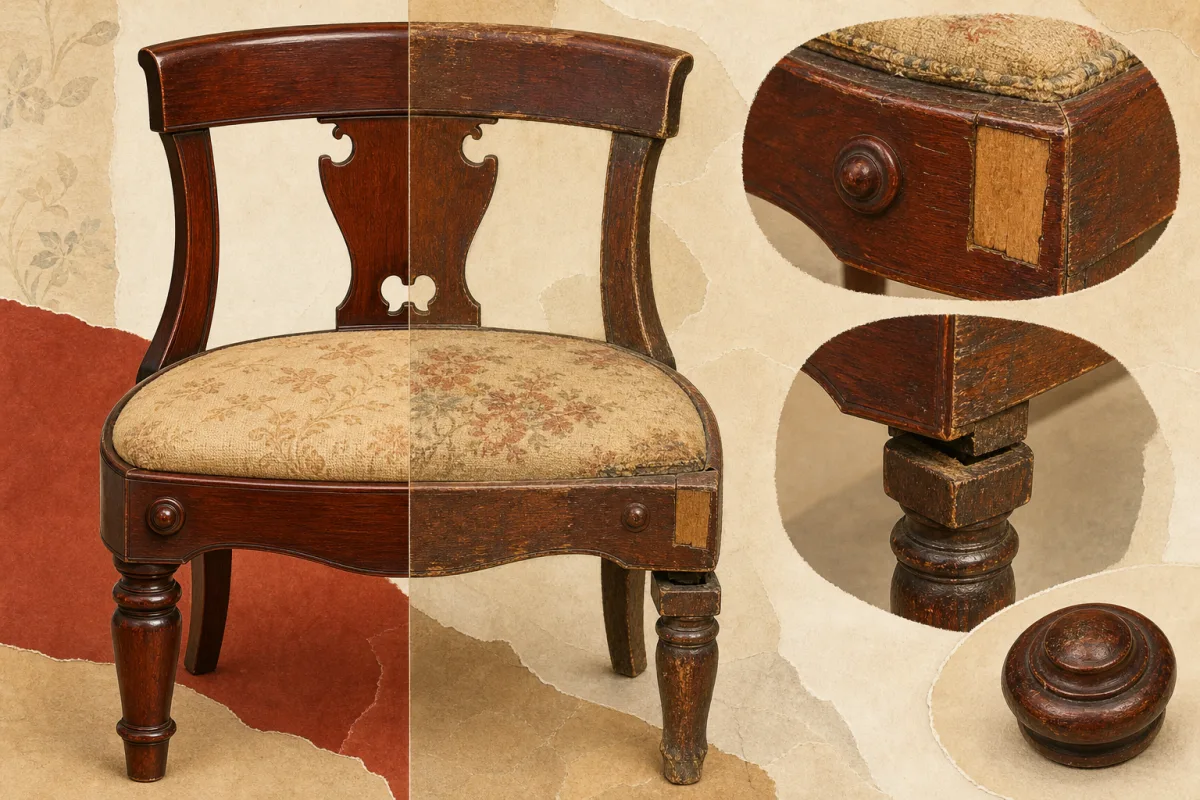
Condition has a major effect on value. Even a rare piece can lose appeal if it has structural damage, heavy refinishing, or major missing parts. On the other hand, a common item in very good original condition can still be desirable.
| Condition factor | What to look for | Why it matters |
|---|---|---|
| Structure | Wobble, broken joints, or sagging | Repairs can lower value if they affect use or originality |
| Finish | Original patina vs. stripped or painted surface | Original finish often helps value |
| Hardware | Missing knobs, pulls, hinges, or locks | Replacements may reduce authenticity |
| Surface wear | Scratches, water marks, fading, and dents | Light age wear is normal; major damage is not |
| Restoration | Glue, new veneer, patching, or refitting | Quality repairs may be acceptable, but should be disclosed |
Try to describe the piece as it is, not as you hope it is. A clear appraisal starts with realistic condition notes.
6. Compare age, originality, and demand
A useful antique furniture appraisal balances three questions: How old is it, how original is it, and how much do buyers want it right now?
Age matters, but it does not guarantee value. Some pieces from the same period bring very different results depending on style and condition. A large formal cabinet may be harder to sell than a smaller, more practical table if current buyers prefer compact furniture and antiques.
Originality is also important. Original finish, original hardware, and original parts generally help a piece keep collector interest. Heavy restoration may make a piece more usable, but it can also reduce value in some markets.
Demand changes over time. Vintage furniture appraisal can be especially sensitive to trends in interior design, because buyers often look for pieces that fit modern homes. A piece that is less formal but well-made may sell faster than one that is older but harder to place.
7. Use a simple value checklist
Here is a practical checklist you can use before seeking a formal appraisal:
- Identify the type of furniture and its likely period.
- Note the wood, finish, and any visible construction details.
- Check for maker marks, labels, or signatures.
- Document all damage, repairs, and replaced parts.
- Compare the style to similar sold pieces.
- Estimate whether the item is antique, vintage, or a later reproduction.
- Save clear photos of the front, back, underside, and close-ups of joints and marks.
If you want a broader comparison point for value checks across different collectibles, you may also find Antique Price Guide Online: 7 Best Value Checks useful as a starting point.
How to estimate what antique furniture is worth
Once you have identified the piece, estimate value by comparing similar items that sold recently. Look for matches in style, age, size, maker, and condition. A small difference in condition can create a large difference in price.
Use this simple framework:
- Low end: common style, visible wear, minor repairs, average demand.
- Mid range: appealing design, good condition, mostly original parts.
- Higher range: strong maker, desirable style, excellent condition, clear provenance.
For some categories, expert interest matters a lot. For example, a unique chair or a quality cabinet may be worth more if it has documented origin, while a generic mass-produced dresser may have mainly decorative value.
When to get a professional appraisal
Seek a professional opinion if the piece appears rare, has a recognized maker, or may be valuable enough to insure, sell, or consign. A professional can help if you are dealing with furniture and antiques that are difficult to date, or if repairs and alterations make the history unclear.
You should also consider a pro appraisal if:
- The piece has a label or mark you cannot verify.
- You suspect the item may be from a notable workshop or designer.
- The furniture has mixed parts from different periods.
- You need a written valuation for estate, insurance, or resale planning.
If your piece is more decorative than monumental, a careful online review may be enough to narrow the range before spending on a formal appraisal.
FAQ
How can I tell if furniture is antique or just vintage?
Antique furniture is generally much older and often shows construction methods, materials, and style details from an earlier era. Vintage furniture is usually newer and may still be collectible, but it often has more modern production features.
What is the most important clue in an antique furniture appraisal?
There is no single clue that proves value. The best appraisal combines style, construction, maker marks, condition, and current demand. A strong match in several areas is more reliable than one dramatic feature.
Can I value furniture old enough to look antique without a specialist?
Yes, for an initial estimate. You can identify antique furniture styles, check the build, and compare recent sales. For rare or high-value pieces, a specialist should confirm the result.
Do repairs always lower value?
Not always. Small, professional repairs may be acceptable, but major restoration can reduce originality. The effect depends on the type of furniture, the quality of the repair, and what buyers expect.
What if there are no maker marks?
That is common. Many older pieces were not marked. In that case, construction, style, materials, and wear patterns become even more important.
Final takeaway
A careful antique furniture appraisal is mostly about observation. Start with style, check the construction, verify any maker marks, and judge the condition honestly. From there, compare similar pieces and use current market demand to refine your estimate.
If you want a faster first pass, you can also use the Antique Value Identifier app to help organize what you see and compare details before you decide whether to seek a professional opinion.
For more antique guides, visit the Antique Guides section on antiquevalue.co.
Try the Antiquevalue app
Use the app when you want a faster photo-based check before comparing details manually.