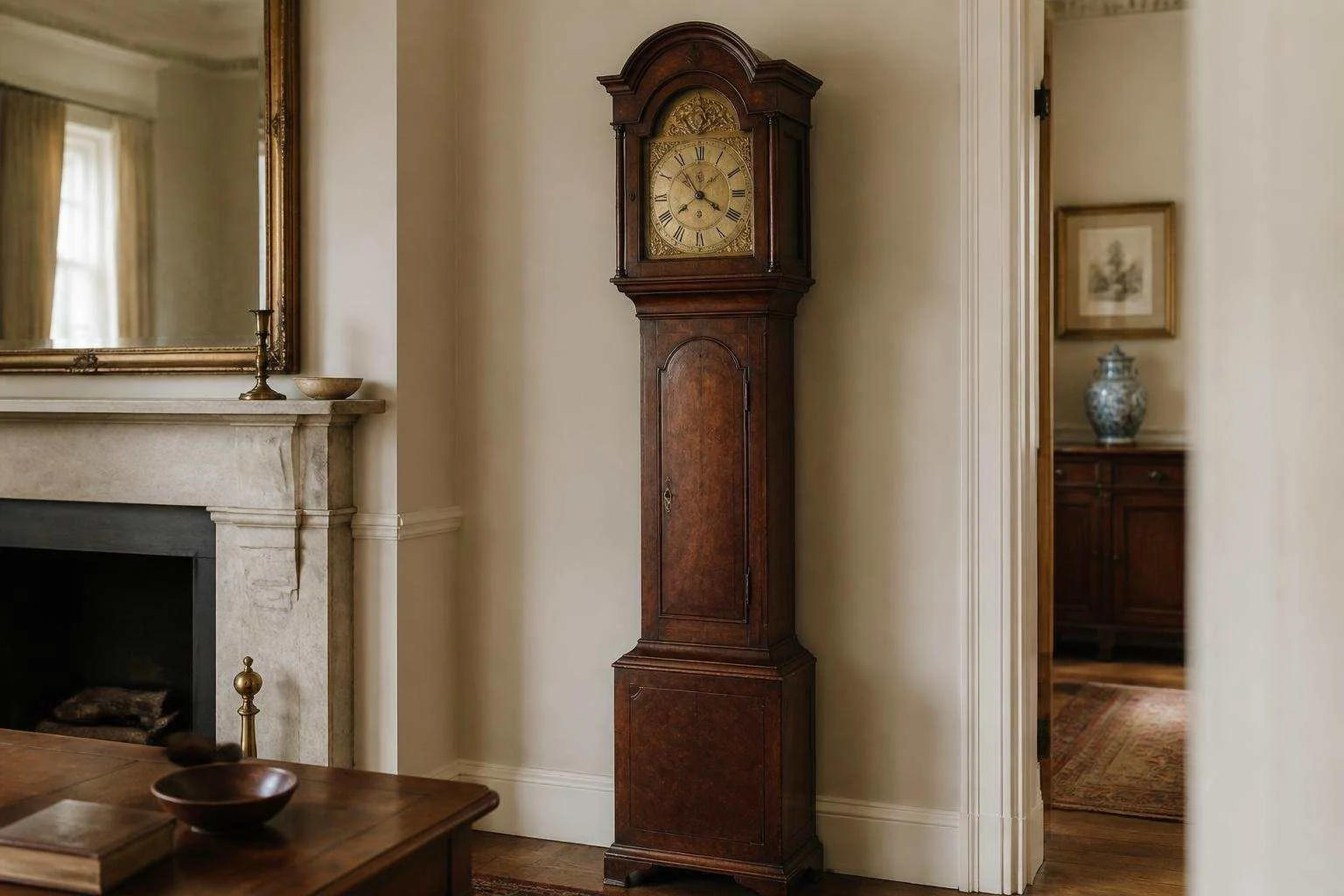
Antique Value Guide
Antique Grandfather Clock Appraisal: Key Value Factors
Learn how to estimate antique grandfather clock value with a practical appraisal checklist, condition clues, maker details, and pricing factors.
If you are trying to determine an antique grandfather clock appraisal, the good news is that you can narrow down value with a few careful checks before speaking with a specialist. A grandfather clock can range from modest decorative value to a much higher antique grandfather clock value depending on maker, age, condition, originality, and whether the movement works.
This guide walks through the most useful clues for a grandfather clock appraisal, explains what usually affects antique grandfather clock price, and gives you a simple checklist to help you decide what to do next.
1. Start with the basics: what kind of clock is it?
Not every tall floor clock is equally valuable. Many people use “grandfather clock” as a catch-all term, but value depends on how the clock was made and when.
- Case style: Look at the wood, shape, and decorative details.
- Movement type: Mechanical weight-driven clocks are often appraised differently than later modern versions.
- Age clues: Older clocks may have hand-cut details, wear patterns, and older hardware.
- Originality: Replaced dials, movements, or doors can affect antique grandfather clock value.
If you are not sure how to approach the identification side first, this overview can help: How to Identify Antiques: 7 Best Expert Tips.
2. Check the maker, label, or movement marks
The maker is one of the strongest clues in a grandfather clock appraisal. A well-known maker can support higher value, especially if the clock is complete and authentic.
What to look for
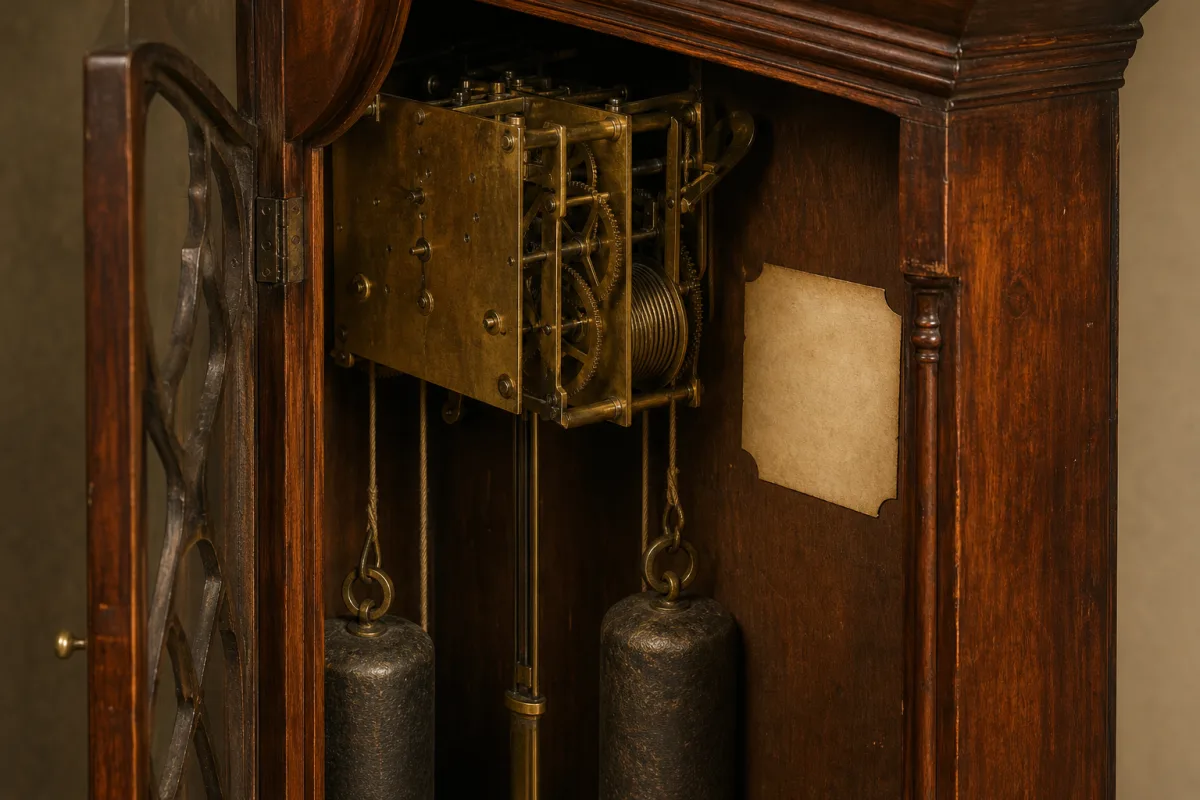
- Paper labels inside the case or on the back board
- Stamped or engraved movement marks on the brass works
- Model numbers or serial numbers
- Retailer or cabinetmaker labels
Be careful not to assume any old-looking mark is genuine or important. Compare what you see with reputable references, and do not rely on invented or unverified marks. If your clock has a furniture-style cabinet with a clearly identifiable maker, this resource may also help: Furniture Maker Marks: 7 Best Antique Clues.
3. Inspect the case, dial, and movement condition
Condition matters a lot in antique grandfather clock appraisal. Even a desirable clock can lose value if key components are damaged, missing, or heavily altered.
| Part | What to check | Why it matters |
|---|---|---|
| Case | Cracks, warping, woodworm, missing trim, refinishing | Original finish and intact wood usually support value |
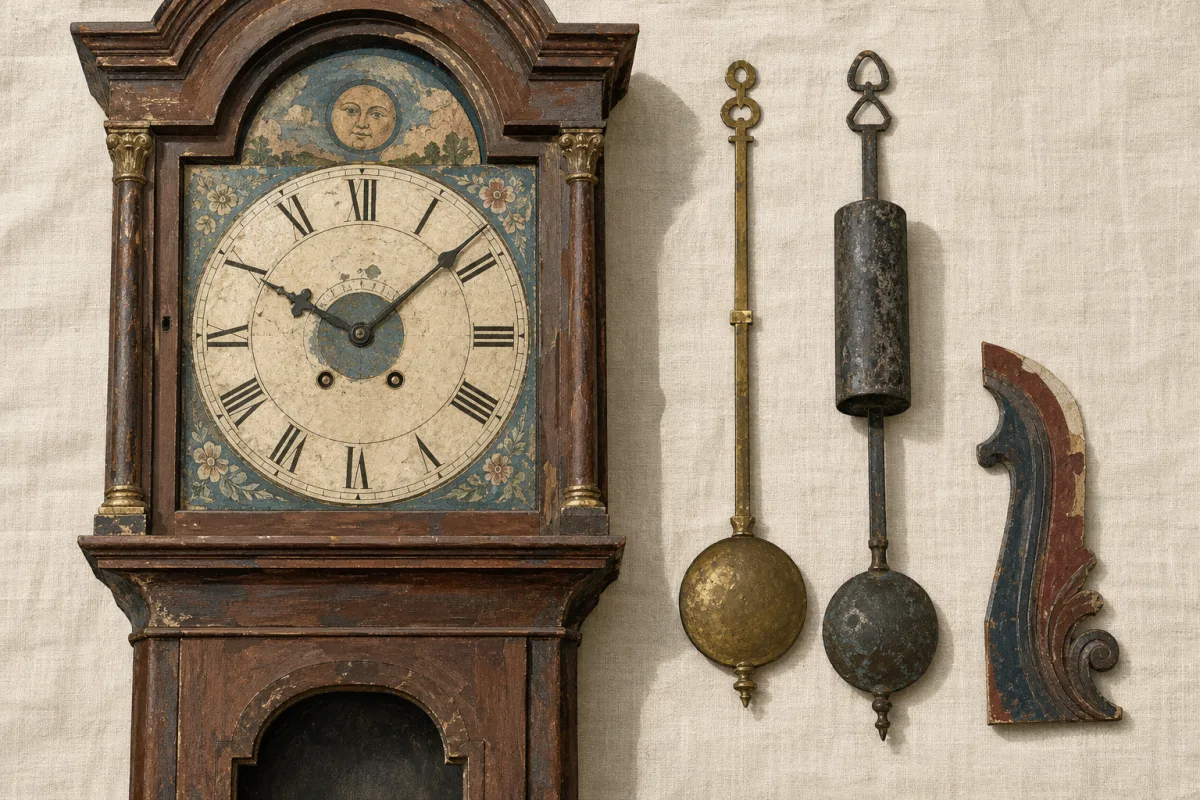
| Dial | Paint loss, replaced chapter ring, repaired corners, missing hands | Original dial components can increase antique grandfather clock value |
| Movement | Rust, worn bushings, broken parts, replacement components | Movement condition affects usability and appraisal result |
| Weights and pendulum | Matching set, originality, cosmetic wear | Missing or replaced parts can lower antique grandfather clock price |
Working condition is important, but “it runs” does not automatically mean it is valuable. A clock that has been cleaned, serviced, or even over-restored may still need a more detailed grandfather clock appraisal.
4. Look for age clues in the construction
Age is another major factor in antique grandfather clock value. Some clocks are true antiques, while others are vintage or later decorative pieces. A vintage grandfather clock value is often lower than a verified antique because of age, materials, and collector demand.
Clues that can help estimate age
- Joinery: Hand-cut joints and older fastening methods can suggest earlier construction.
- Wood choices: Mahogany, oak, walnut, and veneer work may point to specific periods.
- Dial style: Painted dials, moon-phase features, and numeral styles vary by era.
- Movement design: The mechanics can reflect a rough production period.
- Wear patterns: Natural wear often shows in handles, feet, edges, and the base.
If you are comparing age-related value more broadly, you may also find this helpful: Vintage Value: How to Check What It Is Worth.
5. Understand the biggest value factors
When specialists estimate antique grandfather clock price, they usually weigh several factors together rather than using one detail alone. The same style of clock can be worth very different amounts based on condition and market demand.
- Maker reputation: Recognized names often carry stronger interest.
- Originality: Original dial, movement, case, and finish can improve value.
- Condition: Damage, repairs, and replacement parts matter.
- Age: Older does not always mean more valuable, but it often helps.
- Size and style: Some cases are more desirable than others.
- Provenance: Documented history can support an appraisal.
- Working status: A complete working clock is usually easier to sell.
Practical rule: a clean, original, documented clock usually appraises better than a heavily restored clock with unknown parts.
6. Use a simple appraisal checklist at home
Before you contact an appraiser or list the clock for sale, gather the details that matter most. This makes your grandfather clock appraisal faster and more accurate.
Value checklist
- Take clear photos of the front, sides, back, dial, movement, weights, and pendulum.
- Record any labels, stamps, serial numbers, or maker marks.
- Measure the height, width, and depth.
- Note whether the clock runs, chimes, and keeps time.
- List any repairs, replacements, or refinishing you know about.
- Check whether the weights and pendulum appear original to the clock.
- Write down where you found it and any family history attached to it.
If you prefer a photo-based starting point, try the site’s tool-style guide to Antique Identifier by Picture: 7 Best Photo Tips or explore the Antique Value Identifier app for a quick first look.
7. Compare similar clocks carefully
After you collect the details, compare your clock with similar examples, not just any old tall clock. Two clocks that look alike may have very different market value if one is original and the other has a replacement dial or modern movement parts.
Look for matches based on:
- Country of origin
- Maker or retailer
- Case style and wood type
- Movement type
- Condition and completeness
If you are checking pricing more generally, this resource can help you think through a value range: Antique Pricing: 7 Best Ways to Value Items.
When to get a professional appraisal
Consider a professional antique grandfather clock appraisal if the clock appears rare, signed by a known maker, or tied to a family estate. You should also seek expert help if the clock needs insurance documentation, estate division, or a possible sale through an auction house or dealer.
Professional appraisal is especially useful if:
- The clock has an unusual maker or model
- You see signs of a high-end movement or cabinet
- The clock may have historical provenance
- You want a written valuation for records or insurance
- The value difference between “decorative” and “collectible” seems significant
If you want to compare local appraisal options, this guide may help: Antique Valuations Near Me: 7 Best Options.
FAQ
What is the fastest way to estimate antique grandfather clock value?
The fastest way is to identify the maker, inspect the condition, and check whether the clock is original and working. Photos of the dial, movement, and case details help most.
Does a working grandfather clock appraise higher?
Usually, yes, but only if the movement, case, and original parts are in good condition. A clock that runs but has major replacement parts may still have limited value.
What lowers antique grandfather clock price the most?
Common value reducers include heavy refinishing, missing weights or pendulum, damaged movement parts, warped wood, and unknown or replaced dials.
Is vintage grandfather clock value the same as antique value?
Not always. Vintage clocks are often newer than true antiques, so they may have a different market and lower price range unless they are from a desirable maker or style.
Can I use an app before getting an appraisal?
Yes. A photo-based tool can help you organize what you have before you speak with an expert. For a quick starting point, you can use the Antique Value Identifier app and then confirm details with a specialist if needed.
Final thoughts
A careful antique grandfather clock appraisal starts with the maker, condition, age clues, and originality. Once you know those details, it becomes much easier to judge antique grandfather clock value and understand whether your clock is mainly decorative, collectible, or worth a closer expert review.
If you are ready to take the next step, gather your photos and notes, compare a few similar examples, and use a trusted antique identifier or appraisal resource to narrow the range before you sell, insure, or restore the clock.
Try the Antiquevalue app
Use the app when you want a faster photo-based check before comparing details manually.