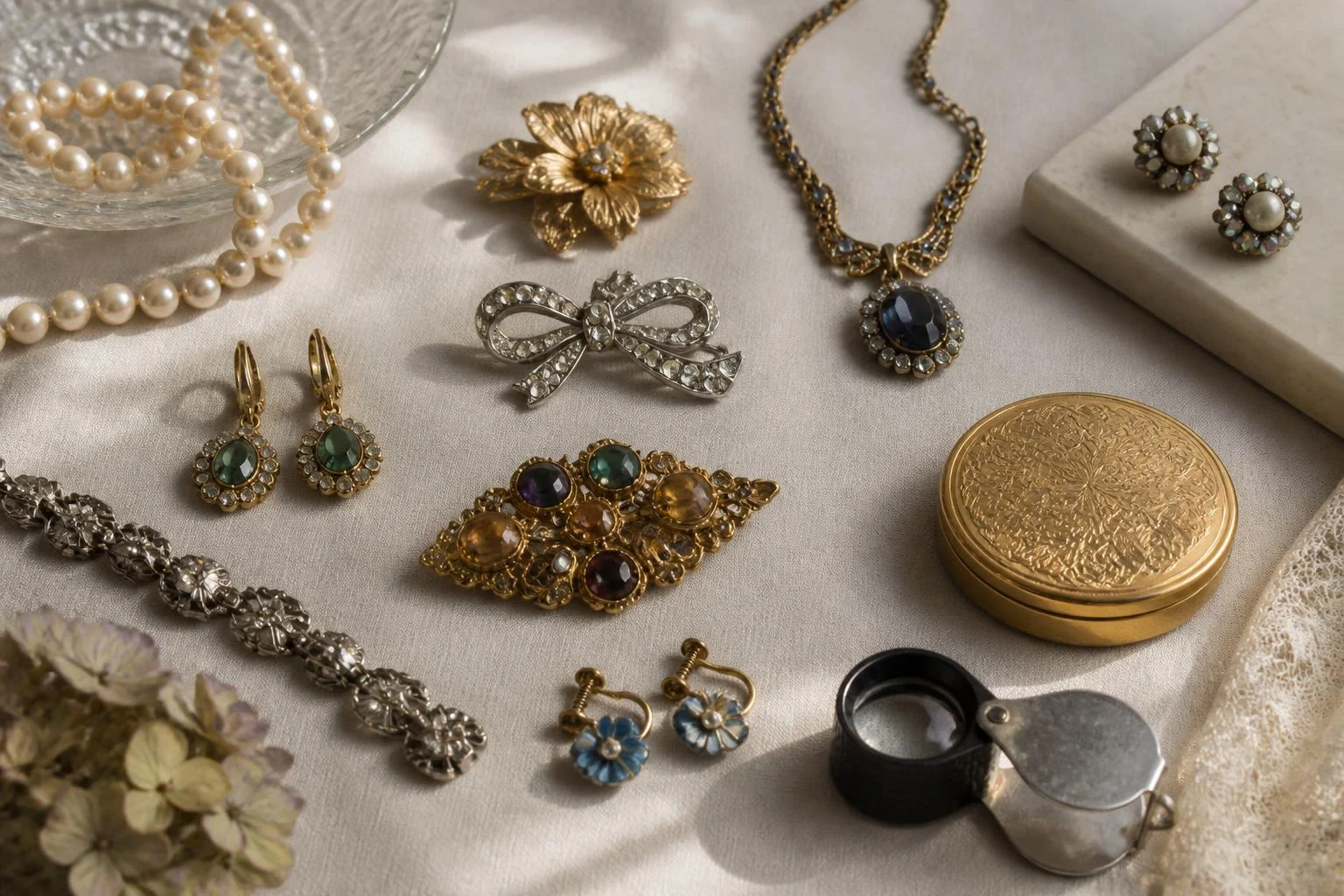
Antique Value Guide
Vintage Costume Jewelry Value: 7 Clues to Check Worth
vintage costume jewelry appraisal: Learn how to assess vintage costume jewelry value using marks, materials, condition, and style before you sell or insure it.
If you need a vintage costume jewelry appraisal, start with the basics: identify the materials, check the condition, and look for maker marks or signatures. Those three things usually tell you much more about vintage costume jewelry value than age alone.
The fastest way to judge what a piece may be worth is to compare it against similar items, then adjust for brand, rarity, and wear. A simple vintage costume jewelry price guide can help, but a real appraisal always depends on the specific piece in hand.
1. Start with the piece, not the story
Family stories can be helpful, but they are not proof of antique costume jewelry value. Before you assume something is rare, inspect it carefully and write down what you can actually see.
What to note first
- Type of item: brooch, necklace, bracelet, clip earrings, ring, or set
- Base metal color and finish: gold-tone, silver-tone, rhodium, painted, or plated
- Visible stones: rhinestones, glass, plastic, paste, faux pearls, cabochons
- Construction: prong-set, glued, wired, molded, cast, or linked
- Any marks on the clasp, pin back, earring clip, tag, or underside
If the piece looks handmade, repaired, or heavily modified, note that too. Condition and originality matter a lot in any antique costume jewelry appraisal.
2. Look for maker marks and signatures
Signed pieces often bring stronger interest than unsigned ones, but a mark alone does not guarantee high value. Some well-known costume jewelry brands are collectible; others are common. What matters is whether the mark is authentic and whether the design is desirable.
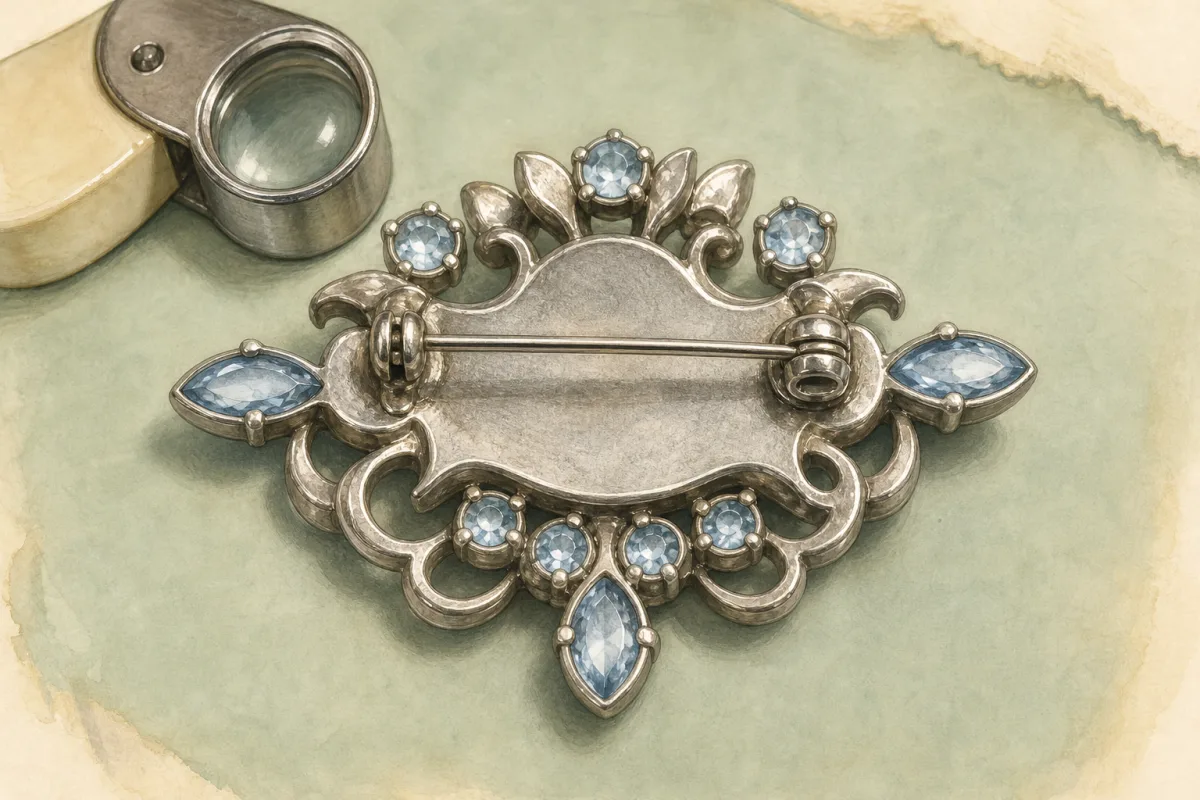
Check the back, clasp, pin stem, tag, or fold-over closure under good light. Use a loupe if you have one. If a mark looks too neat, too new, or inconsistent with the rest of the piece, be cautious. Do not assume an unfamiliar stamp is valuable without comparing it to trusted references.
A vintage costume jewelry appraisal should focus on verifiable features, not guesswork. If you later compare the item with online listings, look for sold results from similar signed pieces, not just asking prices.
3. Judge materials and craftsmanship
Material quality often separates everyday jewelry from pieces with real collector demand. Even in costume jewelry, better construction can make a big difference in value.
| Feature | What to look for | Why it matters |
|---|---|---|
| Stones | Bright, well-cut glass or early rhinestones; uniform settings | Higher-quality stones can improve appeal and price |
| Metal finish | Clean plating, intact enamel, minimal flaking | Original finish often supports better value |
| Settings | Neat prongs, secure mounts, even alignment | Careful construction suggests better workmanship |
| Clasp and hardware | Secure clasp, original pin stem, matching earring clips | Replacement hardware can reduce value |
| Design detail | Layered elements, articulated parts, hand-applied stones | More detailed pieces are often more collectible |
Plastic or common base metal does not automatically mean low value, but it usually limits it unless the design is rare, signed, or historically desirable. The same is true for antique costume jewelry value: craftsmanship helps, but market demand still decides the result.
4. Check condition the way a buyer would
Condition is one of the biggest value drivers. A beautiful piece with broken stones or a damaged clasp may be worth much less than a cleaner example.
Watch for these issues
- Missing or replaced stones
- Broken clasps, bent pins, or weak hinges
- Chips, cracks, or cloudy stones
- Flaking plating or worn enamel
- Glue residue from old repairs
- Missing matching components in a set
Small wear is normal for vintage jewelry, but major repairs can change value quickly. If you are doing a vintage costume jewelry appraisal for insurance, sale, or estate purposes, document every flaw with clear photos.
Tip: Clean gently only if you know the materials. Harsh polishing can damage plating, loosen stones, and reduce value.
5. Compare style, era, and demand
Age alone does not set the price. Certain styles sell better because collectors want them, wearers want them, or they are harder to find in good shape. This is where a vintage costume jewelry price guide becomes more useful than a simple age estimate.
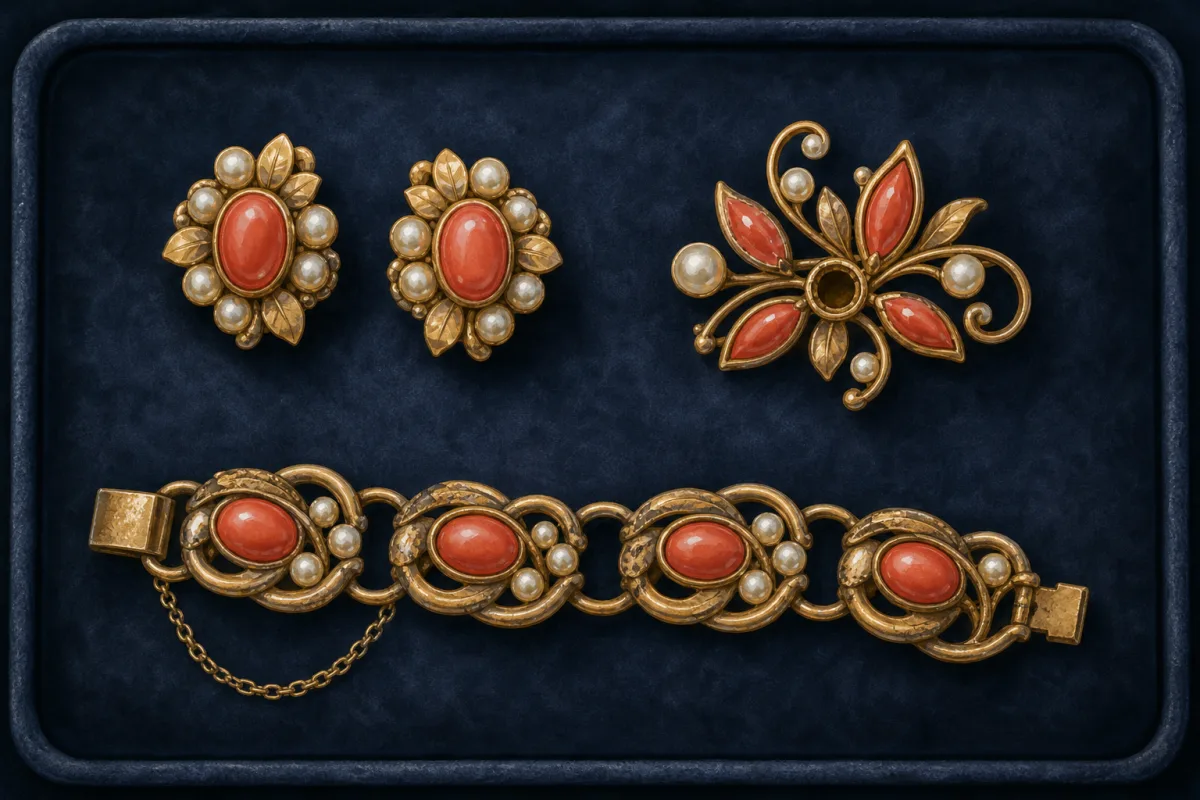
Pieces that often get more attention include bold mid-century designs, unusual floral brooches, signed sets, and clean examples from recognizable design eras. On the other hand, very common necklaces, damaged clip earrings, or mass-produced pieces usually bring modest prices.
Ask yourself: would someone buy this for the design, the maker, or just because it is old? If the answer is only “because it is old,” the antique costume jewelry value may be lower than expected.
6. Compare sold prices, not listings
One of the best ways to estimate vintage costume jewelry value is to compare your piece with recently sold items that match as closely as possible. Search by brand, type, color, stone style, and condition.
Compare these details
- Exact item type: brooch versus pendant, clip earrings versus screwbacks
- Matching maker mark or signature
- Similar stone color and setting style
- Same era or design period
- Comparable condition and completeness
Ignore inflated asking prices. Sold comparisons are more useful because they reflect what buyers actually paid. If you cannot find close matches, widen the search carefully and lower your confidence level.
7. Decide whether you need a professional appraisal
Some pieces only need a quick value check, while others deserve a formal antique costume jewelry appraisal. If the item may be rare, signed, part of a set, or tied to an estate division, it is worth getting a more careful opinion.
You may want professional help if:
- The piece has a clear maker mark and seems collectible
- You suspect the stones or materials may be unusual
- The item is part of a larger inheritance or insurance claim
- You need a written value for sale, estate, or replacement purposes
- You are seeing very different prices online and want a realistic range
For broader identification and value checks beyond jewelry, you can also read our Antique Appraisal Services: 7 Clues to Figure Out What Your Item Is Worth.
Quick value checklist
Use this simple checklist before you sell, insure, or list a piece.
- Identify the item type and likely era
- Check for signatures, tags, or hidden marks
- Inspect stones, plating, enamel, and hardware
- Note damage, repairs, or replacements
- Compare with sold examples, not just listings
- Write down any matching set pieces or original packaging
- Take clear photos front, back, clasp, and close-up marks
If you are trying to evaluate a larger vintage or antique collection, the same method works across categories. Our guide to Vintage Value: How to Check What It Is Worth can help you build a better habit for judging items at home.
How to avoid common appraisal mistakes
Many people overestimate value because a piece looks old or “looks expensive.” Others underestimate it because they focus only on wear.
- Do not assume all signed jewelry is valuable.
- Do not trust a single online listing as a price guide.
- Do not clean aggressively before documenting the piece.
- Do not treat repaired items as mint condition.
- Do not confuse costume jewelry with fine jewelry value rules.
A realistic appraisal balances design, condition, maker, and market demand. That is the most reliable path to understanding vintage costume jewelry value.
FAQ
How do I know if my vintage costume jewelry is valuable?
Check for a maker mark, original construction, strong condition, and a design that shows buyer demand. Signed pieces in good shape usually have more potential than unsigned, worn, or heavily repaired items.
What is the best vintage costume jewelry price guide?
The best guide is a comparison of recently sold items that closely match your piece. Use the same maker, similar materials, and similar condition. Asking prices are less reliable than sold results.
Is antique costume jewelry value based mostly on age?
No. Age helps, but it is not the main factor. Brand, design, rarity, condition, and market demand usually matter more than age alone.
Should I get a professional antique costume jewelry appraisal?
Yes, if the piece may be rare, signed, part of a set, or needed for estate or insurance purposes. A professional opinion is also helpful when online comparisons are inconsistent.
Soft next step
If you want a quicker first pass before you decide on a formal antique costume jewelry appraisal, try the Antique Value Identifier app from antiquevalue.co. It can help you organize what you see, compare details, and make a more informed next step.
Download the app on the App Store to start checking items from home.
Try the Idar app
Use the app when you want a faster, more organized starting point before comparing details manually.