Antique Value Guide
Antique Silverware Appraisal: 7 Clues to Spot Real Value
Learn how to evaluate antique silverware appraisal clues, from silver hallmarks and condition to pattern, maker, and resale demand.
If you have a box of old flatware, a family tea set, or a single odd spoon, an antique silverware appraisal starts with the same basics: what metal it is, who made it, when it was made, and how complete and usable it is today. Some pieces have modest value as everyday silverware; others are worth far more because of their maker, pattern, or rarity.
This guide walks through the main clues that affect antique silverware value, including antique silverware markings, condition, and the difference between sterling, plated, and novelty pieces like antique silverware jewelry or decorative porcelain silverware handles.
1. Check the metal first
The biggest factor in antique silverware appraisal is the metal. Sterling silver usually has stronger value than silver plate because it contains a high percentage of real silver. Silver plate, on the other hand, has a base metal core with a thin layer of silver on top.
Look for these common signs:
- Sterling marks such as “Sterling,” “.925,” or a national hallmark system
- Silver plate marks such as “EPNS,” “EP,” “A1,” or “silver plate”
- Wear patterns that reveal a different base metal underneath on high-touch areas
If you are comparing old silver silverware value versus plated pieces, sterling typically has the stronger resale market. That said, some plated patterns still have collectible demand if the design is rare or the set is complete.
2. Read the antique silverware markings carefully
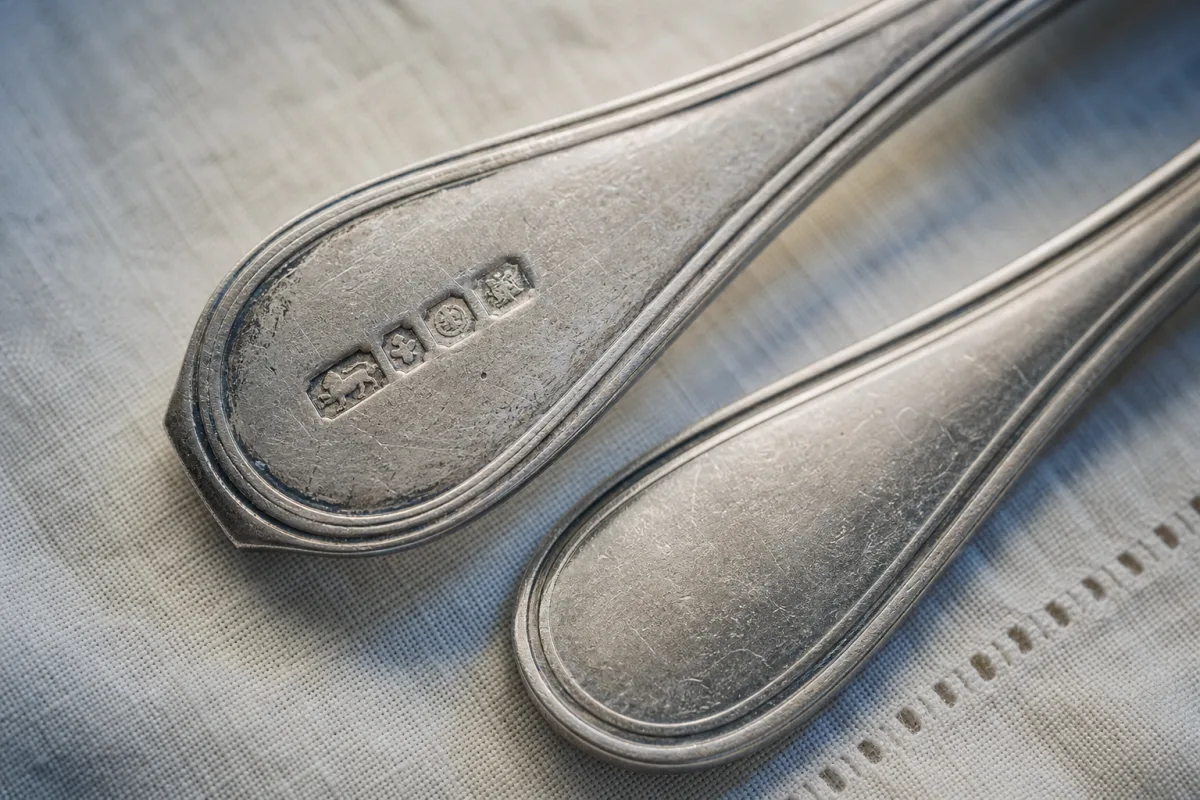
Antique silverware markings are often the fastest way to narrow down age, maker, and origin. Markings may appear on the back of a handle, near the neck of a spoon, or on the underside of a serving piece. They can include maker names, city names, date letters, hallmarks, and pattern numbers.
Do not guess from a single stamp. Many pieces were repaired, mixed into sets, or worn down over time. Compare all visible marks and, if possible, photograph them in good light.
You may also want to compare those marks with broader clues found in silver hallmarks identification, especially if the piece appears older than 100 years or has a non-U.S. origin.
What markings usually matter most
- Maker or retailer name
- Silver content mark
- Hallmark symbol or assay mark
- Pattern number or style number
- Date mark, when present
3. Compare pattern demand, not just age
Age alone does not decide antique silverware value. A common pattern from a well-known era may be worth less than a later piece in a rare or highly sought-after design. Collectors often pay more for complete sets, elegant serving pieces, and patterns with strong name recognition.
To estimate vintage silverware value, ask:
- Is the pattern decorative or plain?
- Is it from a known maker?
- Are matching pieces easy or hard to find?
- Does the pattern appeal to collectors or decorators?
More ornate patterns, unusual handles, and discontinued designs often bring better interest. A plain teaspoon may be common, while a matching serving spoon or sugar shell from the same pattern can be harder to replace.
4. Inspect condition with a practical eye
Condition has a direct effect on antique silverware appraisal. Light tarnish is normal, but damage lowers value. A clean piece with strong edges and clear marks is usually more desirable than one that has been over-polished or heavily bent.
| Condition clue | What it can mean |
|---|---|
| Clear marks and good shape | Better identification and stronger resale interest |
| Heavy dents or bends | Lower value, especially for usable flatware |
| Deep scratches or pitting | May reduce collectible appeal |
| Thin worn areas | Possible silver loss on plated items |
| Professional repair | Can help usability, but may affect originality |
For collectible items, original condition often matters more than a mirror-bright finish. Over-polishing can soften detail and reduce the look of older workmanship.
5. Identify whether it is a full set or a single piece
One of the most important value checks is completeness. A full set of matching forks, knives, and spoons often has more market interest than scattered singles. Serving pieces can also add value, especially when they match a popular pattern.
Ask yourself:
- Do the pieces match in pattern and maker?
- Are any key pieces missing?
- Is there a fitted box, case, or original storage?
- Are the pieces in a standard place setting or a specialty size?
Collectors often pay a premium for matched sets, while mismatched pieces may be valued more for metal content or decorative use.
6. Watch for special categories that can raise interest
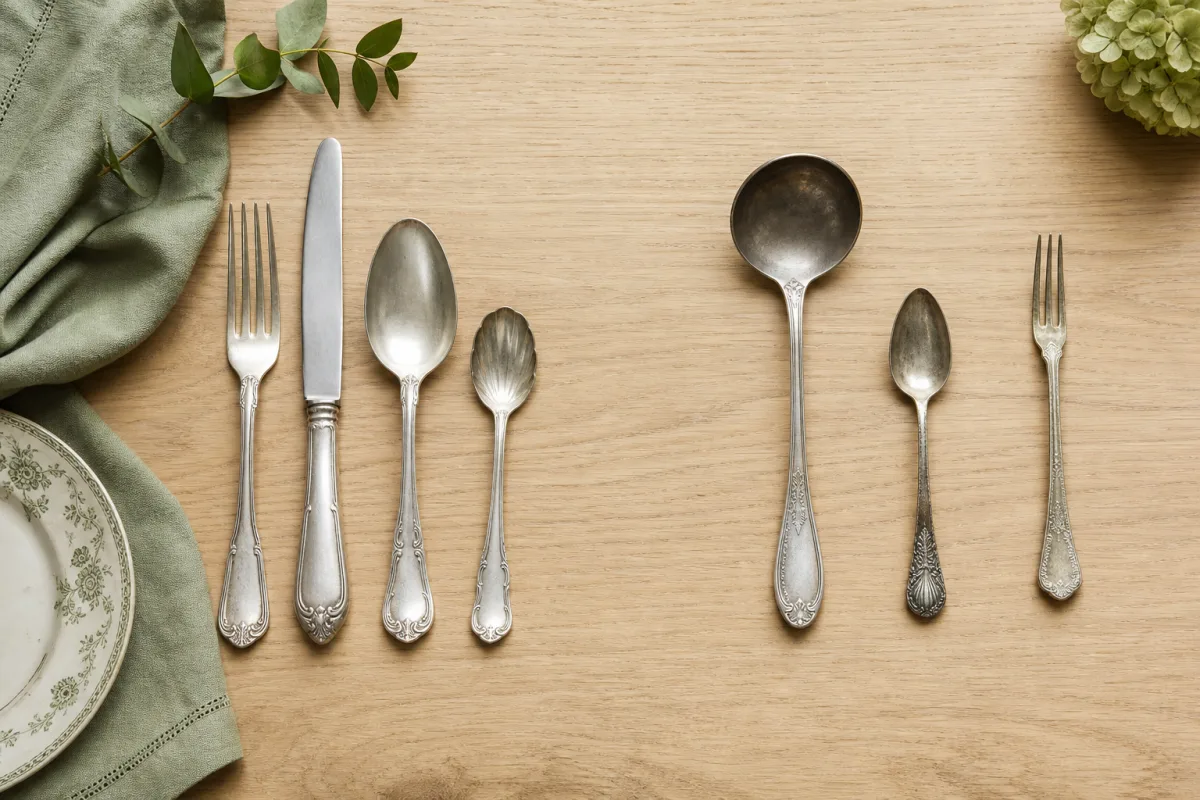
Some silverware items are more collectible because of form, rarity, or decoration. These are not the most common pieces, but they can stand out in an appraisal.
- Most valuable antique silverware often includes rare serving pieces, unusual forms, or pieces by a recognized maker
- Antique silverware jewelry may be made from repurposed flatware and should be evaluated differently from original table silver
- Porcelain silverware handles or accents can add design interest, but condition and originality are important
- Presentation pieces, monogrammed items, and regional patterns may also have niche demand
If a piece was altered into jewelry or home decor, its value may shift from silverware appraisal to vintage accessory or craft-market value. That is not necessarily bad, but it changes the comparison set.
7. Factor in silver content, scrap interest, and collector demand
Antique silverware value can come from two very different markets: collectors and metal buyers. A sterling spoon with rare marks may have collector value above melt. A common, damaged piece may be worth more as silver weight than as a decorative item.
When reviewing old silver silverware value, keep both possibilities in mind:
- Collector value depends on maker, pattern, age, and condition
- Metal value depends on actual silver content and weight
- Resale demand depends on how easy the item is to use, display, or complete into a set
A practical antique silverware appraisal looks at all three, not just one number.
Quick value checklist
Use this short checklist before you compare prices or request an appraisal:
- Look for sterling, plated, or foreign hallmarks
- Photograph all antique silverware markings
- Note maker, pattern, and any date clues
- Check for bends, splits, worn tips, or missing parts
- Count how many matching pieces you have
- Separate original flatware from altered items like antique silverware jewelry
- Compare the piece with similar sold examples, not just listings
- Keep any box, receipt, or family history with the item
If you want a broader framework for evaluating inherited objects, you may also find Antique Appraisal Services: 7 Clues to Figure Out What Your Item Is Worth useful.
When to get a professional opinion
If your silverware appears to be sterling, has unusual markings, or may be part of a complete set, a professional review can save time and prevent costly mistakes. This is especially helpful when the piece looks older than expected, comes from a known silversmith, or includes unfamiliar hallmarks.
For a wider read on expert evaluation, see Certified Antique Appraiser: 7 Clues That Reveal Real Value.
If you want a quick first pass before contacting an expert, the Antique Value Identifier app can help you organize photos and compare visible clues with fewer assumptions. You can learn more at the Antique Value Identifier app.
FAQ
How do I know if my silverware is sterling or silver plate?
Check for marks like “Sterling” or “.925.” If you see “EPNS,” “EP,” “silver plate,” or similar marks, it is usually silver plated rather than solid sterling. When in doubt, inspect all pieces and compare the markings carefully.
What affects antique silverware value the most?
The biggest factors are metal content, maker, condition, rarity, and whether the piece is part of a matching set. Clear markings and original detail usually help.
Are single forks or spoons worth anything?
Yes, but the value depends on the material and pattern. A single sterling piece may have collectible or metal value, while a common plated piece may have limited resale demand unless it is part of a desirable set.
Do tarnish and patina hurt value?
Light tarnish usually does not hurt value, and some collectors prefer natural age. Heavy damage, corrosion, or aggressive polishing can be more of a concern.
Can a decorated or altered piece still have value?
Yes. Altered pieces such as antique silverware jewelry may still appeal as vintage items, but their value should be judged differently from original table silver.
If you are sorting inherited flatware or comparing pieces for resale, start with the marks, metal, and condition. Those clues usually tell you the most. When the piece seems promising, a closer appraisal can help confirm whether you have a common serving spoon or one of the most valuable antique silverware finds in the set.
Try the Antiquevalue app
Use the app when you want a faster photo-based check before comparing details manually.