Antique Value Guide
Antique Lighting Appraisal: 7 Clues That Reveal Real Value
Learn how to assess antique lighting appraisal values with 7 practical clues, a quick price guide, and a checklist for lamps, sconces, and chandeliers.
Antique lighting can range from a modest period fixture to a highly desirable decorative piece, and the difference is usually in the details. If you are researching antique lighting appraisal, the best place to start is with condition, materials, maker clues, and whether the piece still has its original parts.
This quick guide covers the most useful clues for estimating value, plus a simple antique lighting price guide you can use before you contact an appraiser or compare recent sales. For a broader look at related pieces, you may also find our Tiffany Lamp Appraisal guide helpful.
1. Start with the type of lighting
Not all antique lighting is valued the same way. A table lamp, oil lamp, sconce, chandelier, and ceiling fixture can each follow different markets. The style and purpose matter because buyers often look for specific eras and uses.
Common categories include:
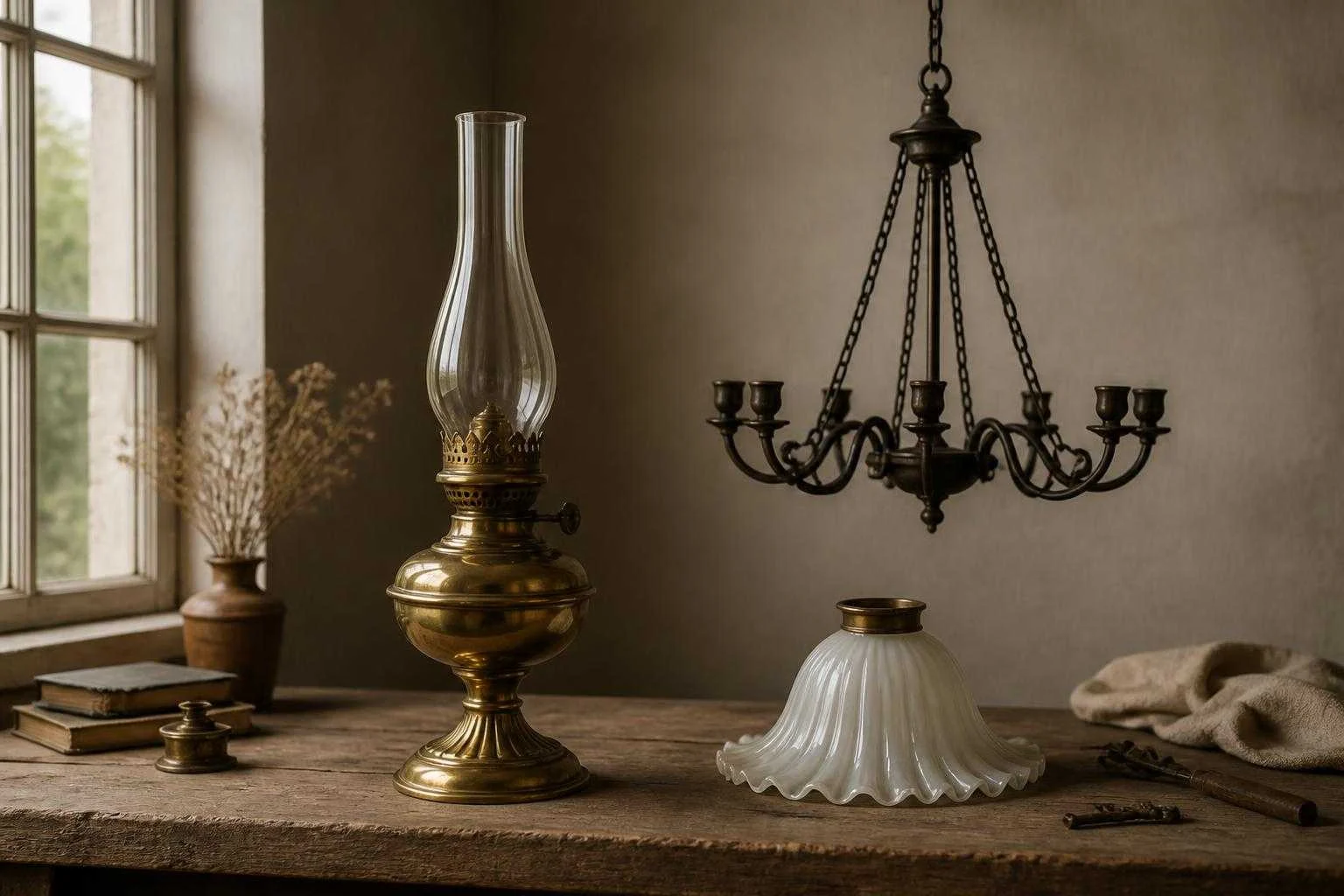
- Oil lamps with glass font, burner, and chimney
- Electric table lamps from the late 19th to mid-20th century
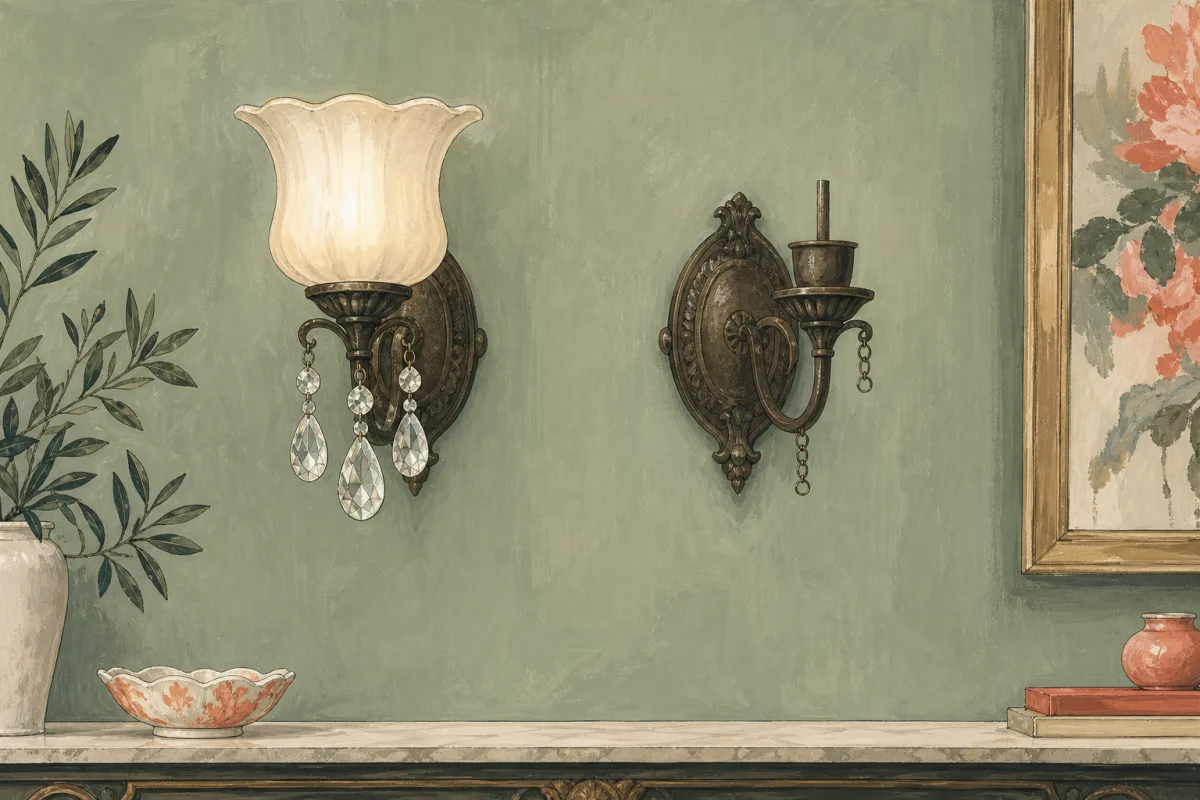
- Wall sconces in brass, bronze, or glass
- Chandeliers with crystal, brass, or cast metal parts
- Decorative lamps with glass shades or figural bases
As a rule, lighting with decorative design, complete original parts, and a recognizable period style tends to draw more interest than a plain replacement fixture.
2. Check the materials closely
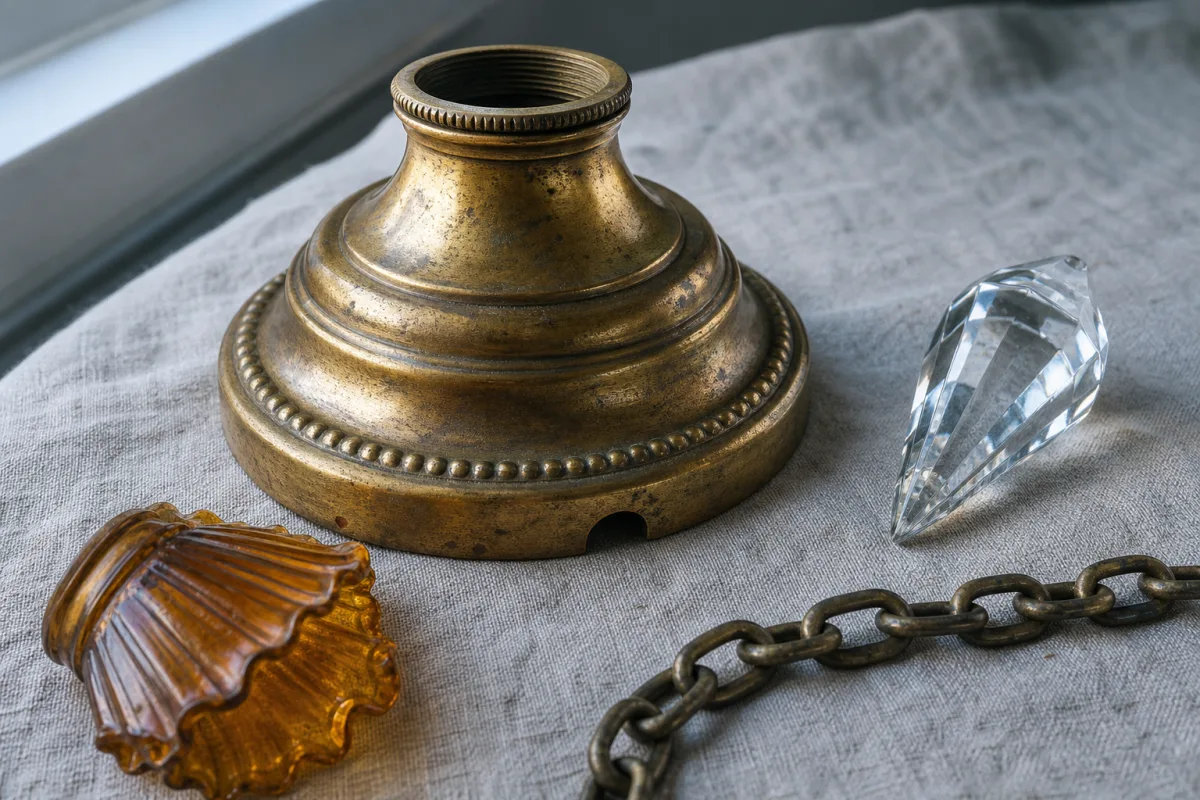
Materials are one of the strongest value clues. Brass, bronze, hand-cut glass, crystal prisms, slag glass, mica, and fine ceramic bases often indicate a more desirable fixture than modern plated metal or mass-produced replacement parts.
Look for signs of quality such as:
- Heavier metal construction instead of thin, lightweight parts
- Hand-finished surfaces or patina that look consistent with age
- Glass shades with slight variations, bubbles, or hand-applied decoration
- Original crystal drops, prisms, or chains
Be careful not to assume all old-looking pieces are valuable. Some reproduction lamps are made to imitate antique styles very well, but the materials and construction usually tell the real story.
3. Look for the maker, retailer, or pattern clues
True maker marks can add important context, but many antique lights were not signed in an obvious way. Instead, you may find stamped numbers, paper labels, engraved names, or hardware marks on sockets, bases, or mounting points.
Useful clues include:
- Labels from lighting companies, department stores, or importers
- Model numbers or pattern numbers on metal parts
- Patent dates on sockets or fittings
- Recurring design elements that match known manufacturers
If you do not see a mark, do not guess. A fake maker name or invented signature can create confusion and lower confidence in the piece. When in doubt, document what is actually present and compare it with known examples.
4. Determine whether the piece is original, converted, or repaired
Conversion is a major factor in antique lighting appraisal. Many oil lamps were later electrified, and many fixtures have had sockets, cords, shades, or arms replaced over time. Some conversions are old and acceptable; others reduce value because they change the originality of the piece.
Ask these questions:
- Was the fixture originally electric or converted from oil?
- Are the socket, cord, and switch period-correct?
- Do the shade and base belong together?
- Are any arms, prisms, or finials missing?
Originality usually matters most when the piece is decorative and collectible. A well-kept original fixture will often outperform a heavily altered example, even if both are attractive.
5. Judge condition the same way a buyer would
Condition can change value dramatically. Small surface wear is expected on antique lighting, but chips, cracks, bent arms, missing glass, poor repairs, and unstable wiring all affect buyer confidence.
Use this quick condition checklist:
- Glass is intact with no major cracks or large chips
- Metal is not badly bent, cracked, or corroded
- Wiring is safe enough to inspect and photograph
- Shade, finial, and decorative parts are present
- Repairs are neat and do not distract from the design
Even if the piece is not perfect, an honest description helps you compare it against the right antique lighting price guide results. A rare fixture in fair condition may still be worth more than a common fixture in excellent condition.
6. Compare style and era to recent market results
Value depends on what similar pieces are actually selling for, not just what they are listed at. When possible, compare completed sales for the same type, era, and style. A Victorian oil lamp, an Art Nouveau lamp, and a mid-century glass pendant may all fall under “antique lighting,” but they belong to different markets.
When reviewing comparable sales, match these details as closely as possible:
| What to compare | Why it matters |
|---|---|
| Fixture type | Lamp, sconce, chandelier, or oil lamp can have different demand |
| Era | Victorian, Arts and Crafts, Art Deco, or mid-century buyers value different looks |
| Materials | Brass, bronze, glass, crystal, and ceramic often affect price |
| Original parts | Completeness can increase value |
| Condition | Damage and repairs change buyer interest |
If you are unsure how to organize your comparison search, the Antique Lamp Appraisal article offers a useful method for checking clues on lamp bases, shades, and fittings.
7. Measure desirability, not just age
Age matters, but desirability often matters more. A later fixture with a strong design, good proportions, and quality materials can outrank an older but plain piece. Buyers usually pay more for lighting that looks complete, decorative, and ready to display.
Features that can raise interest include:
- Signed or attributed design
- Uncommon glass color or pattern
- Matched shade and base
- Architectural or period-specific styling
- Original decorative hardware
By contrast, pieces with mismatched parts, generic design, or heavy wear often belong in the lower end of the antique lighting price guide.
Quick antique lighting price guide
Use the table below as a broad starting point only. Actual value depends on originality, maker, condition, and demand in your market.
| Lighting type | Typical value range | Notes |
|---|---|---|
| Common antique table lamp | Lower to moderate | Often influenced by condition and wiring |
| Decorative oil lamp | Low to moderate | Completeness and glass parts matter |
| Quality brass or bronze sconce | Moderate | Original pairs can be more desirable |
| Crystal or ornate chandelier | Moderate to high | Missing prisms and repairs can reduce value |
| Designer or attributed lamp | Higher | Maker confirmation can change pricing |
Think of this as a framework, not a quote. Two lamps that look similar in photos can appraise very differently once the wiring, marks, and parts are inspected in person.
Value checklist before you ask for an appraisal
Before contacting an appraiser or using a valuation tool, gather the basics. Good photos and measurements make it much easier to estimate value accurately.
- Take full views from the front, back, and sides
- Photograph all labels, marks, sockets, and fittings
- Note height, width, and shade diameter
- List any repairs, missing parts, or replacements
- Show the wiring and plug if it is safe to do so
- Record whether the fixture still works
If you want a broader valuation approach for different antiques, our Antique Appraisal Services guide explains how to think through the same kind of value clues across categories.
Tip: For antique lighting, completeness and originality often matter as much as age. A well-preserved, documented fixture usually gives you a much stronger value estimate than a vague “old lamp” description.
FAQ
How do I know if my antique light is valuable?
Start by identifying the type, checking materials, looking for marks, and seeing whether all original parts are present. Value usually rises when the fixture is complete, attractive, and tied to a known maker or period style.
Does rewiring hurt value?
Not always. Safe, professional rewiring can be acceptable, especially if it preserves the original look. But rough repairs, incorrect parts, or visible damage can lower value.
Are antique lamps better than chandeliers for value?
Neither is automatically better. The strongest pieces in either category usually have original parts, appealing design, and a healthy market of interested buyers.
What photos should I send for an appraisal?
Send clear photos of the whole fixture, close-ups of marks, the socket or mount, the shade, the underside or back, and any damaged areas. Include a ruler or tape measure if possible.
Get a faster first look
If you want a quick starting point before deeper research, use the Antique Value Identifier app to organize photos and notes before you request a full appraisal. It is a simple way to keep track of what you have and which details matter most.
For more appraisal help across lighting and other antiques, visit antiquevalue.co for practical guides built around real value clues.
Try the Antiquevalue app
Use the app when you want a faster photo-based check before comparing details manually.