Antique Value Guide
Certified Antique Appraiser: 7 Clues That Reveal Real Value
Learn how a certified antique appraiser checks age, maker marks, condition, provenance, and comparables to estimate what an antique is worth.
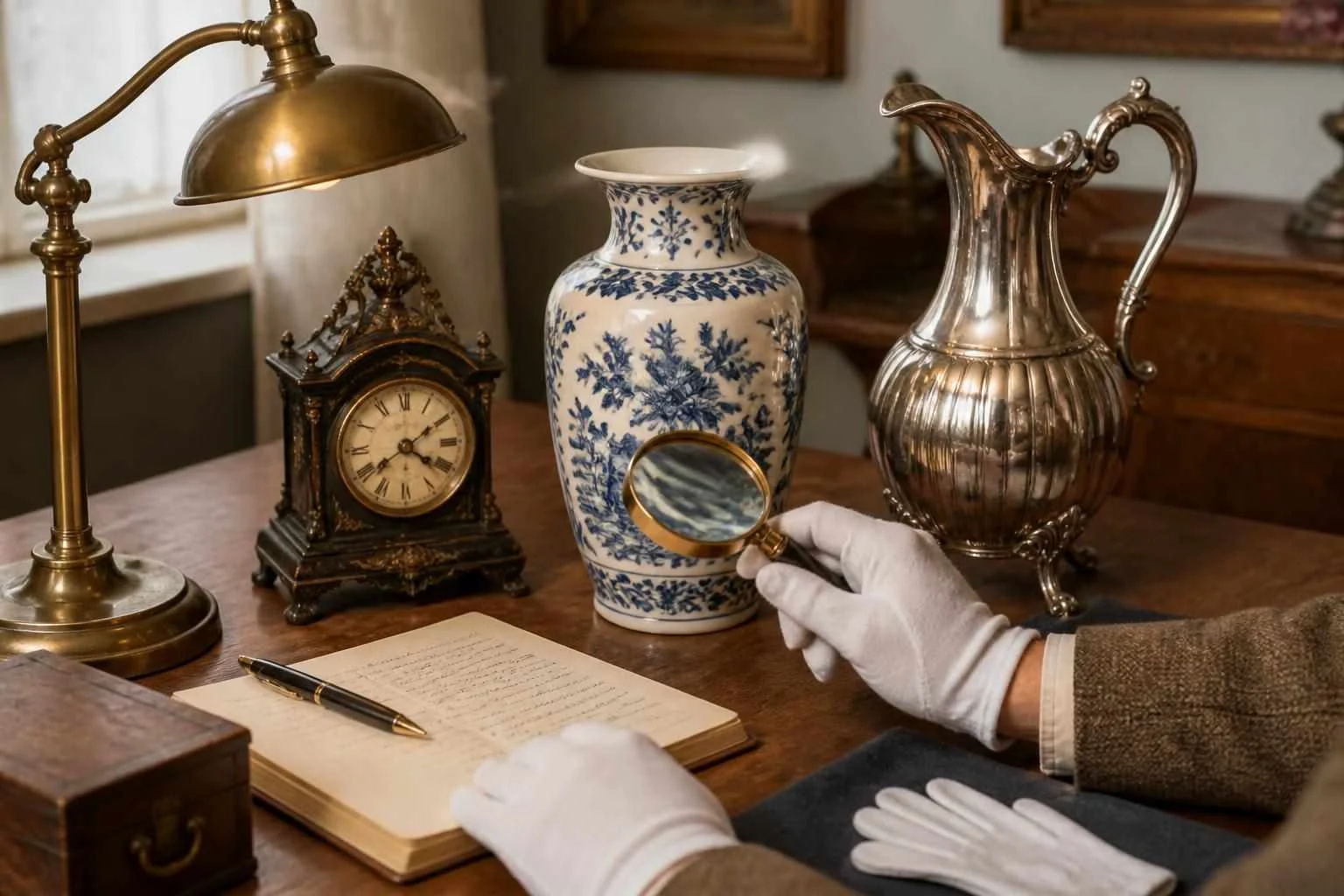
If you want a realistic estimate of what an antique is worth, a certified antique appraiser looks beyond the object’s age. They check maker marks, condition, materials, provenance, and recent market examples before giving a value range. That same process can help you make a smarter decision whether you are selling, insuring, inheriting, or simply sorting through a family collection.
This guide breaks down the clues a certified antique appraiser uses, plus a simple checklist you can follow before you request a formal opinion. If you want to compare your item with a quick digital reference first, you can also use the Antique Value Identifier app as a starting point.
What a certified antique appraiser looks for first
A certified antique appraiser does not begin with a guess. The first step is usually identification: what is the item, when was it made, and is it authentic? Once those basics are clear, the appraiser compares your piece with similar items sold in the market and adjusts for condition, rarity, and demand.
That process matters because two antiques that look similar can have very different values. A common example is furniture: one piece might be a later reproduction, while another has original hardware, a documented maker, and early finish. For a deeper look at furniture-specific valuation, see Antique Furniture Appraisal: How to Check What It Is Worth.
7 clues a certified antique appraiser checks
1. Maker marks, signatures, and labels
Marks can be one of the fastest ways to narrow down origin and age. A certified antique appraiser will look for stamped names, paper labels, impressed marks, hallmarks, and painted signatures. The key is not just finding a mark, but reading it correctly in context.
- Check under bases, inside drawers, along backs, and near joints.
- Look for wear that matches the age of the item, not a fresh-looking label added later.
- Compare the mark style with known examples from the same maker or period.
If your piece is furniture, maker marks are especially important. You can learn the basics in Furniture Maker Marks: 7 Best Antique Clues.
2. Materials and construction
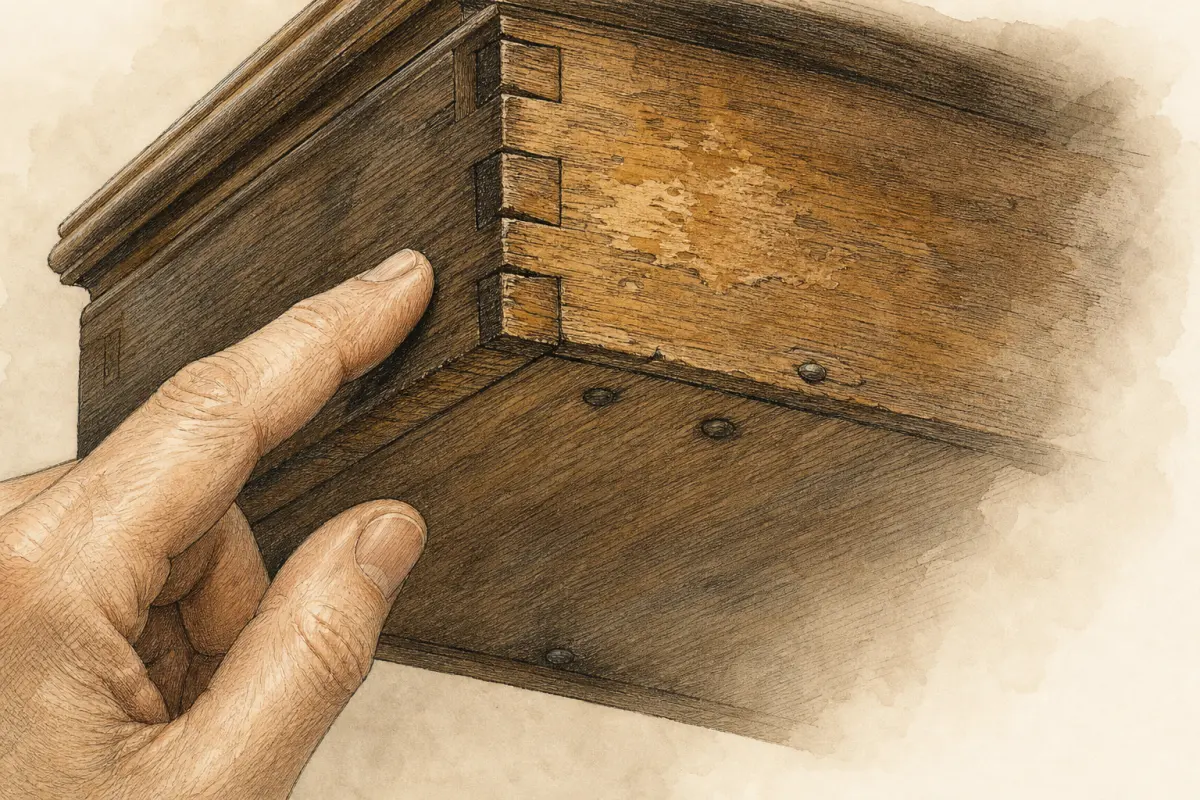
Materials often tell the story faster than appearance. A certified antique appraiser checks whether the item was made by hand, with early machine methods, or in a later period using modern shortcuts. Construction details such as dovetail joints, hand-planed surfaces, old nails, and wear patterns can support age and authenticity.
- Hand-cut joints usually differ from machine-cut ones.
- Older finishes often show natural aging rather than uniform shine.
- Repairs, replacements, and refits can affect value significantly.
3. Condition and originality
Condition is one of the biggest value drivers. A certified antique appraiser will note chips, cracks, refinishing, missing parts, and restorations. Original finish, original hardware, and untouched surfaces can raise interest, while heavy repairs can lower value.
That does not mean a damaged item has no value. It means the appraiser has to decide how much the flaws affect the market for that specific type of antique.
4. Age, style, and period
An antique is not valuable only because it is old. Style and period matter because buyers often seek pieces from a particular era, such as Victorian, Arts and Crafts, or Art Deco. A certified antique appraiser uses style details to verify whether the item fits the claimed period.
If you are still deciding whether something is truly antique or simply vintage, this article can help with the difference: Vintage Value: How to Check What It Is Worth.
5. Provenance and ownership history
Provenance means the item’s documented history. Receipts, old photographs, auction records, family records, and exhibition history can strengthen value, especially for notable pieces. A certified antique appraiser treats provenance as supporting evidence, not automatic proof of value.
Clear provenance is most helpful when it ties the item to a known maker, a respected collection, or a documented time period. Even partial records can improve confidence in the identification.
6. Rarity and survival rate
Rare does not always mean expensive, but rarity often influences demand. A certified antique appraiser asks how many comparable examples survive and whether your item has unusual features. Limited production, uncommon colorways, special commissions, or intact sets can all affect the estimate.
For unusual household pieces, rarity can be overlooked. A detailed look at an uncommon form such as a chifferobe can help you see why details matter: Antique Chifferobe with Mirror Value: How to Check What It Is Worth.
7. Recent market comparables
Even a beautiful antique needs market evidence. A certified antique appraiser compares the item against recent sales of similar pieces, not just asking prices. That helps separate hopeful listings from actual market results.
Comparables are strongest when they match:
- same maker or close attribution
- similar age and style
- similar size and condition
- similar materials and originality
For decorative items such as lamps, glass, clocks, silver, or slot machines, recent comps can vary a lot depending on condition and completeness. If that is your category, these guides may help you narrow things down: Tiffany Lamp Appraisal: How to Check What It Is Worth, Silver Pitcher Value: How to Check What It Is Worth, and Antique Slot Machine Price Guide: How to Check What It Is Worth.
Quick value checklist before you ask for an appraisal
Use this checklist to prepare your item so a certified antique appraiser can work faster and with better information.
| What to check | Why it matters | What to do |
|---|---|---|
| Maker mark or label | Helps identify origin and age | Photograph every mark clearly |
| Condition | Strongly affects value | Note chips, cracks, missing parts, repairs |
| Measurements | Comparable sales depend on size | Record height, width, depth, weight if useful |
| Material | Affects authenticity and demand | Identify wood, metal, ceramic, glass, or stone |
| Provenance | Supports history and confidence | Gather receipts, family notes, photos, auction papers |
| Function | Working parts can influence value | Test gently and note any issues |

Common mistakes that can distort value
Even careful owners can misread value. A certified antique appraiser usually sees the same mistakes again and again.
- Cleaning too aggressively: heavy polishing or scrubbing can damage original surfaces.
- Assuming age equals value: older items are not automatically rare or desirable.
- Trusting a single online listing: asking prices are not the same as sold prices.
- Ignoring repairs: old repairs may reduce value even if they are stable.
- Overlooking category-specific clues: ceramics, silver, furniture, and clocks each have their own markers.
If you need more general evaluation clues for mixed household antiques, this overview may help: Antique Appraisal Services: 7 Clues to Figure Out What Your Item Is Worth.
FAQ
What does a certified antique appraiser do?
A certified antique appraiser examines an item’s identity, age, condition, rarity, and market demand, then provides a value opinion based on evidence and comparable sales.
Is a certified antique appraiser the same as a dealer?
Not always. A certified antique appraiser is focused on valuation, while a dealer may be focused on buying and selling inventory. The two roles can overlap, but they are not identical.
Can I estimate value without an in-person appraisal?
You can make a rough estimate using photos, measurements, marks, and comparable sales. For a more confident result, a certified antique appraiser usually needs clear images and item details at minimum, and sometimes an in-person review.
What if my item has no maker mark?
That does not make it worthless. A certified antique appraiser can still evaluate construction, style, material, wear, and comparable examples to narrow down the period and market value.
Do repairs always lower the value?
Not always, but they often matter. Small period repairs may be acceptable in some categories, while refinishing, replaced parts, or structural fixes can reduce value more noticeably.
Final takeaway
A certified antique appraiser checks more than age. The most useful clues are marks, construction, condition, provenance, rarity, and recent market evidence. If you gather those details first, you will usually get a clearer and more credible value estimate.
If you want a fast first pass before talking to a professional, try the Antique Value Identifier app and compare your notes with the clues in this guide. It is a simple way to decide whether your piece deserves a deeper appraisal.
Try the Antiquevalue app
Use the app when you want a faster photo-based check before comparing details manually.