Antique Value Guide
Antiques and Collectibles Value Guide for Real-World Appraisals
Learn how to assess antiques and collectibles, spot value clues, and know when to use a collectible appraisal or value guide.
If you want to understand antiques and collectible value, start with condition, authenticity, rarity, and recent market demand. A good collectible appraisal or antique collectibles price guide helps, but the real answer usually comes from comparing your item’s exact details against similar pieces that have actually sold. In most cases, you can narrow value quickly by checking marks, material, age, repairs, and whether the item is common or unusually scarce.
This guide gives you a practical way to judge antiques and collectibles without guesswork. Use it as a decision path: identify the item, check the value clues, compare it to a price guide, and then decide whether you need a professional appraisal antiques collectibles expert or a tool like the Antique Value Identifier.
What matters most when pricing antiques and collectibles
Two objects can look similar and still have very different values. The price usually depends on a combination of factors, not one single feature.
- Condition: Chips, cracks, repairs, replaced parts, and heavy wear usually reduce value.
- Authenticity: Original parts, correct materials, and genuine age matter more than appearance alone.
- Rarity: Scarcer pieces often bring stronger interest, especially if collectors actively seek them.
- Maker or origin: A known manufacturer, workshop, or country of origin can change value significantly.
- Demand: Even a genuine antique may sell slowly if collectors are not currently active in that category.
- Documentation: Receipts, provenance, old photos, or prior appraisals can help support a valuation.
7 clues that help you estimate value
These clues work for many categories, from furniture and silver to glass, lamps, and decorative objects. You do not need every clue to be present, but the more you can confirm, the better your estimate.
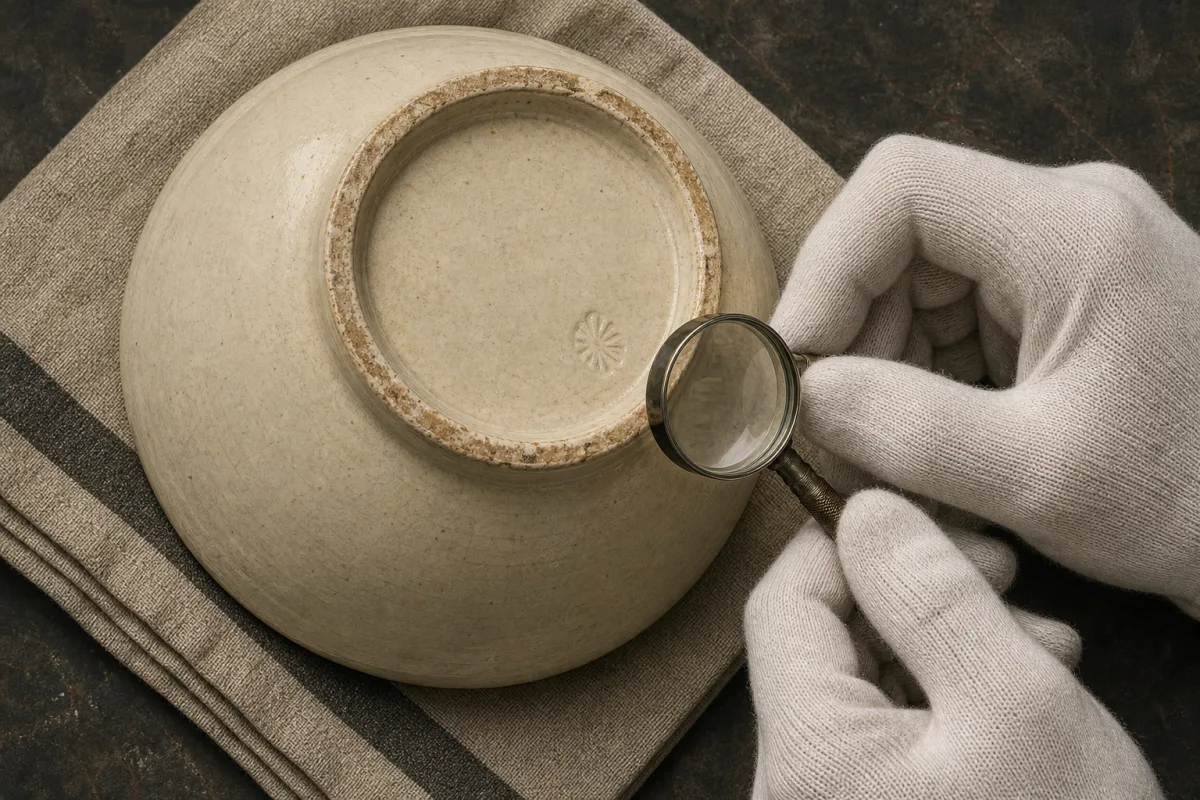
1. Look for marks, signatures, and labels
Start by checking the underside, back, inside edge, socket area, or hidden joinery. Marks can identify a maker, material, country of origin, or production period. Be careful: not every mark means the item is valuable, and not every old item is marked.
2. Check the material closely
Material often separates a common reproduction from a more desirable original. For example, sterling silver is different from silverplate, hand-blown glass is different from molded glass, and solid wood construction is different from later veneer-only repair jobs.
3. Judge age with the right clues
Wear should make sense for the object. Natural aging appears in consistent places, while fake aging often looks uneven or forced. Look at screws, fasteners, seams, glass thickness, finish loss, and tool marks. If something looks “too new” for its claimed age, it may need closer review.
4. Note damage and repairs
Restoration is not always bad, but it should be disclosed and factored into the value. Cracks, rewired lamps, replaced mounts, repainted surfaces, re-plated silver, and missing parts can all change what a buyer will pay.
5. Compare style and design details
Style can point to a period and help you separate authentic pieces from later copies. Shape, proportion, handles, feet, glasswork, carving, shade construction, and hardware all matter. For example, a genuine period piece often has more precise construction than a decorative later version.
6. Check whether the item is complete
Sets and matching components usually carry more appeal than partial pieces. A lamp without its original base parts, a silver service with missing items, or a jewelry piece with replaced stones may still sell, but completeness affects value.
7. Compare against real sales, not just asking prices
Listed prices are only wishful thinking until an item actually sells. For an antique and collectibles price guide, use sold examples that match your item’s size, condition, and brand as closely as possible. That comparison is often more useful than a broad category average.
Quick value checklist before you search a price guide
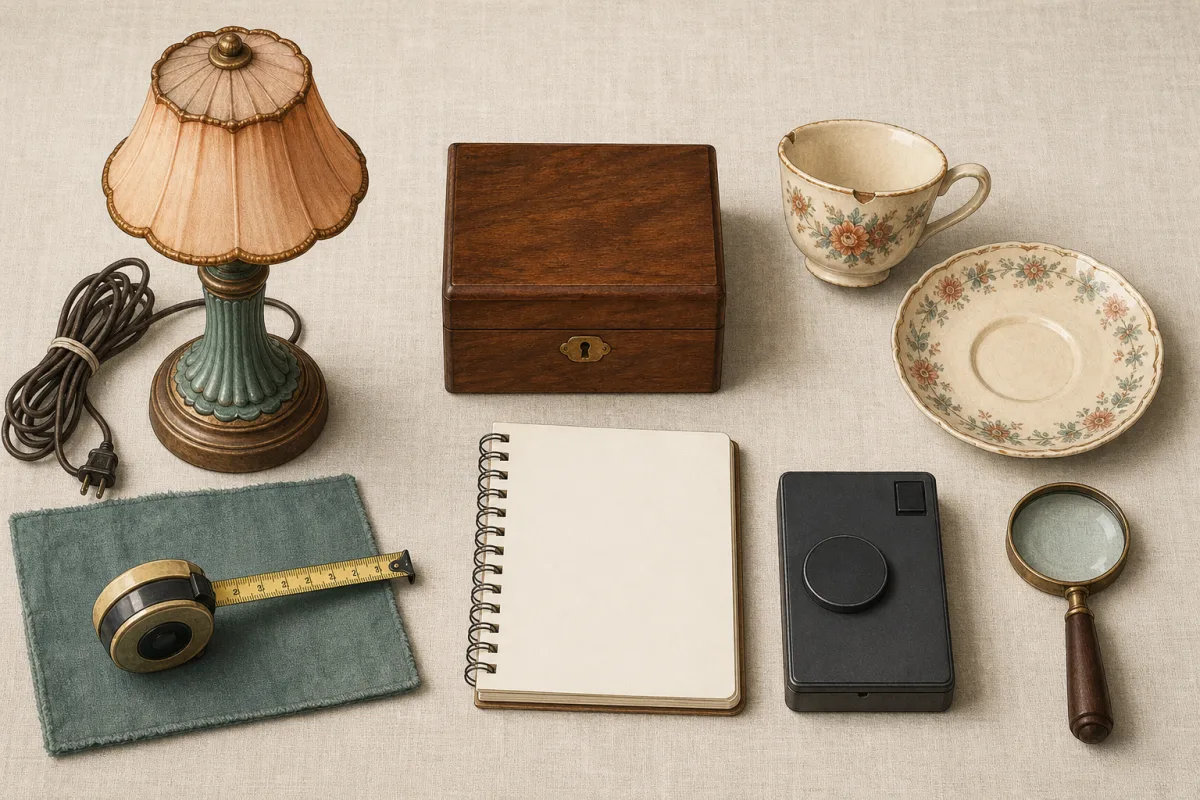
Before you move to an antique collectibles price guide, gather these details. This will make any search or appraisal much more accurate.
| Check item | What to record | Why it matters |
|---|---|---|
| Identification | Maker mark, label, signature, country, model number | Helps confirm what the item actually is |
| Condition | Cracks, chips, dents, wear, repairs, missing parts | Condition can raise or lower value fast |
| Material | Metal type, glass type, wood species, finish, stones | Material affects authenticity and desirability |
| Size | Height, width, depth, weight | Comparable sales often depend on exact size |
| Provenance | Where it came from, old receipts, family history | Documentation can support a stronger appraisal |
| Market use | Decorative, functional, collectible, or rare specialty item | Demand is different in each market |
When a general price guide is enough, and when it is not
A price guide can help when you are comparing a common category or trying to see whether a piece is worth further investigation. It is often enough for straightforward objects with clear marks and ordinary condition.
You should consider a collectible appraisal or a professional opinion when the item is:
- unusually old or rare
- signed, attributed, or linked to a known maker
- part of a set, estate, or inheritance with multiple related pieces
- made from precious metals, fine glass, or high-end decorative materials
- heavily restored, altered, or incomplete
- suspected to be valuable enough to insure, sell, or divide fairly among heirs
If your item falls into one of those groups, an antique appraiser or a specialized reference may be more useful than a broad online estimate. For example, a detailed article like Antique Furniture Appraisal: What Experts Look For can help you understand how specialists think about construction, style, and condition.
Examples of categories that often need closer review
Some categories are especially sensitive to small details. A minor difference in size, color, finish, or hardware can change the market a lot.
- Glass and decorative art: maker attribution, shape, and color variations matter. If you are checking a vase, this Murano Vase Value: What Determines It guide can help you focus on the right details.
- Silver: sterling versus plated, monograms, and pattern names are important. See Antique Silver Appraisal: 7 Clues That Reveal Value for a deeper breakdown.
- Costume jewelry: brands, construction, stones, and clasp style matter more than age alone. A useful starting point is Vintage Costume Jewelry Value: 7 Clues to Check Worth.
- Lamps and lighting: rewiring, shades, sockets, and base changes can affect value. Compare with Tiffany Lamp Appraisal: Authenticating and Valuing Yours or Antique Lamp Appraisal: 7 Clues That Reveal Real Value.
A simple decision path for antique and collectible value
- Identify the item: record marks, photos, measurements, and any labels.
- Confirm what it is: compare construction and style to known examples.
- Review condition: note every repair, missing piece, or surface issue.
- Search comparable sales: look for similar sold items, not just listings.
- Judge confidence: if details do not line up, pause before assigning a value.
- Get a second opinion if needed: especially for high-value, rare, or insured items.
If you are organizing an estate or sorting a mixed box of items, use the same process across the group. That method is often faster and more accurate than trying to guess from memory or family stories alone.
Common mistakes that lead to bad valuations
- assuming old automatically means valuable
- using asking prices instead of sold prices
- ignoring repairs, replacements, or later modifications
- trusting a mark without checking the rest of the object
- mixing decorative style with confirmed age
- forgetting that size, condition, and completeness can change value a lot
For more specialized items, a focused reference can save time. For example, a Antique Silverware Appraisal: 7 Clues to Spot Real Value article can help if you found flatware, while Antique Slot Machine Price Guide: Models and Market Prices is better suited to mechanical collectibles with model-specific demand.
FAQ
What is the fastest way to estimate antiques and collectible value?
The fastest method is to identify the item, note its condition, and compare it with sold examples of the same maker, model, or style. If the item has unclear marks or seems rare, a collectible appraisal is more reliable than a quick guess.
Is an antique collectibles price guide enough for insurance or selling?
Not always. A price guide can be useful for a rough estimate, but insurance, estate division, and high-value sales often need a more specific appraisal antiques collectibles review. The more valuable or unusual the item, the more important it is to verify details carefully.
How do I know if a mark is real and meaningful?
Check whether the mark matches the construction, materials, and style of the whole piece. A real maker’s mark should make sense for the object, but it should never be the only proof. If the mark looks added, inconsistent, or too new, treat it cautiously.
Should I clean an item before getting it appraised?
Only gently and only if you are sure it will not damage the surface. Avoid aggressive polishing, harsh cleaners, or scrubbing hidden areas. In some categories, original surface and patina are part of the value.
Soft next step
If you have an item in hand and want a quicker starting point, try the Antique Value Identifier to organize what you see before you look for a final appraisal. It is a practical way to narrow down antiques and collectible details, compare clues, and decide whether you need a deeper expert review.
Try the Idar app
Use the app when you want a faster, more organized starting point before comparing details manually.